Listado de la etiqueta: gas

Firman contratos de fase 3 el 10 de mayo
El 10 de mayo serán firmados los 25 contratos petroleros que se adjudicaron en la tercera fase de la Ronda Uno petrolera.
La Comisión Nacional de Hidrocarburos (CNH) aprobó la documentación que ofrecieron las empresas para la firma de los contratos de licencia que se adjudicaron el 15 de diciembre.
El Órgano de Gobierno de la dependencia aseguró que los planes que presentaron en marzo estas empresas permiten la continuidad de las operaciones.
Las empresas que obtuvieron los contratos ofrecieron una parte de sus ingresos brutos al Estado a cambio de enajenar la totalidad de la producción petrolera.
Estas empresas son, en su mayoría, contratistas de Petróleos Mexicanos (Pemex), por lo cual apostaron por los contratos.
La mayoría de los campos tienen producción actualmente y están bajo resguardo de Pemex, que deberá iniciar el proceso de entrega a los contratistas.
Los campos que desarrollarán se encuentran en tierra en estados como Tamaulipas, Nuevo León, Veracruz, Chiapas y Tabasco.
El Gobierno espera una producción pico de 36 mil barriles por día (bpd) de crudo y 205 millones de pies cúbicos por día (mmpcd) de gas. La primera producción se vería en tres años.
México está ejecutando una ronda licitatoria de áreas y campos de hidrocarburos pese a la baja de los precios del crudo que ha llevado a Pemex a recortar su presupuesto y reducir su expectativa de producción de petróleo a 2.13 millones de bpd para este año.
El 5 de diciembre está previsto anunciar los ganadores de los contratos de 10 áreas de exploración y extracción en aguas profundas, la joya de la ronda licitatoria y en donde se presume que existe el mayor potencial de crudo y gas.

Fuente: Reforma
What Will Drive LNG Growth for the Next Decade?
Question: What will be more localized, more widely dispersed and more transparent a decade from now? Answer: The liquefied natural gas (LNG) industry.
A recent Deloitte report on the changing LNG landscape presents such a scenario, and one of the report’s authors credits the United States’ emergence as a gas exporter as a catalyst for the evolution.
«The beginning of exports of LNG from the U.S. in 2016 adds an interesting new component to the global market, expanding the range of options available to buyers both geographically and in terms of pricing basis,» said Andrew Slaughter, executive director of the Deloitte Center for Energy Solutions.
Slaughter, who wrote the report with colleague John England, also sees liquid hub-based pricing becoming a more viable option compared to longstanding oil-linked LNG pricing formulas.
«It will be interesting to see whether this type of competition results in changes in strategy from the more traditional LNG suppliers,» Slaughter said.
In a recent interview with DownstreamToday, Slaughter elaborated on the Deloitte report’s findings. Moreover, he explained why – despite the unease felt by many in the LNG sector – he sees reason for industry players to be optimistic. Read on for his insights.
DownstreamToday: How would you summarize the current upheaval in the global energy market, and where does LNG fit in amid this dynamic environment?
Andrew Slaughter: In the short term, the global energy market is still adjusting to a lower oil price environment, in which crude oil prices dropped from above $100 per barrel down to $30-$40 levels since June 2014. While the primary causes of this were an accumulating imbalance of oil supply growth, relative to oil demand growth, the LNG market was not immune to the consequences. Long-term contract prices for LNG, which are linked by formula to crude oil price levels, have declined along with crude oil, negatively impacting the cash flow of existing LNG suppliers, as well as putting into question the expected economic returns for new and proposed LNG supply projects.
Over the longer term, in a world where most nations have committed to carbon mitigation policies at COP21, we expect natural gas to be able to increase its share of energy demand around the world, both because of its intrinsically lower carbon intensity than other fossil fuels and also because of its complementarity with renewable energy in the power sector, providing grid stability and reliability when renewable generation is not available. We expect LNG to play a significant part in meeting this growth in gas demand around the world over the next two or three decades.
DownstreamToday: Deloitte has observed that the LNG trade has quadrupled over the last two decades and is poised to double over the next two decades. What were some key attributes of the previous growth period, and what major characteristics would you expect during the next one? Any particularly prominent similarities/differences?
Slaughter: LNG market growth over the past 20 years has predominantly been characterized by the development of large integrated gas projects in which most LNG has been committed to buyers under long-term contracts. This model has been necessary to secure project financing for multi-billion dollar investment in upstream gas development, liquefaction trains, specialized ships and regasification terminals. Using this model, new LNG supply sources have been developed in resource-rich countries like Qatar, Australia, Trinidad and Nigeria; and large new markets have been opened up, such as India and China.
Over the next 10 to 20 years, we expect growth in the LNG market to be associated with the opening up of many more, often smaller, markets served by more flexible supply options, such as floating storage and regasification units, smaller, more modular liquefaction technologies and the growth of both portfolio supplies and LNG traders to more flexibly match supply with market needs. We also expect new and emerging applications for LNG to grow, creating an additional boost to demand – such as LNG as a marine fuel and as a fuel for heavy trucks and rail.
DownstreamToday: You’ve identified seven key factors that should drive LNG growth in the next 10 years. Which of these factors is supported by the strongest evidence? Which factors are more of a guessing game?
Slaughter: Of the seven key factors identified in the Deloitte report, three represent challenges for LNG development, at least for the next several years. The potential slowdown in global economic growth, and perhaps particularly in China, may lead to a near-term slowing of LNG demand, as will continued improvements in energy efficiency which work to decouple demand growth rates from economic growth rates. Thirdly, the amount of new LNG supply capacity planned or announced is a threat to sanctioning the next wave of LNG projects which will likely be needed post 2020.
On the side of opportunity, the other four factors are more favorable to LNG development. These are the reduction of LNG shipping costs, allowing markets to be served more economically; the development of new markets geographically, such as in South East Asia and Latin America; the emerging penetration of LNG into new applications such as for road and marine transport fuels, as well as the larger-scale expansion of LNG as a source for natural gas as a power generation fuel; and the expansion of market liquidity, with more buyers, more sellers, more diverse contract terms and durations making it easier for market participants to structure the right deals to expand their business.
There is fairly strong evidence supporting all these factors, and it will be fascinating to watch how they play out over the next 10 years or so.
DownstreamToday: You’ve no doubt seen industry headlines proclaiming that the era of mega-LNG projects is drawing to a close and that small- and mid-scale projects are on an upward trajectory. What effects on the broader LNG market do you anticipate with the rise of smaller-scale projects?
Slaughter: Smaller-scale projects are emerging on the liquefaction side of the business with project developers proposing smaller and more modular units than have historically been the norm; and also on the regasification side of the business with the increasing deployment of floating regasification and storage units to serve new market locations. Such developments reduce the upfront capital required to launch an LNG project, potentially opening up new sources of financing. And these developments add more flexibility and optionality to the market, and will contribute to the development of new markets and the growth of portfolio players and traders who can play a role in enhancing the efficiency of the market.
DownstreamToday: What is the most surprising thing you learned while preparing your report?
Slaughter: Despite higher-than-accustomed levels of uncertainty about LNG prices, growth prospects and the viability of new supply investments, market participants maintain a high degree of long-term optimism about the future of LNG as a growing and strategic part of the world’s energy supply and trade. This is founded on the attractiveness of natural gas as a fuel in major and emerging markets, for which its lower carbon intensity than other fossil fuels plays a major role; and on the maturing of LNG market structures globally, to accommodate new contractual options.

Copyright: Rig Zone
Privados ganan 30% del mercado de gas LP a Pemex
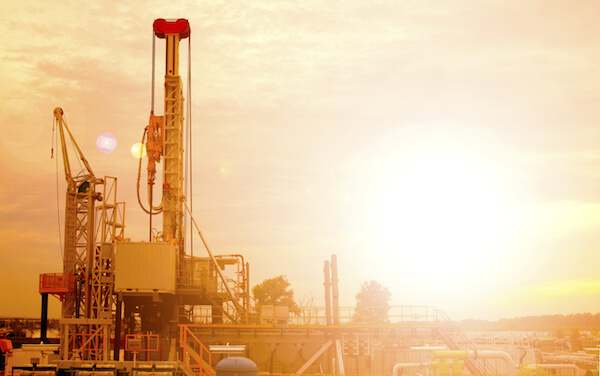
El valor de las importaciones de gas Licuado de Petróleo (LP) de Petróleos Mexicanos (Pemex) cayó 37% de un año a otro en el acumulado de los primeros cinco meses del año, ubicándose en 325 millones de dólares, gracias a que el volumen de estas compras al exterior por parte de la estatal se redujo 16%, debido a que la libre importación por parte de privados (que arrancó a inicios del año) ya abastece 30% de la demanda nacional.
Como muestran los indicadores de Pemex, la importación por cuenta propia de los privados que arrendaban su infraestructura a la estatal antes de este cambio legal arrancó con mayor fuerza en el mes de abril, en que se importó un volumen de 29,000 barriles diarios, en comparación con los 102,400 que se importaron el mes anterior y con los 110,000 barriles por día importados en el mismo mes del 2015; en mayo se redujo incluso a 26,43 0 barriles por día la compra de gas LP al exterior de Pemex, restándole esta carga que Pemex tenía antes de los cambios legales, al ser el único autorizado para importar gas LP.
Por tanto, en términos financieros, la estatal pasó de gastar 87 millones de dólares en marzo de este año a 24.29 millones en abril y a 24.28 millones en mayo en compras de gas LP; en comparación con los mismos meses del año pasado, la estatal gastó en este concepto 78% menos en abril y 70% menos en mayo.
En tanto, la demanda se ha mantenido estable por encima de los 275,000 barriles diarios, y gracias a las nuevas posibilidades legales, empresas como Soni, Tomza, Global Gas y Nieto —que según la Asociación de Distribuidores de Gas LP (ADG) son las arrendatarias de terminales marítimas de almacenamiento, buques y hasta un ducto que daba servicio a Pemex— han sustituido en una tercera parte las ventas de la petrolera estatal, según la Asociación Mexicana de Distribuidores de Gas Licuado y Empresas Conexas (Amexgas).
“Las ventas de Gas LP de Pemex han disminuido en más de 30%, particularmente las que se originan como importaciones. La empresa productiva del Estado ha sido rápidamente remplazada en este tipo de operaciones por un gran número de importadores privados que ya cuentan con infraestructura propia”, dijo Octavio Pérez Salazar, presidente ejecutivo de la Amexgas.
Menores precios
Además, el presidente de la Amexgas aseveró que los precios del gas LP ya han disminuido en varias ciudades y regiones del país, lo que ha permitido que los consumidores de gran volumen del energético, que lo utilizan en México para producir bienes de consumo indispensables y proporcionar servicios básicos para la población, tales como la floreciente agroindustria de los invernaderos, las tortillerías, los restaurantes, los hoteles y las cadenas comerciales, ya reciban descuentos sobre el precio máximo autorizado mayores al 10 por ciento.
“Los cambios han obligado a Pemex a competir, el cual era uno de los propósitos de la reforma energética y Pemex ha reaccionado con una estrategia come
Fuente: El Economista
Safety Investment Remains Resilient Despite Downturn
Oil and gas companies are continuing to invest in safety research despite the current oil price downturn, DNV GL representatives told Rigzone during a recent trip to the firm’s Spadeadam testing and research facility in Cumbria, England.
“Business is tough in the oil and gas sector but committed customers are still investing in safety improvement. They’re still conducting research into major hazards,” said Gary Tomlin, DNV GL UK’s vice president of safety and risk.
Naturally, the level of this investment was slightly hampered by the drop in crude prices, but investment has started to increase over the last couple of months.
“We saw a hiccup and to be honest, it’s inevitable. When the oil price drops from $110 a barrel to $27, you’re kidding yourself if you’re not going to see a hiccup,” said Hari Vamadevan, DNV GL – Oil & Gas’ regional manager for the UK and West Africa.
“We’ve seen a pickup I would say over the last couple of months … oil recovery to $50 has helped a little bit, I think there’s positive cash flows for some companies, but many companies haven’t stopped [investing],” he added.
Investment in this type of research is expected to rise even further over the not too distant future, as the oil price achieves an anticipated rise and oil and gas firms gain more access to expendable income.
From an industry perspective we think … we’ll see an upturn 2017-2018,” said Tomlin. “I think that we’ve plateaued. We are a cyclical oil and gas industry … I think we’ve hit the low point, but we do need to be aware that we still need to control costs,” said Vamadevan. “I think companies will become profitable at $50 and $60 per barrel, and as the price rises I think there will be more investment. So I am hopeful that we will see more activity going forward,” he added.
Oil, Gas Safety Testing ‘Critically Important’
Oil and gas major hazards testing and research was described as critically important by Tomlin, who outlined the significance of Spadeadam for the hydrocarbon sector.
“It’s a unique facility worldwide. There are other facilities like this, but none that do the breadth of the work we do, so it’s something we’re incredibly proud of. The work we do here is of critical importance,” said Tomlin.
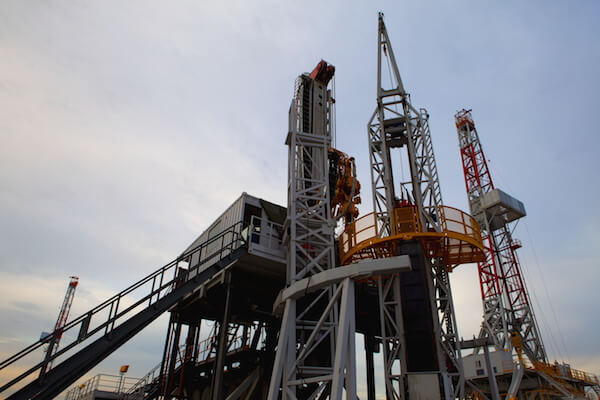
DNV GL Spadeadam Testing and Research is designed to carry out full-scale hazardous trials and simulate real-world environments. Situated in 120 acres (50 hectares) of Ministry of Defence land in the north of England, it offers the opportunity to test equipment, components, products, techniques and processes, and to provide data to validate computer models.
aff at Spadeadam have recreated a number of major accidents at their facility – ranging from the Piper Alpha platform explosion to the Buncefield oil storage terminal fire – to find out exactly what went wrong and help prevent future incidents in the oil and gas industry.
“We’re undertaking research here that helps … [oil and gas companies] understand hazards that they manage in their facilities, so that they can take measures to limit the risk to their people and their infrastructure,” said Tomlin. “We get people to experience large scale fires and explosions so that they can see and feel the power of these events. They can’t get that anywhere else in the world.”
Most safety lessons in the oil and gas sector come from real world events, said Vamadevan, who highlighted how experiences of this nature can be more useful than theoretical work.
“If you … felt a jet fire, you experience what happens in an explosion, it means you understand it much better than reading in a textbook, seeing a colour contour on a map or seeing a percentage,” Vamadevan told Rigzone.
Copyright: Rig Zone
Seguros Para La Construcción Y Montaje De Oleogasoductos
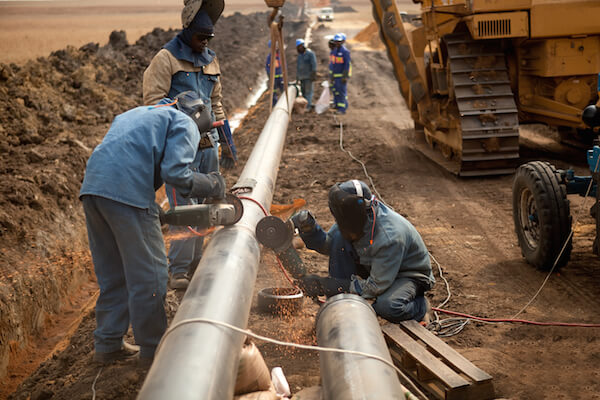
Los Oleogasoductos son tuberías de gran diámetro que se usan para el transporte de hidrocarburos en estado líquido y gaseoso estas van desde el sitio donde estos se extraen, hasta los centros de transformación y distribución.
Para proceder al diseño de las rutas se debe tomar en cuenta tanto el caudal a transportar, características físicas y químicas del fluido, como los aspectos técnicos, las restricciones del medio físico, biológico y cultural, las opciones de ingeniería y construcción, así como los costos económicos.
En el caso de las rutas submarinas, estas se determinan eligiendo la trayectoria más directa o en base a estudios geofísicos, geotécnicos y oceanográficos.
Para proteger está inversión, económica y legalmente es de vital importancia el contar con un seguro dependiendo de la fase en la que el proyecto se encuentre:
- Seguros de Construcción: Abarca desde el momento en que empieza la excavación, hasta el momento en que se termina la fase de pruebas.
- Operación: Este seguro entra en vigor cuando el ducto entra en operación y protege a la empresa por la pérdida de daños materiales a los bienes propiedad del gasoducto usado en las operaciones de la misma.
En NRGI Broker contamos con personal experto en materia de hidrocarburos y con las mejores opciones en materia de seguros, por lo que podemos asesorarte y ofrecerte un producto adaptado a las necesidades de tu empresa.
Stacked Oil and Gas Make Permian Deals Costly in Spite of Rout
Oil prices are depressed, but Texas shale has never been more valuable.
A recent spate of land deals in the sprawling Permian Basin illustrates a counter-intuitive trend: Real estate in the country’s most active oil field is even more expensive today than it was before commodity prices crashed.
QEP Resources Inc. agreed to pay a price that works out to close to $60,000 per net acre in June for a slice of the Permian, in the basin’s priciest land deal on record.
That’s more than double the average $30,000 per net acre explorers paid for Permian land during the first nine months of 2014, when oil topped $100 a barrel, according to data from Citigroup Inc. Oil has been hovering at $45 to $50 per barrel since mid-August.
Over the past few months, at least four other explorers agreed to pay more than $30,000 per net acre to expand in the Permian: Concho Resources Inc., Parsley Energy Inc., SM Energy Co., and Silver Run Acquisition Corp., according to data compiled by Bloomberg.
“The valuations are pretty lofty,” said Bryan Lastrapes, managing director at Moelis & Co. “When you look at the prices being paid for a flowing barrel, they are higher than when oil was at $100.”
Unusual Geography
The obvious question: With oil so much cheaper today, why has Permian land become so pricey? There are a few explanations. The first comes down to the same reason a dingy is more valuable on a sinking ship.
“It’s about scarcity,” said Bruce Cox, global head of energy acquisitions and divestitures with Credit Suisse Group AG.
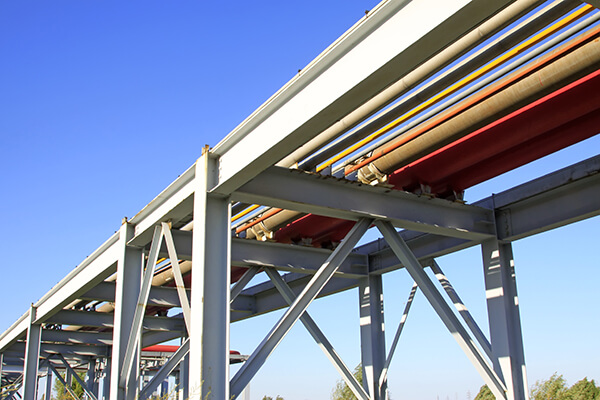
The Permian is one of the few places in the U.S. where drilling remains profitable amid low prices, thanks to its unusual geography, in which different layers of oil- and gas-soaked rock are stacked like layers in a cake, he said. An explorer can drill multiple horizontal wells after digging straight down.
“What you can’t find in most plays is the Permian hydrocarbon column,” Cox said. “Companies can drill two to four times as many wells over a 10-year development period” in the Permian than in other basins.
QEP Rationale
This is a key part of the rationale QEP used to justify the price it agreed to pay for the 9,400 net acres in the Permian in June.
The company told investors it sees a chance to drill more than 400 horizontal wells along four different benches of shale, more than a half-mile down, where it has already determined there is oil. It sees additional upside potential drilling riskier, wildcat wells on three other benches. So it isn’t buying just one field, but as many as seven.
That deal also addresses a perpetual critique from investors that QEP isn’t big enough in the Permian, by increasing its position there by 50 percent, Richard Doleshek, QEP’s chief financial officer, said in August.
“From a dollar-per-acre standpoint, we heard a lot of conversation about how that was a big number,” Doleshek said during a presentation at an oil and gas conference sponsored by Enercom Inc., according to a transcript compiled by Bloomberg.
“When you look at it on a target basis, it’s relatively reasonable,” he said. “It’s pristine acreage.”
Lower Costs
Another factor driving up Permian land prices is the fact that it has some of the lowest break-even costs in the world. The area has more than a half-dozen fields where drilling can stay profitable even when oil falls below $30 a barrel, according to data compiled by Bloomberg.
The oil rout has set off a land grab for that reason, said Ron Gajdica, co-head of energy acquisitions and divestitures with Citigroup.
“When oil prices were high, there was a high supply of acreage with economic drilling opportunities,” he said. “Now, in a $40 to $50 oil price environment, acreage with economic locations is scarcer. There are only a limited amount of opportunities and many of them are in the Permian.”
A couple of other things are driving up the price of Permian land. First, development costs have come down sharply during the downturn, thanks to lower service costs, technological advances and more efficient techniques, Gajdica said. That means explorers can justify paying higher prices for land.
Second, Wall Street is helping the trend. Publicly traded Permian explorers such as Concho and Parsley trade at a premium to other shale players. They paid for their recent acquisitions with stock. Since their currency is worth more, they can afford to pay up.
In addition, other explorers with operations elsewhere, such as QEP and SM, saw their share prices spike after striking deals in the Permian, which could spur even more dealmaking in the area.
“The market tends to respond favorably when these Permian deals are announced,” Gajdica said.
Copyright: Bloomberg
Multan a Pemex con 2.1 mdp por no aprovechar gas
Durante la 64 sesión extraordinaria del Órgano de Gobierno de la Comisión Nacional de Hidrocarburos (CNH) se sancionó a Pemex Exploración y Producción con 2.1 millones de pesos por no cumplir con las metas de aprovechamiento de gas en Ku-Maloob-Zaap.
La comisión detectó que durante 2014 y 2015 la quema y venteo de gas en el activo incumplió las metas de aprovechamiento, las cuales eran de 39.6 millones de pies cúbicos en 2014 y se quemaron 133.5, mientras que en 2015 el limite máximo era de 105 y se quemaron 137.8 millones de pies cúbicos de gas.
Juan Carlos Zepeda Molina, comisionado presidente de la CNH, detalló que los 550 millones de pies cúbicos que Pemex quema cada día equivalen a 32% del gas natural que México importa.
Pemex justificó el incumplimiento a la reducción presupuestal de 100,000 millones de pesos “El cumplimiento a la meta establecida de 98% en el aprovechamiento de gas en aguas someras fue pospuesta, alcanzándose un índice de 96”, dijo la empresa el pasado 11 de noviembre.
Además de la sanción económica impuesta a la empresa se le obligó a implementar inversiones por 2 mil 446 millones de dólares en distintas actividades por los próximos tres años, así como presentar un plan para subsanar la situación.

Copyright: Oil and Gas Magazine
Los seguros para los contratos de exploración y extracción de hidrocarburos
En el marco de la Reforma Energética, se han llevado a cabo las Rondas de Licitación para la Exploración y Extracción de Hidrocarburos. Los ganadores celebraron los contratos correspondientes con la Comisión Nacional de Hidrocarburos (CNH).
Entre las obligaciones más importantes de los nuevos operadores, se encuentra la de contratar seguros de control de pozos, de responsabilidad civil y responsabilidad ambiental.
Estos seguros tienen como objetivo que quienes realicen las actividades de Exploración y Extracción de Hidrocarburos puedan responder por los daños que causen a personas, sus bienes y el medio ambiente.
La Agencia Nacional de Seguridad Industrial y Protección Ambiental del Sector Hidrocarburos (ASEA), es la autoridad competente para emitir la regulación en materia de seguros. En ejercicio de tal atribución, el día 23 de junio de 2016 se publicaron en el Diario Oficial de la Federación, las Disposiciones Administrativas de Carácter General que establecen las reglas para el requerimiento mínimo de seguros a los Regulados que lleven a cabo obras o actividades de Exploración y Extracción de Hidrocarburos, Tratamiento y Refinación de Petróleo y Procesamiento de Gas Natural (DACGS).
Las DACGS establecen los elementos y características de los seguros obligatorios, por lo que las empresas que contraten estos seguros deberán cerciorarse de que cumplan con lo establecido en la regulación.
Los requisitos más importantes con los que deberán contar los seguros son, entre otros, los siguientes:
- Las pólizas de seguro deberán ser emitidas por una institución de seguros autorizada por la Secretaría de Hacienda y Crédito Público o la Comisión Nacional de Seguros y Fianzas.
- La vigencia mínima de las pólizas deberá ser de un año.
- Las pólizas de seguros deberán incluir expresamente la renuncia de las instituciones de seguros a sus derechos de subrogación en contra de las autoridades del Sector Hidrocarburos.
- Las pólizas no deberán contener condiciones suspensivas que limiten la cobertura de los seguros en función de las actividades de los Regulados o que los subordine a la aplicación o no aplicación de otros seguros.1512
En NRGI Broker somos expertos en los seguros requeridos en los contratos con la CNH, acércate a nosotros.
Los peores accidentes con hidrocarburos en México: Primera Parte
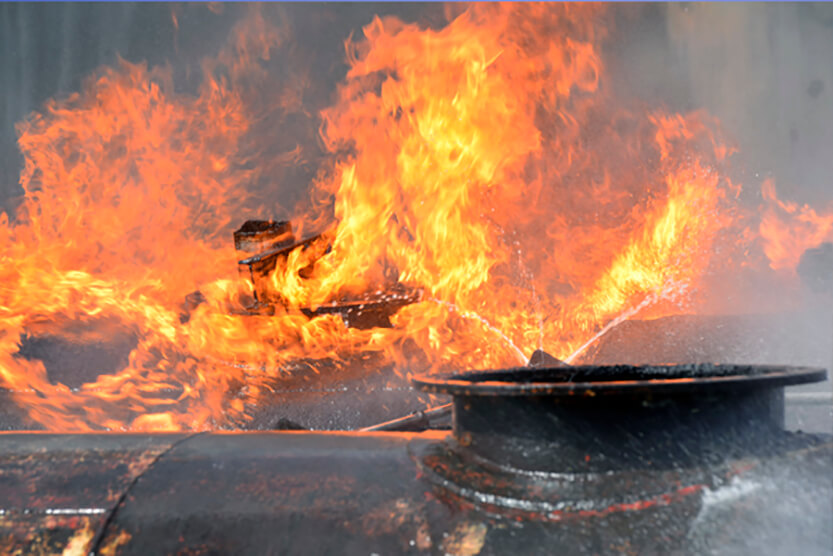
En México, la actividad petrolera es una de las más importantes por su contribución al desarrollo económico, sin embargo también está considerada una industria altamente riesgosa, por su potencial para causar daños a personas, bienes y al medio ambiente. En ocasiones, a pesar de contar con diversas medidas de seguridad, los accidentes ocurren y pueden llegar a tener consecuencias catastróficas.
A continuación, se presentan dos de los peores accidentes con hidrocarburos y/o petrolíferos sucedidos en México:
19 de noviembre de 1984. Se registraron diversas explosiones en las plantas de almacenamiento y distribución de Gas de Pemex en San Juan Ixhuatepec, Tlalnepantla, Estado de México. La planta de almacenamiento contaba con 4 tanques con un volumen de 1600 m3 y 2 con un volumen de 2400 m3, equivalente a 11,000,000 de litros aproximadamente[1].
El accidente provocó la muerte de entre 500 y 600 personas y un aproximado de 4,500 heridos, 200 mil damnificados.
El 22 de abril de 1992. Una fuga de gasolina de un ducto de Pemex en Guadalajara vertió al subsuelo y al sistema de drenaje de la ciudad, lo que causó una gran explosión que dejó unos 210 muertos además de cuantiosos daños.
Estos dos siniestros significaron un importante precedente para la regulación de actividades altamente riesgosas, consideradas todas aquellas que manejan alguna de las sustancias contenidas en el Primer Listado (Manejo de Sustancias Tóxicas), de fecha 28 de marzo de 1990 y el Segundo Listado (Sustancias Inflamables y Explosivas) de fecha 04 de mayo de 1992.
Los listados fueron publicados posteriormente a cada uno de los siniestros antes mencionados, como una forma de incrementar las medidas de seguridad y evitar que volvieran a suceder.
En esos listados, se encuentran los hidrocarburos y petrolíferos, por lo que todos aquellos manejan estas sustancias están obligados a cumplir con la regulación aplicable a las actividades altamente riesgosas.
Una de esas obligaciones es contar con seguros de responsabilidad civil y responsabilidad ambiental para responder por los daños que puedan causar a terceros.
En NRGI Broker somos expertos en seguros para el Sector Hidrocarburos. Acércate a nosotros, con gusto te atenderemos.
[1] Ver “The tragedy of San Juanico- the most severe LPG disaster in history”, disponible en:http://www.ncbi.nlm.nih.gov/pubmed/358094