• Link to Facebook
  • Link to X
  • Link to LinkedIn
  • Link to Youtube
  • Inicio
  • NOSOTROS
  • SECTORES
    • ENERGÍA
      • Eléctrico
      • Petróleo y Gas
      • Renovables
    • Marítimo
    • INFRAESTRUCTURA
      • Puertos
      • Ductos
      • Carreteras
      • Edificios
      • Vías Férreas
      • Terminales de almacenamiento
  • SEGUROS
    • EMPRESAS
      • RESPONSABILIDAD CIVIL
        • Responsabilidad Ambiental
        • Responsabilidad Civil
        • Responsabilidad Civil Profesional
      • MARÍTIMO
        • Puertos y Terminales
        • Responsabilidad Civil Portuaria
        • Casco y P&I
        • Carga
        • Responsabilidad Civil del Fletador
      • DAÑOS
        • Daño Material
        • Múltiple Empresarial
        • Pérdida de Beneficios
      • CONSTRUCCIÓN
        • Construcción y Montaje
        • Obra Civil Terminada
      • MAQUINARIA Y EQUIPO
        • Equipo de Contratistas
      • EXPLORACIÓN Y EXTRACCIÓN
        • Control de Pozos
      • Aviación y Drones
      • Transporte
    • PERSONAS / BENEFICIOS
      • Vida Colectivo
      • Gastos Médicos Mayores Colectivo
      • Accidentes Personales
    • Hogar
    • AUTOS
      • Flotillas Autos y Camiones
      • Autos, Pickups y Camiones individuales
    • LINEAS FINANCIERAS
      • Cyber
      • Errores y Omisiones (E&O)
      • Directores D&O
      • Crime
  • FIANZAS
    • Licitación
    • Anticipo
    • Cumplimiento
    • Buena Calidad
    • Contingencias Laborales
    • Arrendamiento
    • Fiscales
    • Daños y Perjuicios
    • Fidelidad
    • Suministro Combustibles
    • Aduanales
  • BLOG
  • Noticias
  • CONTACTO
  • Click to open the search input field Click to open the search input field Buscar
  • Menú Menú

Listado de la etiqueta: oil

Hydrocarbons Seminar «Fundamentals of the Hydrocarbons Sector in Mexico» generates proposals and knowledge

en

On April 26th and 29th of this year, the two scheduled sessions of the Hydrocarbons Seminar «Fundamentals of the Hydrocarbons Sector in Mexico» were held at the H. Chamber of Deputies, an event addressed to legislators and public in general; whose objective was to disseminate the essential concepts, categories, data and information of the oil and gas value chain.

The Deputy and President of the Energy Commission, Manuel Rodríguez González, was in charge of the inauguration and closing of the sessions, along with Deputy Mario Delgado. According to Rodríguez, the country has an «unfortunate and sad dependence on energy from abroad,» about 94% of the gas consumed is imported and 80% of the fuels as well.

The panelists of the first and second session where composed by BP Mexico’s CEO Angelica Ruiz, Dr. Aldo Flores-Quiroga specialist in Energy, Ulises Neri from CNH, Ulises Lopez from ANIQ, Gaspar Franco from UNAM, Rodrigo Ochoa and Mr. Salvador Ugalde from E & Y. During the second day, the exhibitions were in charge of Dr. Adrian Duhalt, Mr. Jesus Rodriguez, Ms. Nerea Chacartegui, Mr. Jose Luis Vitlagiano, Mr. Ricardo Ortiz, Mr. David Zarate, Ms. Graciela Alvarez Hoth promoter of the iniciative “Energy Voices” and Luis Felipe Echavarria.

The main topics at the meeting where the regional context of gas, its introduction to the market, security of supplies, distribution, gas feed transportation infrastructure, sustainability’s criteria, risk management and vehicles’ use.

During the seminar’s closing, Deputy Mario Delgado Carrillo, president of the Political Coordination Board said that the production of gas is a huge opportunity that has been wasted and its use could change the energy sector. «It is being left aside, and it is the vein that is needed”.

https://nrgibroker.com/wp-content/uploads/2019/05/0.jpg 609 1263 Soporte https://nrgibroker.com/wp-content/uploads/2025/12/logo-nrgi.svg Soporte2026-05-11 19:24:122026-05-11 19:24:12Hydrocarbons Seminar «Fundamentals of the Hydrocarbons Sector in Mexico» generates proposals and knowledge

U.S. oil prices rise as Gulf platforms shut ahead of hurricane

en Reforma energética de México

Reuters / Henning Gloystein / September 3


* Storm Gordon to make U.S. landfall as hurricane

* Brent dips as India takes steps to continue Iran imports

* Global oil markets have tightened since 2017 – Barclays

By Henning Gloystein

SINGAPORE, Sept 4 (Reuters) – U.S. oil prices edged up on Tuesday, rising back past $70 per barrel, after two Gulf of Mexico oil platforms were evacuated in preparation for a hurricane.

U.S. West Texas Intermediate (WTI) crude futures were at $70.04 per barrel at 0034 GMT, up 24 cents, or 0.3 percent from their last settlement.

Anadarko Petroleum Corp said on Monday it had evacuated and shut production at two oil platforms in the northern Gulf of Mexico ahead of the approach of Gordon, which is expected to come ashore as a hurricane.

International Brent crude futures, by contrast, lost ground, trading at $78.10 per barrel, down 5 cents from their last close.

This came as India allowed state refiners to import Iranian oil if Tehran arranges and insures tankers.

Many international shippers have stopped loading Iranian oil as U.S. financial sanctions against Tehran prevents them from insuring its cargoes.

Mirroring a step by China, where buyers are shifting nearly all their Iranian oil imports to vessels owned by National Iranian Tanker Co (NITC), this means that Asia’s two biggest oil importers are making plans to continue Iran purchases despite pressure by Washington to cut orders.

CHANGING MARKET

Britain’s Barclays bank said on Tuesday that oil markets had changed since 2017 when worries about rising supply were more evident.

“U.S. producers are resisting temptation and exercising capital discipline, OPEC and Russia have convinced market participants they are managing the supply of over half of global production, the U.S. is using sanctions more actively, and several key OPEC producers are at risk of being failed states,” Barclays said.

Crude oil “prices could reach $80 and higher in the short term”, the bank said, although it added that despite these developments global supply may exceed demand next year.

For 2020, Barclays said it expects Brent to average $75 per barrel, up from its previous forecast of just $55 a barrel.

French bank BNP Paribas struck a similar tone, warning of “supply issues” for the rest of the year and into 2019.

“Crude oil export losses from Iran due to U.S. sanctions, production decline in Venezuela and episodic outages in Libya are unlikely to be offset entirely by corresponding rises in OPEC+ production due to market share sensitivities,” the bank said.

“We do not expect oil demand to be materially impacted in the next 6-9 months by economic uncertainty linked to U.S./China trade tensions and recent concerns over emerging markets,” he added.

BNP Paribas expects Brent to average $79 per barrel in 2019.


Reuters / Henning Gloystein / September 3


https://nrgibroker.com/wp-content/uploads/2018/09/U.S.-oil-prices-rise-as-Gulf-platforms-shut-ahead-of-hurricane.png 400 600 Soporte https://nrgibroker.com/wp-content/uploads/2025/12/logo-nrgi.svg Soporte2018-09-04 15:39:432026-05-11 19:51:17U.S. oil prices rise as Gulf platforms shut ahead of hurricane

Amlo and the realities of Mexico’s oil reform

en Mercados internacionales, Reforma energética de México

Petroleum Economist / Craig Guthrie / July 9


The Mexican president-elect needs a strong oil and gas sector to fund a promised social transformation

The investor-friendly tone Mexican president-elect Andres Manuel Lopez Obrador, widely known as Amlo, struck in the run-up to his landslide victory on 1 July is fueling confidence he will tweak rather than dismantle the energy reforms that are enticing international oil companies to the country.

Prospects of an Amlo presidency had stirred concerns among investors for months ahead of the vote—he’s the first leftist Mexican president since the 1930s, and has forged an anti-elitist platform calling for a reordering of the political landscape. And yet the peso gained more than 2% against the US dollar in the hours after the result.

«This can be a presidency ruled by reason and legality,» Ixchel Castro, manager of Latin American oils and refining markets research with Wood Mackenzie, tells Petroleum Economist, while pointing to the currency market’s reaction and the links he’s built with Mexican business elites. «There may be change in the emphasis of the energy reforms, but we see a reversal as highly unlikely».

Launched by outgoing President Enrique Peña Nieto in 2013, the reforms ended Pemex’s 75-year monopoly over the energy sector. So far, auctions in January and March jointly lured at least $100bn in oil exploration investment commitments from more than 70 different firms—useful revenue for a president who has promised sweeping social changes to tackle crime, corruption and poverty.

Amlo made opposition to the reforms a bedrock of his failed 2013 presidential bid, and told a rally just four months ago that he would never allow Mexican crude to return to the hands of foreigners. But a reversal in tack since has seen his top business adviser and nominee for chief of staff, Alfonso Romo, lead a pro-business public relations drive towards international investors.

Romo told Reuters on 25 June that there could be more auctions of oil drilling rights, as long as a review of contracts that have already been awarded to private companies showed no problems. «We will revise them and everything good will remain,» he said, noting that Amlo had said this directly to investors in New York.

But it’s not expected to be all smooth sailing for foreign oil investment under Amlo’s watch. Uncertainty over the long-term goals of his populist agenda will likely continue to unnerve companies looking to establish a steady pipeline of projects.

«Amlo will likely enjoy the benefits from the existing contracts that have been awarded, especially in terms of oil barrels produced, fiscal revenue received and jobs created. By the third year of his administration he can claim that Mexico is producing more oil under his presidency,» Duncan Wood, director of the Mexico Institute at the Woodrow Wilson International Centre wrote in an e-mail.

«But he will be reluctant to continue the bidding rounds. The one possible exception that I see would be in deep waters and in farm-outs from Pemex.»

Mexico plans to auction 37 onshore areas and nine in the shale gas-rich Burgos Basin on 27 September, as well as the farm-out of seven onshore areas with Pemex on 31 October.

Amlo’s approach to a planned re-shaping of Pemex is seen as the next critical indicator of his eventual intentions on the country’s energy direction.

While the president has pledged to resurrect Pemex into a strong national oil company through cost-cutting, this comes amid a significant decline in domestic energy production—from 3.4m barrels of oil a day in 2004 to 1.9m b/d in 2018.

«Pemex must be forced to compete in order to become stronger,» said Wood. «If the reform process is stopped, Pemex would gain from a strengthening of its position in the short-term. But in the long term its competitiveness and productivity could be severely damaged.»


Petroleum Economist / Craig Guthrie / July 9


https://nrgibroker.com/wp-content/uploads/2018/07/Fotolia_8365763_Subscription_L-e1531247131209.jpg 469 600 Soporte https://nrgibroker.com/wp-content/uploads/2025/12/logo-nrgi.svg Soporte2018-07-10 13:26:062026-05-11 19:51:19Amlo and the realities of Mexico’s oil reform

Competitive fuel market is still some years off, analysts say

en Pipelines, Reforma energética de México

Mexico News Daily / Mileno / June 25


Time, more investment required before gas prices will drop

It will take another two to five years to attain a truly competitive fuel market with lower gasoline prices for motorists, according to industry specialists.

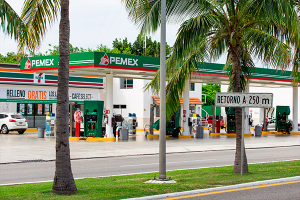
The federal government’s 2013 energy reform opened up Mexico’s retail fuel market to foreign and private companies and there are now more than 2,000 gas stations that operate under a brand other than the state-owned Pemex.

But the increased competition hasn’t translated into cheaper fuel prices as had been expected.

“It was thought that it would be faster but that’s not the case,” said Rodrigo Favela, a consultant and fuel market analyst.

Favela told the newspaper Milenio that based on experiences in other countries, creating a competitive market takes time.

In addition, greater competition in the retail fuel market is not enough on its own to generate lower fuel prices, according to Mexico’s central bank.

In its regional economies report for the last quarter of 2017, the Bank of México said greater investment is needed in the entire gasoline supply chain from the refinery to the gas station in order for prices to drop.

Sebastián Figueroa, CEO of energy operator FullGas, told Milenio that gas stations in the north of the country could start competing on price within one to two years.

He cited proximity to the United States, the presence of existing pipelines, greater ease with which fuel can be imported and lower logistics costs as factors that will likely see fuel prices drop more quickly there than in other parts of the country.

In central states, Figueroa predicted that it would be another three to four years before competitiveness among gas stations increases due to the need for more infrastructure while in the southeast of Mexico, it could take up to five years or more.

In the latter region, the development of the new infrastructure that is needed — such as pipelines —is more complicated because of geological factors, he said.

Considering that fuel prices have actually risen since Mexico’s previously monopolized fuel market opened up, Milenio asked the president of the Senate’s energy committee whether energy reform should be considered a failure.

Salvador Vega Casillas, of the opposition National Action Party (PAN), rejected that suggestion but said it was a mistake to liberalize fuel prices at a time when the value of the US dollar was high against the peso. Gasoline prices were fully deregulated by November 30 last year.

However, Figueroa said that if the government had waited any longer to free prices, more problems could have been created for the sector because a subsidized model is not sustainable.

He maintained that the reform is a positive for Mexico, charging that having only one participant in the downstream sector led to inefficiency whereas competition forces gas stations to offer better deals to motorists.

Federal Energy Secretary Pedro Joaquín Coldwell has also contended that an open and competitive market is the best way to achieve gasoline prices that are accessible to all Mexicans.

Favela explained that there are three main factors that determine the price of petroleum at the pump: international crude oil prices, the prevailing exchange rate and logistics costs.

In order to generate a more competitive market, he argued, all petroleum companies should have non-discriminatory access to the nation’s oil terminals and ports.

Despite opening up the domestic fuel market to new players, the majority of Mexico’s petroleum infrastructure is still controlled by the state oil company Pemex.

The average price of regular — or Magna — gasoline has risen 17% this year, according to the consultancy PETROIntelligence, from 16.24 pesos per liter at the beginning of January to 19 pesos. Prices were as high as 19.11 pesos on Friday in Guadalajara.


Mexico News Daily / Mileno / June 25
 

https://nrgibroker.com/wp-content/uploads/2018/06/Mexico’s-petroleum-infrastructure-1.png 400 600 Soporte https://nrgibroker.com/wp-content/uploads/2025/12/logo-nrgi.svg Soporte2018-06-26 12:39:452026-05-11 19:51:20Competitive fuel market is still some years off, analysts say

Netherland Sewell Adds Mexico City to the 2018 Oil & Gas Property Evaluation Seminar Lineup

en Reforma energética de México

Oil & Gas 360º / May 29


NSAI Oil & Gas Property Evaluation seminars coming to London, Singapore and Mexico City this summer

Netherland Sewell & Associates (NSAI) has again expanded the reach of its popular Oil & Gas Property Evaluation Seminars for financial professionals, with the new addition of a seminar in Mexico City on September 5-6, 2018.

“We are very excited to introduce the NSAI Oil & Gas Property Evaluation seminars to Mexico,” said NSAI SVP & CFO Scott Frost. “With the country opening its hydrocarbon sector to foreign investors and international partners, the time is right for NSAI to host a seminar in Mexico.”

Seminars deliver a basic understanding of the upstream oil and gas industry

The two-day seminars are designed to help energy finance professionals gain a deeper understanding of the various aspects of the evaluation of hydrocarbon reserves and learn how to use reserves reports and studies.  Participants can expect to gain a basic understanding of the upstream oil and gas industry, including basic geology of different plays, reservoir evaluation basics, reserves and resources definitions, understanding hydrocarbons-in-place, recovery factors and rates, operating expenses and capital costs, and more.

The seminar speakers are NSAI professionals that have significant career expertise in reserves determination methods, the economics of hydrocarbon extraction, and petroleum geology. The seminars are popular with financial institutions that invest in energy development as well as banks that are involved in making lending decisions for oil and gas exploration and production projects.

Below is the 2018 NSAI Oil & Gas Property Evaluation seminar calendar:

  • May 7 & 8 and 9 & 10, 2018 – Dallas (Both sessions had record attendance with a waiting list)
  • June 26 & 27, 2018 – London: Grange City Hotel
  • July 10 & 11, 2018 – Singapore: Singapore Exchange – SGX Auditorium
  • September 5 – 6, 2018 – Mexico City: Asturiano Polanco Banquet Room

NSAI encourages energy industry and oil and gas financial professionals to pass this information on to colleagues who may benefit from attending. “We are excited about the opportunity to meet again with petroleum industry financial professionals and would like to thank you for recommending our seminars to your colleagues,” said NSAI SVP Joseph Spellman.

Scott Rees, NSAI Chairman and CEO, told Oil & Gas 360® that the firm has graduated about 6,500 people during 38 cumulative years of seminars in Dallas, London and Singapore. “We are glad to be adding Mexico City to that list,” Rees said.

Interested parties may learn more and register at NSAI’s website.


Oil & Gas 360º / May 29


https://nrgibroker.com/wp-content/uploads/2018/05/NSAI-Oil-Gas-Property-Evaluation-seminars.jpeg 853 1280 Soporte https://nrgibroker.com/wp-content/uploads/2025/12/logo-nrgi.svg Soporte2018-05-29 17:03:542026-05-11 19:51:21Netherland Sewell Adds Mexico City to the 2018 Oil & Gas Property Evaluation Seminar Lineup

Mexico’s Sureste Basin Returns To Super Basin Spotlight

en

From: Hartenergy / 6 April

HOUSTON—The flurry of bidding activity from oil and gas companies willing to shell out millions of dollars for drilling rights in the shallow waters of the Gulf of Mexico (GoM) during Mexico’s latest bidding round showed there must still be something special about the Sureste (Southeast) Basin.

“I’ve never seen a structure like it in my career,” Mark Shann, subsurface director for Sierra Oil and Gas, said of Sureste during the AAPG’s recent Global Super Basins Leadership conference.

The multiplay basin, which includes prolific sub-basins such as Sonda de Campeche and Chiapas-Tabasco, spans about 65,000 sq km and is believed to hold 50 billion barrels of recoverable oil in the GoM’s shallow water and beyond. Its oil-prone prowess gained prominence in 1976 with Mexico’s game-changing Cantarell oil field discovery. Since then the basin has served as the main hydrocarbon-bearing province for Mexico, which is working to reverse declining production with global players eagerly chomping at the bit in search of oil.

RELATED: Southeast Basin Lures Oil Companies To Mexico’s Shallow Water

The historic Zama discovery made in 2017 by a Talos Energy-led consortium that includes Sierra and Premier Oil and another discovery—Amoca—by Italy’s Eni in 2017 have kept the basin in the spotlight, indicating it still has more to give. The Zama well, the first well drilled by the private sector since Mexico opened its doors to foreign investors, hit 170 m to 200 m (558 ft to 656 ft) of net oil pay in Upper Miocene sandstones. Initial gross original oil in place estimates ranged from 1.4 billion barrels (Bbbl) to 2 Bbbl.

Some would call it the rebirth of a super basin.

Shann said the basin—along with neighboring Tampico-Misantla—has all the qualities of a super basin.

“If you’re going to go into a super basin, you need at least one fantastic source rock and it has to be a mature source rock,” Shann said. He added that multiple reservoirs are also needed. “Having multiple reservoirs takes away the dependency of one reservoir working out or not, and you need seals to hold back hydrocarbons in their reservoirs.”

Having a diversity of traps is fantastic, he added, noting other attributes also define a super basin. These include having a regulatory framework in which to make the entire business work and super data, something Shann said Sureste Basin has plenty.

“Four years ago when we started our company we couldn’t get all seismic data from the country. Today you can access all the seismic,” Shann said. “You can access any well that is older than two years, and there are 39,000 wells in the country. The ability mine data and therefore to compete on an equal level playing field is hugely important,” especially for a small company competing against supermajors.

Sierra has picked up 11,000 sq km of wide azimuth data from Schlumberger and source rock is visible, he said. “The super data has really helped to underpin a story of success in one of the world’s greatest super basins.”

Today Sierra is focused mainly on Sureste, which Shann said extends beyond shallow and into deepwater.

The company said on its website that Sureste’s original oil and gas in place is about 220 Bboe, and the fact that it has numerous mature fields—including Ku Maloob Zaap and Sihil—and little reinvestment signals “significant opportunity for growth.”

Its reservoirs are associated with structural, salt tectonics, stratigraphic and combined traps, and the main structural styles include normal faulting with rotated blocks (Late Miocene-Holocene), salt cored anticlines and salt rollers and diapirs (Jurassic-Late Cretaceous), according to Mexico’s National Hydrocarbons Commission.

In terms of source rock potential, Shann said “we’re definitely in a super basin.” He spoke about how the Zama discovery shed more light on source rock thickness. Taking into account a conservative 50% migration loss among other factors, the company was able to determine the source rock must be about 200 m thick.

Shann said the company and its partners’ plan to test the Jurassic next year.

“Sureste is one of those amazing salt-related basins,” he added, speaking highly of the carbonate potential of the basin in Mexican waters and on the U.S. side. “I think we can still find some big carbonate fields in the Campeche Slope.”

Located about 37 miles offshore, Zama is between Eni’s Amoca appraisal well in the Lower Pliocene and Pan American’s Hokchi 2 in the Middle Miocene.

“Between the three of us, we’re exploiting different parts of this basin, which helps the industry’s understanding of the whole basin,” Talos CEO Tim Duncan told Hart Energy’s Oil and Gas Investor last summer.

RELATED: Talos Energy CEO Talks About Historic Zama Well

Talos, which will merge with Stone Energy, said in its March 15 fourth-quarter earnings release that the company is in the appraisal planning stages for the Zama-1 discovery. Zama-1 is located in Block 7 of the Sureste Basin at a water depth of about 165 m.

Other exploration opportunities exist, according to Talos.

Talos holds a 35% participating interest with Sierra holding 40% and Premier, 25%.

From: Hartenergy / 6 April


https://nrgibroker.com/wp-content/uploads/2016/08/shutterstock_199017701-e1472503200645.jpg 268 400 Soporte https://nrgibroker.com/wp-content/uploads/2025/12/logo-nrgi.svg Soporte2018-04-10 16:45:392026-05-11 19:51:23Mexico’s Sureste Basin Returns To Super Basin Spotlight

The World’s Biggest Oil Companies

en

How much has the shale boom shifted the rankings of the world’s 20 biggest oil and gas companies? We compared today’s giants with data from 2003 to see what, if anything, has changed for the likes of Exxon, Shell, BP, Saudi Aramco and Chevron. Who do you think is on top?

1. Saudi Aramco

Plataforma 1

Copyright: Shutterstock

2013: 12.7 million BOE per day (barrels of oil + natural gas equivalents)
2003: 9.9 million BOE per day (rank: 1)    
Saudi Arabia’s Minister of Petroleum and Mineral Resources Ali Ibrahim Al-Naimi speaks to journalists at a hotel in in Vienna, Austria, on Monday, June 11, 2012. Al-Naimi joined Saudi Aramco in 1947, age 12, studied in the U.S., rose to become CEO and is now the world’s most powerful oilman. Data courtesy WoodMackenzie. 

2. Gazprom

shutterstock_7893784

Copyright: Shutterstock

2013: 8.1 million BOE per day (oil + natural gas equivalents)   

2003: 9.5 million BOE per day (rank: 2)   

In this Tuesday, Nov. 12, 2013 photo, Russian President Vladimir Putin, right, talks with Russian state energy giant Gazprom CEO Alexey Miller during the cooperation signing ceremony between Russia and Vietnam at the Presidential Palace in Hanoi, Vietnam. Putin announced that Russia and Vietnam would be strengthening their energy and military ties.   Data courtesy WoodMackenzie.

3. National Iranian Oil Company

shutterstock_95528917

Copyright: Shutterstock

2013: 6.1 million BOE per day (oil + natural gas equivalents)  
2003: 4.9 million BOE per day (rank: 3)   
Iran’s Minister of Petroleum, Rostam Ghasemi, gestures before the start of the 161st meeting of the OPEC in Vienna, on June 14, 2012. Despite international sanctions on its nuclear program, Iran has been able to grow its natural gas output.  Data courtesy WoodMackenzie.

4. ExxonMobil

shutterstock_38528809

Copyright: Shutterstock

2013: 5.3 million BOE per day (oil + natural gas equivalents)  
2003: 4.6 million BOE per day (rank: 4)   
Russia’s President Vladimir Putin (R) and ExxonMobil Chairman and CEO Rex Tillerson (L) attend at the ceremony of the signing of an agreement between state-controlled Russian oil company Rosneft and ExxonMobil in the Black Sea port of Tuapse on June 15, 2012.   Data courtesy WoodMackenzie.

Continue reading >>>

Copyright Forbes

Images Getty Images

https://nrgibroker.com/wp-content/uploads/2015/02/NRGI_broker_worlds_biggest_oil_companies_news.jpg 299 442 admin https://nrgibroker.com/wp-content/uploads/2025/12/logo-nrgi.svg admin2015-02-10 13:11:412026-05-11 19:51:26The World’s Biggest Oil Companies
Página 7 de 7«‹567

Buscador

Search Search

Categorías

  • Mexicanas Mujeres (14)
  • Mujeres (14)
  • Mujeres Exitosas (15)

Entradas Recientes

  • Rompiendo Barreras. Construyendo el Futuro
  • El Poder Femenino de la Perspicacia en el Mundo Empresarial Mexicano
  • La Secretaría de Marina reconoce a Graciela Alvarez Hoth en el día Internacional de la Mujer en el Sector Marítimo
  • Graciela Álvarez reconocida como una de las pioneras en la industria energética por la revista Oil and Gas Magazine
  • NRGI Broker Presente en el Congreso Mexicano de Petróleo 2022

NRGI Broker

Somos el enlace entre los riesgos que enfrentan las industrias del sector energético con las soluciones para administrarlos y respaldarlos mediante esquemas confiables de garantías financieras.

Contáctanos

Prolongación Paseo de la Reforma 1015 Torre A Piso 21. Col. Desarrollo Santa Fe, Contadero, C.P. 05348 CDMX, México

Tel: +52 (55) 9177 2100

Horario de Atención

Lunes – Viernes: 7:30-18:00
Contáctanos: [email protected]

© Copyright - NRGI Broker | Aviso de Privacidad | Términos y condiciones
  • Link to Facebook
  • Link to X
  • Link to LinkedIn
  • Link to Youtube
Desplazarse hacia arriba Desplazarse hacia arriba Desplazarse hacia arriba