Listado de la etiqueta: Trump
Oil Bets Are Biggest in 9 Years Amid OPEC, Trump Volatility
enMoney managers, producers and consumers made the biggest bets on West Texas Intermediate crude prices in nine years, amid signals more volatility is coming.
Global markets were roiled after Donald Trump’s election as U.S. president and as OPEC continued negotiations on a deal to cap output. The U.S. dollar climbed to the highest since January. A measure of oil volatility surged last week to a seven-month high, a sign that traders were anticipating bigger price swings.
Wagers on higher and lower prices held by speculators and hedgers reached 1.47 million contracts in the week ended Nov. 15, the most since 2007, U.S. Commodity Futures Trading Commission data show. Trading volume of calls giving investors the right to purchase WTI futures rose to a record that day. The CBOE Crude Oil Volatility Index reached the highest since April. Brent oil shorts, bets that prices will fall, rose to the highest in more than two years.
“There’s tension in the market, with both producers and consumers worried about what OPEC does or won’t do on Nov. 30,” said Tim Evans, an energy analyst at Citi Futures Perspective in New York. “They want to be protected from surprising price moves.”
OPEC Meeting
Investors are weighing the chances that the Organization of Petroleum Exporting Countries will complete a deal to cap output at its Nov. 30 meeting in Vienna. While Saudi Arabian Energy Minister Khalid Al-Falih told Al Arabiya television he’s optimistic a deal will be reached, only seven of 20 analysts surveyed by Bloomberg last week expect the group to set output targets for its members.
OPEC agreed in September to cut their collective output to 32.5 million to 33 million barrels a day and has been trying to persuade other suppliers, notably Russia, to join the cuts. OPEC Secretary General Mohammed Barkindo said he’s confident the group can reduce record oil inventories and bring forward the rebalancing of the market.
“The Saudis are working hard to reach a deal,” said John Kilduff, a partner at Again Capital LLC, a New York-based hedge fund that focuses on energy. “You don’t fight the Fed in the bond market and when it comes to oil you don’t fight the Saudis.”
The September agreement marked the end of OPEC’s two-year long experiment with pumping at will. Saudi Arabia led the group in the effort to grab market share and curb the development of more expensive reserves such as U.S. shale.
U.S. Production
While U.S. production has dropped from last year’s 44-year high, the decline is slowing. The Energy Information Administration this month raised its output forecast for 2017. Rigs targeting oil in the U.S. rose the most in 16 months last week, according to Baker Hughes Inc.
Producers and merchants increased short positions, or protection against lower WTI prices, to the highest level since March 2011. They added 66,613 bearish contracts over the past two weeks as prices retreated from last month’s peak at above $50 a barrel.
“The Saudis want higher prices but won’t sacrifice just to see a major competitor, U.S. shale, benefit,” said Sarah Emerson, managing director of ESAI Energy Inc., a consulting company in Wakefield, Massachusetts. “The Trump election changes things. In one day the U.S. shale business got better. The government will be more responsive to the industry.”
Money managers’ net-long position in WTI advanced for the first time since mid-October, climbing by 3,906 futures and options to 163,321. Shorts climbed 14 percent while longs rose 8.1 percent. WTI gained 1.8 percent to $45.81 a barrel in the report week. It rose 2.7 percent to $46.93 as of 8:48 a.m. on Monday.
Brent Bets
In the Brent market, money managers increased short positions by 11 percent to 157,016 during the week, the highest level since September 2014, according to data from ICE Futures Europe. The net-long position in the global benchmark slipped by 4.6 percent during the week to the lowest since January.
In fuel markets, net-bullish bets on gasoline decreased 35 percent to 25,796 contracts, as futures slipped 2.5 percent in the report week. Money managers were net-short 393 contracts of ultra low sulfur diesel, from net-long 7,791 the previous week. Futures advanced 0.2 percent.
“I suspect that when the OPEC meeting is over there will have been a lot more smoke than fire,” said Michael Lynch, president of Strategic Energy & Economic Research in Winchester, Massachusetts. “If they don’t come up with a convincing agreement, they’ll be forced to revisit the issue before long.”
Copyright: Bloomberg
Petróleo aporta 18% a los ingresos totales
enPara el cierre del tercer trimestre del año los ingresos petroleros registraron un total de 617,410.7 millones de pesos, un crecimiento real de 0.9%, respecto a lo registrado en el mismo periodo del 2015.
Este monto representó 18% de los ingresos presupuestarios totales del sector público, la participación más baja desde 1994, considerando sólo los primeros nueve meses de cada año, de acuerdo con datos de la Secretaría de Hacienda y Crédito Público (SHCP).
En el tercer trimestre del 2008, en plena crisis financiera, los ingresos petroleros aportaban 45% de los ingresos totales, a partir de finales del 2014, empezaron a reducir su aportación.
Lo anterior se debió a que los precios del petróleo a nivel internacional comenzaron a reducirse de manera significativa, al igual que la producción de Petróleos Mexicanos (Pemex), lo cual se vio reflejado de manera directa en los ingresos que aportan a las finanzas públicas del país, coincidieron expertos.
Héctor Villarreal, director general del Centro de Investigación Económica Presupuestaria (CIEP), comentó que si bien se han despetrolizado las finanzas públicas del país, el verdadero problema es que los ingresos que se obtienen por el cobro de impuestos no son suficientes para solventar al 100% el gasto público.
Refirió que México sigue siendo de los países con baja recaudación tributaria como porcentaje del Producto Interno Bruto (PIB); el promedio de la recaudación tributaria de los países que conforman la Organización para la Cooperación y el Desarrollo Económicos (OCDE) fue de 34.4% del PIB en el 2014 (últimos datos), en México se ubicó por debajo de 20 por ciento. Para el cierre del 2017 se espera que representen 15% del PIB.
“Aunque los ingresos tributarios sigan creciendo, será a un nivel muy bajo porque el efecto de las reformas se va a agotar. Estos ingresos sólo van a crecer si la economía avanza, pero seguimos viendo aumentos pequeños. Además, el gasto cada vez es mayor y vive una gran presión por el de pensiones, participaciones y costo financiero de la deuda”.
Agregó que difícilmente los ingresos petroleros puedan recuperarse en el corto o mediano plazos, una vez que las rondas 1,2 y 3 comiencen a dar resultados.
“En el corto plazo, la posibilidad de que aumenten los ingreso petroleros es muy baja, porque el costo es alto y es difícil que la producción aumente; además de que el precio ha estado topado (…) el efecto Trump es indirecto, afecta más la baja producción y el precio”.
En el 2012 el precio anual promedio de la mezcla mexicana se ubicaba en 101.96 dólares el barril, para el cierre del 2015, se ubicó en 43.28 dólares el barril de petróleo, esto es una caída de 58%, según datos del Servicio Geológico Mexicano.
El viernes pasado el precio de la mezcla mexicana se ubicó en 37.40 dólares el barril.
Aportan menos al gasto
Al cierre del tercer trimestre del año, cuando el gasto fue por 3.7 billones de pesos, los ingresos petroleros apenas aportaron 16% con un total de 617,410.7 millones de pesos.
Esta aportación ha sido la más baja desde 1990, año desde donde se tiene registro, y considerando sólo los primeros nueve meses de cada año. En el 2008, los ingresos petroleros aportaron hasta 48% del gasto neto del sector público.
“Si bien es bueno que las finanzas públicas del país estén teniendo menor dependencia de los ingresos petroleros, el principal factor debería ser por el crecimiento de otros ingresos como los tributarios y no por la presión que está ejerciendo la caída en el precio del petróleo”, dijo Luis Miguel Labardini, socio de Marcos y Asociados.
De acuerdo con la Ley de Ingresos de la Federación 2017, los ingresos petroleros serán por 739,369 millones de pesos, de los cuales, 400,415 millones de pesos provendrán de Pemex y los 338,954 millones, de la Comisión Federal de Electricidad.
Es decir, de los 4.8 billones de pesos que pretende gastar el sector público, las empresas productivas del Estado aportarán 15 por ciento. Por el cobro de impuestos se espera recaudar un total de 2.7 billones de pesos.
Copyright: El Economista
More Company Climate Votes Ahead, As Trump May Loosen Energy Rules
enActivist shareholders plan a record number of resolutions focused on climate change at U.S. company annual meetings in 2017, even as President-elect Donald Trump looks set to loosen environmental regulations.
Based on filings so far, U.S. companies are on track to face roughly 200 resolutions on climate matters at their shareholder meetings next year, according to Rob Berridge, who follows the subject for Ceres, a sustainability advocacy group.
There were 174 such resolutions this year, Berridge said, compared with 167 in 2015 and 148 in 2014. Many have been directed at big oil and gas companies, though other sectors have also been targeted, including technology and retail.
Activist shareholders broadly aim to curb companies’ carbon emissions and make energy usage more efficient, or at the very least, to draw the attention of companies and investors to climate change as an urgent problem.
They have had some limited success. Investors at Exxon Mobil Corp the world’s largest publicly traded oil producer, passed a measure this year that could lead to an environmental activist joining its board. «Our position is that the risk of climate change is clear and warrants action,» said Exxon spokesman Alan Jeffers.
The rising number of shareholder votes reflects a growing concern among big investors about the environment, encouraged by steps by some boards to embrace reforms.
Deadlines are fast approaching to get resolutions on the ballot for shareholder meetings to be held in the spring.
The election victory of Trump, who is set to take over as U.S. president on Jan. 20, only seems to have added impetus.
On the campaign trail, Trump dismissed human-caused climate change as a «hoax» and pledged to dismantle the Environmental Protection Agency. He also threatened to withdraw the United States from the landmark 2015 Paris Agreement to combat climate change, although he appeared to step back from that position on Tuesday.
He vowed instead to revive the U.S. coal industry, encourage oil drilling and to scale back regulation of the energy sector.
«Despite what the administration may or may not do, I really believe that corporations understand the risks posed by climate change,» said Danielle Fugere, president of As You Sow, a California nonprofit campaign group. It sponsored 18 climate-related shareholder resolutions in 2016 and expects to file a bigger number next year.
One resolution for 2017 calls on Anadarko Petroleum Corp to report on how it would address the risk of so-called stranded assets, such as high-cost deepwater project investments, that might be caused by a drop in demand for oil and gas. The idea won support from 42 percent of shares voted at the company’s 2016 meeting, up from 29 percent in 2015.
Anadarko’s board last year called the idea «unnecessary and unproductive.» Spokesman John Christiansen said it is reviewing the proposal.
To be sure, among S&P 500 companies, investor support for climate resolutions has been relatively weak, holding steady around 22 percent since 2014, according to research firm Fund Votes.
But activists often won more backing for ideas such as urging companies to report on their strategy for dealing with climate change, according to the Sustainable Investments Institute, a research firm specializing in shareholder votes, supported by universities, pension funds and other institutional investors.
Anne Simpson, director of sustainability for the California Public Employees’ Retirement System (Calpers), which manages about $300 billion, said it plans to file or back resolutions at U.S. oil and gas companies for 2017, though she declined to discuss specifics.
Last year the boards of mining companies including Rio Tinto Plc and Glencore Plc endorsed resolutions Calpers submitted calling for reports on climate risk, and the measures passed by wide margins.
More companies will likely embrace shareholder proposals to head off disruption caused by climate change, Simpson said.
«Economics is driving this, not politics,» she said.
Copyright: Rigzone
Will Natural Gas Go On another Run in 2017?
enFrom the multi-year slump of $1.611/MMBtu hit on 04 March 2016, to the highs of $3.902/MMBtu reached on December 28, 2016, natural gas prices have come a long way. Natural gas is 2016’s best performer among major commodities.
However, the big question is – Will the rally continue and what should be the strategy of the natural gas traders in 2017?
Until about November, the underground storage in the lower 48 states consistently stayed above the 5-year maximum levels, indicating a supply glut.
However, in December, the weather turned colder than normal, leading to a large drawdown in gas stocks. In the last six weeks of 2016, the U.S. working gas stocks in underground storage declined by 687 billion cubic feet, the largest seasonal decline since 2013, said John Kemp of Reuters.
In their Natural Gas Weekly Update released on December 22, 2016, the EIA said that in the first three weeks of December the U.S. natural gas consumption averaged 92 billion cubic feet per day (Bcf/d), 21 percent higher than the previous year and 17 percent higher than the five-year average (2011-2015), according to data from PointLogic.
As temperatures fell in December the consumption of natural gas increased from 80 Bcf/d in the first week of December to 98 Bcf/d between December 8-21.
The EIA report said: “Triple-digit consumption days are generally rare in December. However, from December 15–21, natural gas consumption has averaged 103 Bcf/d and topped 100 Bcf during 4 out of 6 days”.
Latest weather report stems the rally
A week ago, the weather reports were forecasting extremely below-normal temperatures in parts of the Northwest and solidly below-normal temperatures in at least half of the country, however, the weather did a ‘U’ turn of sorts and the latest reports are forecasting higher-than-normal temperatures.
As a result, natural gas prices fell about 11.4 percent on January 3, 2017. Prices are now down close to 16.5 percent since touching the high on December 28, 2016.
So, is this the end of the rally or is this a buying opportunity?
Rig count on the rise
Along with the weather, the natural gas production is also a key factor in determining gas prices. In 2016, gas drilling rigs are up from a low of 81 in August to 132 at the end of the year. Along with it, the increase in oil-well drilling and the U.S. President elect’s supportive policy can also give a boost to natural gas production.
Hence, production in 2017 is likely to surprise on the upside compared to the previous year if prices remain supportive. The EIA forecasts natural gas marketed production to reach 79.94 Bcf/d) in 2017, an increase of 2.46 Bcf/d over 2016 and 1.166 Bcf/d above the 2015 level.
On the other hand, consumption is expected to rise to 75.96 Bcf/d in 2017, an increase of 0.74 Bcf/d over 2016 and 1.31 Bcf/d over 2015 levels.
Price forecast for 2017
The EIA expects natural gas prices to average $3.27/MMBtu in 2017 compared to the average of $2.49/MMBtu in 2016.
The World Bank and IMF, on the other hand, forecast natural gas to average $3/MMBtu in 2017.
The natural gas futures are rising within the uptrending channel. Two attempts to breakout of the channel have been unsuccessful; hence, we don’t see a sharp spike in prices in the near-term and expect the intraday highs of $3.90/MMBtu to be a major hurdle to cross.
Nonetheless, a drop to $2.8/MMBtu levels is a good opportunity to accumulate long positions for a target of $3.8/MMBtu. Traders should wait for dips to accumulate long positions, rather than buying the breakouts.
However, a lot will depend on the policy announcements from the President-elect Donald Trump, which will decide the trajectory of natural gas prices in 2017.
By Rakesh Upadhyay for Oilprice.com
Mexico to Discuss Security With U.S. in Parallel to Nafta
en Mercados internacionalesFrom: Bloomberg / Eric Martin / 11 de Diciembre de 2017
Mexico’s top diplomatic and interior officials will visit Washington this week to discuss security cooperation with their U.S. counterparts at the same time that negotiators work to overhaul Nafta, according to four people familiar with the plans.
The visit by Mexican Foreign Relations Minister Luis Videgaray and Interior Minister Miguel Angel Osorio Chong to meet with Secretary of State Rex Tillerson and Homeland Security Secretary Kirstjen Nielsen on Thursday is a follow-up to meetings in May, according to the people, who asked not to be named before the agenda is made public. It’s aimed at coming up with strategies to combat transnational criminal organizations, the people said. The press office of the Mexican Foreign Ministry and the U.S. State Department declined to immediately comment.
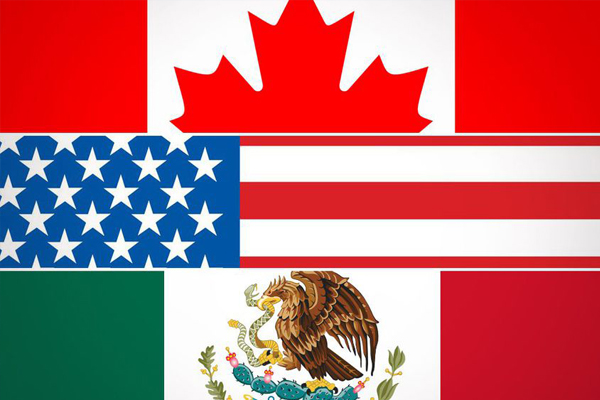
The meetings coincide with a sitdown by negotiators from the U.S., Mexico and Canada to update the North American Free Trade Agreement at the demand of U.S. President Donald Trump, who says the deal is responsible for hundreds of thousands of lost manufacturing jobs in the U.S. In an interview last month, Videgaray said that if the Nafta renegotiation encounters trouble, it could impact other areas of cooperation with the U.S. such as security and immigration. Mexico this year has seen homicides surge to the highest levels of this century, surpassing the previous record levels of the drug war from 2010 to 2012.
“It’s good for Mexico that we cooperate with the U.S. on security and also on migration and many other issues,” Videgaray said in the interview in Vietnam on Nov. 11. “But it’s a fact of life and there is a political reality that a bad outcome on Nafta will have some impact on that,” he said. “We don’t want that to happen, and we’re working hard to get to a good outcome.”
Videgaray told reporters last month that Mexico is prepared for the end of Nafta if it can’t reach a deal with the U.S. and Canada that benefits the nation. The three countries in August began talks to rework the pact after Trump pledged during the 2016 campaign to overhaul or end it.
This Week’s Talks
The latest meetings to revamp Nafta, taking place at the Mayflower Hotel, will run through Friday, largely out of the spotlight. Cabinet-level officials aren’t scheduled to attend for the second time since negotiations began, and the Trump administration is preoccupied with efforts to push through tax cuts by year-end and avoid a government shutdown. Videgaray’s portfolio includes the broad bilateral relationship with the U.S., while a team led by Economy Minister Ildefonso Guajardo has been focused on the commercial details of the Nafta negotiation.

Pronósticos para la economía mexicana en 2018
en EconomíaFROM: El Financiero / Ernesto O´Farril Santoscoy / 26 de Diciembre de 2017
Nuestro escenario básico contempla los siguientes supuestos:
a) Un crecimiento de la economía de Estados Unidos (EU).
b) La negociación del TLCAN es exitosa. No descartamos que el presidente Trump solicite la salida de EU en el primer semestre, pero el Congreso decidirá quedarse.
c) La reforma fiscal de Trump obliga a la SHCP a expedir un decreto con una serie de incentivos fiscales para el primer semestre. Además, prevemos que en el cuarto trimestre se realice en México una reforma fiscal para hacer más competitivo el régimen impositivo.
d) En el escenario electoral asumimos que gana la coalición del PRI o la del PAN–PRD, ambos con pocas posibilidades de obtener control en el Congreso, lo que obligará al ganador a efectuar una alianza legislativa.
Los cinco principales ‘cisnes negros’ para la economía mexicana:
1. El presidente Trump anuncia su intención de que EU salga del TLCAN y el Congreso norteamericano lo aprueba. Se habla de entablar un acuerdo bilateral, pero las negociaciones pudieran tardar más de dos años. El comercio se basa entonces en las reglas de la OMC, en donde el estatus de nación más favorecida permite que nuestras exportaciones paguen un arancel promedio de 3.0 por ciento, pero las inversiones al país se detienen por la reforma fiscal de EU y la falta de certidumbre jurídica para el comercio entre las dos naciones.
2. Morena gana las elecciones presidenciales con pocas sillas en el Congreso, y desde el primer mes en el mando se empiezan a observar choques. Durante el segundo semestre los mercados acentúan la volatilidad. El tipo de cambio se mantiene arriba de 20 pesos, y la inflación ha estado aumentando. Banco de México anuncia dos incrementos de tasas de 50 puntos base, para llevarla a 8.50 por ciento.
3. Un fuerte sismo o varios huracanes afectan severamente la actividad económica y la inflación, motivando incrementos adicionales en la tasa de referencia de Banxico.
4. La iniciativa de reforma fiscal que lanzó la SHCP para hacer más competitivo el esquema fiscal frente al de EU fracasa en el Congreso, dejando a México con un esquema fiscal descompetitivo y una caída en la inversión.
5. La ola de violencia va en ascenso y se sale de control en varias ciudades afectando severamente a la actividad económica.
Los 10 principales pronósticos de la economía mexicana en 2018:
1. El crecimiento del PIB se ubicará en 2.3 por ciento anual. Prevemos un primer semestre con mucha volatilidad en los mercados financieros, y con un crecimiento pobre, pero un segundo semestre con menor incertidumbre y menor volatilidad.
2. La inflación tenderá a bajar. Nuestra estimación es que la inflación se reduzca desde el 6.70 por ciento de 2017 hasta 3.80 por ciento para el cierre del año, siempre y cuando no sucedan nuevos choques de oferta.
3. Prevemos que el tipo de cambio permanezca muy presionado en la primera mitad del año, como efecto de la posible salida de EU del TLCAN, la reforma fiscal en EU y la incertidumbre política. Para el segundo semestre el peso se fortalecería hacia 18.90 pesos por dólar.
4. Prevemos que el Banco de México anuncie un nuevo incremento de su tasa de referencia en marzo, a 7.50 por ciento anual. Posteriormente, si los resultados electorales son favorables, la amenaza sobre el TLCAN desaparece y se empieza a ver una posible reforma fiscal, la tasa de Banxico podría estabilizarse y aumentar otros 25 puntos base en diciembre, para ir a 7.75 por ciento.
5. En cuanto a las remesas familiares, estimamos un flujo ligeramente por debajo del reportado en 2017, que rozó 27 mil millones de dólares.
6. Para la inversión extranjera directa estamos previendo un flujo de 18 mil 650 millones de dólares, lo que representa una reducción respecto a años anteriores, motivada por la reducción de impuestos en EU.
7. Las reservas internacionales subirán ligeramente, sobre todo en el segundo semestre, ante una menor incertidumbre sobre el TLCAN, los resultados electorales y la expectativa de una reforma fiscal en México. Estimamos que al cierre del año las reservas terminen en 180 mil 570 millones de dólares.
8. Para 2018 esperamos que el flujo de las remesas familiares permanezca elevado, con una ligera disminución respecto a 2017, situándose en 26 mil 472 millones de dólares.
9. Para la tasa de desempleo prevemos una primera mitad de 2018 con mayor desempleo, que reflejaría la incertidumbre económica y política, pero con una recuperación en la segunda mitad, que llevaría a la tasa de desempleo a 3.8 por ciento.
10. En consumo e inversión durante el primer semestre podríamos ver un mercado interno en desaceleración y una inversión nula, pero en la segunda parte del año prevemos una recuperación. Para todo el año prevemos un consumo creciendo 3.2 por ciento y el gasto de inversión subiendo 1.5 por ciento anual.
Presidente de Bursamétrica.

FROM: El Financiero / Ernesto O´Farril Santoscoy / 26 de Diciembre de 2017

En 2017: México puso la mira en otros mercados; EU perdió terreno
en EconomíaFROM: El Economista / Thamara Martínez Vargas / 5 de Febrero de 2018
El 2017 representó un año de diversificación, en pleno debate por la actualización del Tratado de Libre Comercio de América del Norte y el proteccionismo de Donald Trump para reducir el déficit comercial de su país con México.
Por primera vez en cinco años, las exportaciones no petroleras de México a destinos diferentes de Estados Unidos tuvieron un crecimiento y, en términos anuales, en 2017 representaron un alza de 15.8 por ciento. El 2017 representó un año de diversificación, en pleno debate por la actualización del Tratado de Libre Comercio de América del Norte (TLCAN) y el proteccionismo de Donald Trump para reducir el déficit comercial de su país con México.
Se calcula que México exportó al mundo cerca de 385,881 millones de dólares en mercancías no petroleras —que comprenden lo producido por el sector agropecuario y la industria manufacturera—, 8.7% más que en 2016. Pese a su discurso proteccionista, hacia Estados Unidos se dirigieron aproximadamente 314,618 millones de dólares, 7.2% más que un año antes.
Si restamos a las exportaciones totales las ventas a Estados Unidos, se puede observar que los envíos a otros destinos tomaron fuerza. Al terminar 2017 se exportó una cifra récord de 71,262 millones de dólares al mundo (excluyendo a Estados Unidos), con este monto se expone un incremento de 15.8%, la mayor expansión desde 2011.
Leticia Armenta, directora del centro de análisis económico del ITESM, refirió que, efectivamente, en 2017 se buscaron nuevas oportunidades de mercado, ya que incluso el gobierno federal hizo intensa promoción para este fin, abriendo mercados que no eran tan visibles, por ejemplo el mercado árabe.
“México tiene una canasta amplia de productos de exportación, una parte tiene que ver con el petróleo, que fue el campeón hasta los años 90, pero otra parte muy importante es el sector agropecuario”, dijo Armenta. Desde el agro, hay muchos productos ganadores que antes no se producían, como los frutos rojos o la estevia, que se han impulsado recientemente y que han resultado muy competitivos.
Diversificar destinos
La participación del mercado estadounidense en las exportaciones no petroleras de México se redujo cerca de un punto porcentual en 2017. Al terminar el año, 81.5% de las exportaciones no petroleras de México se dirigieron hacia Estados Unidos.
La participación de mercado de Estados Unidos bajó, pero aumentaron las exportaciones, dijo Valeria Moy, directora de México, ¿Cómo Vamos? “Algo interesante es que a pesar del discurso proteccionista de Estados Unidos y de otros lugares, las exportaciones crecieron y crecieron de forma importante, casi 9.0% en un año donde el proteccionismo se avivó”.
Moy dijo que pese al difícil año en la relación comercial entre ambos países, el comercio, que incluye importaciones y exportaciones, creció. Esto permitió que se exportara más hacia aquel país, aunque como porcentaje del total su participación se redujo, aumentando la participación de lo exportado a mercados como China, Japón o Alemania.
Las cifras más recientes señalan que entre enero y noviembre de 2017 las exportaciones totales con destino al mercado asiático crecieron al mayor ritmo en seis años, con un alza de 21.7 por ciento. Del monto total exportado en estos 11 meses, el continente asiático concentró 5.4% de las exportaciones de mercancías mexicanas.
“Se tiene que hacer un esfuerzo por diversificar, creo que vale la pena mantener una campaña y una visión de apertura, mantener una posición de México como un país abierto al comercio y abierto al mundo. Eso me parece una cuestión fundamental, sin que se nos olvide que el mercado más grande del mundo está al lado y es al que ya estamos conectados”, dijo Moy.
Armenta coincidió en que más allá de cómo queden las negociaciones del TLCAN, las cadenas productivas que ya están muy consolidadas difícilmente se van a deshacer en el corto plazo, por lo que van a ser una base de comercio en los próximos años.

FROM: El Economista / Thamara Martínez Vargas / 5 de Febrero de 2018
A closer look at round seven of the NAFTA negotiations
en Mercados internacionalesFROM: Lexology / Dentons / 19 de marzo de 2018
Round seven of the NAFTA negotiations concluded in Mexico City on March 5, 2018. The talks ended with United States Trade Representative, Robert Lighthizer, indicating that the US is prepared to walk away from NAFTA and replace it with separate bilateral agreements. He urged the parties to finish the negotiations quickly, «Now our time is running very short…I fear the longer we proceed, the more political headwinds we will feel.»1 Lighthizer alluded to several ‘political headwinds’ that could impact the future of negotiations, including the presidential election in Mexico, provincial elections in Ontario and Quebec, and the US midterm elections.
The talks were impacted midweek by an announcement from President Trump that his Administration would impose tariffs on steel and aluminum imports. The proposed tariff would be 25% for steel imports and 10% for aluminum imports.
The proposed tariff triggered controversy within the Republican Party and the Administration itself. US House Speaker Paul Ryan, backed by a number of Republicans who support the President, has urged President Trump to back away from threats of a tariff, fearing that it could spark a trade war.2 In a letter to the President, 107 House Republicans wrote, «We urge you to reconsider the idea of broad tariffs to avoid unintended consequences to the U.S. economy and its workers.»3 On March 6, Gary Cohn, President Trump’s economic advisor, resigned. Cohn was a voice of free trade in a White House that is ambiguous at best on trade agreements.4
While the tariffs announced by President Trump ultimately excluded Canada and Mexico «for now», the threat of tariffs proposal loomed over the remainder of the negotiations. Reportedly, the proposed tariff was the starting point for many discussions and was often referred to as «the elephant in the room».5 The tariff proposal further impacted negotiations when President Trump linked the tariffs to the NAFTA negotiations. On March 5, he tweeted «Tariffs on Steel and Aluminum will only come off if new & fair NAFTA agreement is signed».6 Canadian Trade Minister Chrystia Freeland responded in her closing remarks by saying «Canada would view any trade restrictions on Canadian steel or aluminum as absolutely unacceptable.»7 Mexican Economy Minister Ildefonso Guajardo responded by tweeting «Mexico shouldn’t be included in steel & aluminum tariffs. It is the wrong way to incentivize the creation of a new and modern #NAFTA».8 On March 7, President Trump announced that he would initially exclude Canada and Mexico from the proposed tariff. However, the exemption could be rescinded if Canada and Mexico do not agree to an updated NAFTA.9
Notwithstanding the short term exemption on steel, supported by the Steelworkers and Speaker Ryan, President Trump again tweeted on March 5 on the Canadian farm system and how Canada «must treat [US] farmers much better.» Thus, US agricultural demands remain on the table, while Canada continues to steadfastly defend its agricultural sector, including the supply management system. Whether and how the negotiators will successfully bridge this issue remains to be seen.
Limited progress was made in other areas, such as the rules of origin provisions. Jason Bernstein, the US negotiator for rules of origin, was called back to Washington on February 26 to consult with US industry representatives, thus halting negotiations. Talks amongst technical experts are scheduled to resume in advance of the next formal round of negotiations. Similarly, investor-state dispute mechanisms and the proposed sunset clause were not emphasized this round.
With respect to energy, we understand there is agreement to include both a standalone chapter on energy as well as energy related sections in other chapters. The standalone chapter, because it will likely include Mexico unlike certain energy provisions in the current NAFTA, will focus on «more interconnectivity across the networks of energy in North America» and will seek to recognize the changes Mexico has made to allow for foreign investment in its energy sector. 10
Negotiators did close a number of smaller chapters, including regulatory practices, sanitary and phytosanitary measures, and telecommunications. Additionally, Steve Verheul, Canada’s chief negotiator, commented that the parties were close to completing sections on technical barriers but required more time on sections regarding the environment.11 While reportedly half of the chapters are between 80-90% settled, Lighthizer commented that only 6 of NAFTA’s 30 chapters have been officially closed.
With respect to the sanitary and phytosanitary chapter that governs food safety, negotiators have settled on a fast-track system that would prioritize requests between the US, Mexico and Canada. This system is a first of its kind in international food safety agreements. Minister Guajardo said the chapter will help facilitate agricultural trade and it «guarantees animal and vegetable sanitation based in science.»12Additionally, sector annexes on proprietary food formulas and chemicals were closed this round. The annex protects the intellectual property of certain mixes and ingredients and allows for more regulatory cooperation for the use of chemicals. 13
The eighth round of NAFTA talks is expected to take place in Washington in April, subject to availability of Ministers who are traveling for other international meetings, including the upcoming Free Trade Area of the Americas summit.14

FROM: Lexology / Dentons / 19 de marzo de 2018
LA CUARTA RONDA DEL TLCAN 2.0 SE EXTENDERÁ DOS DÍAS
en EconomíaFROM: Expansión / Martes, 10 de octubre de 2017 a las 3:03 PM
CIUDAD DE MÉXICO (Reuters) – La cuarta ronda de modernización del Tratado de Libre Comercio de América del Norte (TLCAN) fue extendida por dos días, hasta el 17 de octubre, cuando se llevará a cabo una reunión de ministros, dijeron el martes dos fuentes mexicanas.
Representantes de Canadá, Estados Unidos y México se reunirán en Washington desde el 11 de octubre para tratar de avanzar en varios temas del tratado, que el presidente estadounidense, Donald Trump, ha amenazado con abandonar argumentando que ha sido dañino para su país.
“Pienso que el TLCAN tiene que ser cancelado si queremos hacerlo bueno para nosotros. De otra forma no creo que podamos negociar un buen acuerdo”, dijo Trump en una entrevista publicada este martes por la revista estadounidense Forbes.
Después de estas declaraciones, el canciller mexicano, Luis Videgaray aseguró que México solo seguirá con las negociaciones si el TLCAN es del interés nacional.
NRGI Broker
Somos el enlace entre los riesgos que enfrentan las industrias del sector energético con las soluciones para administrarlos y respaldarlos mediante esquemas confiables de garantías financieras.
Contáctanos
Prolongación Paseo de la Reforma 1015 Torre A Piso 21. Col. Desarrollo Santa Fe, Contadero, C.P. 05348 CDMX, México
Tel: +52 (55) 9177 2100
Horario de Atención
Lunes – Viernes: 7:30-18:00
Contáctanos: [email protected]