• Link to Facebook
  • Link to X
  • Link to LinkedIn
  • Link to Youtube
  • Inicio
  • NOSOTROS
  • SECTORES
    • ENERGÍA
      • Eléctrico
      • Petróleo y Gas
      • Renovables
    • Marítimo
    • INFRAESTRUCTURA
      • Puertos
      • Ductos
      • Carreteras
      • Edificios
      • Vías Férreas
      • Terminales de almacenamiento
  • SEGUROS
    • EMPRESAS
      • RESPONSABILIDAD CIVIL
        • Responsabilidad Ambiental
        • Responsabilidad Civil
        • Responsabilidad Civil Profesional
      • MARÍTIMO
        • Puertos y Terminales
        • Responsabilidad Civil Portuaria
        • Casco y P&I
        • Carga
        • Responsabilidad Civil del Fletador
      • DAÑOS
        • Daño Material
        • Múltiple Empresarial
        • Pérdida de Beneficios
      • CONSTRUCCIÓN
        • Construcción y Montaje
        • Obra Civil Terminada
      • MAQUINARIA Y EQUIPO
        • Equipo de Contratistas
      • EXPLORACIÓN Y EXTRACCIÓN
        • Control de Pozos
      • Aviación y Drones
      • Transporte
    • PERSONAS / BENEFICIOS
      • Vida Colectivo
      • Gastos Médicos Mayores Colectivo
      • Accidentes Personales
    • Hogar
    • AUTOS
      • Flotillas Autos y Camiones
      • Autos, Pickups y Camiones individuales
    • LINEAS FINANCIERAS
      • Cyber
      • Errores y Omisiones (E&O)
      • Directores D&O
      • Crime
  • FIANZAS
    • Licitación
    • Anticipo
    • Cumplimiento
    • Buena Calidad
    • Contingencias Laborales
    • Arrendamiento
    • Fiscales
    • Daños y Perjuicios
    • Fidelidad
    • Suministro Combustibles
    • Aduanales
  • BLOG
  • Noticias
  • CONTACTO
  • Click to open the search input field Click to open the search input field Buscar
  • Menú Menú

Listado de la etiqueta: NAFTA

German firms more upbeat on Mexico, wary on NAFTA collapse – survey

en Mercados internacionales

From Euronews / Dave Graham, Andrew Hay / 5 de Diciembre de 2017

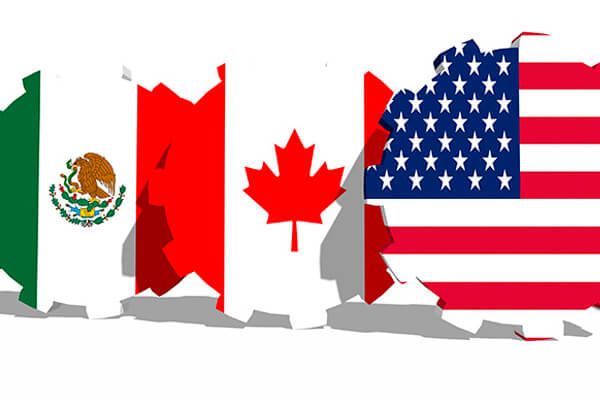
German companies are more upbeat about the business outlook in Mexico than they were a year ago, but more than two-thirds believe that an end to the NAFTA trade deal would hurt their business there, a survey showed on Tuesday. The poll by the German-Mexican chamber of industry and commerce (CAMEXA) showed that more companies planned to invest and increase staffing than they did when surveyed a year ago, shortly after U.S. President Donald Trump’s election victory.

Some 54.6 percent of firms said they would boost staffing levels in 2018, a rise of nearly 10 percentage points from a year earlier. Almost 68 percent said they planned investment in the coming year, an increase of some 6 percentage points. The survey, which was carried out at the end of November, showed that 69 percent of firms believed that a collapse in the North American Free Trade Agreement (NAFTA) would have a negative impact on their business in Mexico. A total of 130 companies took part, CAMEXA said. Trump has repeatedly threatened to withdraw from NAFTA if he cannot rework it to the advantage of the United States. Negotiations between the United States, Mexico and Canada to rework NAFTA have made only halting progress so far, and many major points of disagreement remain with the Trump administration seeking to promote his America First agenda. The three nations have vowed to continue talks to overhaul the almost 24-year-old trade deal through March, when the Mexican 2018 presidential campaign begins in earnest.

german

From Euronews / Dave Graham, Andrew Hay / 5 de Diciembre de 2017

https://nrgibroker.com/wp-content/uploads/2017/12/germanok.jpg 400 600 admin https://nrgibroker.com/wp-content/uploads/2025/12/logo-nrgi.svg admin2026-05-11 19:27:042026-05-11 19:51:13German firms more upbeat on Mexico, wary on NAFTA collapse – survey

Mexico to Discuss Security With U.S. in Parallel to Nafta

en Mercados internacionales

From: Bloomberg / Eric Martin / 11 de Diciembre de 2017


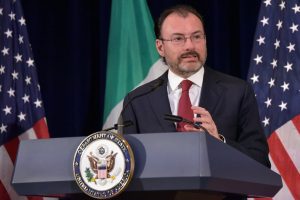
Mexico’s top diplomatic and interior officials will visit Washington this week to discuss security cooperation with their U.S. counterparts at the same time that negotiators work to overhaul Nafta, according to four people familiar with the plans.


The visit by Mexican Foreign Relations Minister Luis Videgaray and Interior Minister Miguel Angel Osorio Chong to meet with Secretary of State Rex Tillerson and Homeland Security Secretary Kirstjen Nielsen on Thursday is a follow-up to meetings in May, according to the people, who asked not to be named before the agenda is made public. It’s aimed at coming up with strategies to combat transnational criminal organizations, the people said. The press office of the Mexican Foreign Ministry and the U.S. State Department declined to immediately comment.


The meetings coincide with a sitdown by negotiators from the U.S., Mexico and Canada to update the North American Free Trade Agreement at the demand of U.S. President Donald Trump, who says the deal is responsible for hundreds of thousands of lost manufacturing jobs in the U.S. In an interview last month, Videgaray said that if the Nafta renegotiation encounters trouble, it could impact other areas of cooperation with the U.S. such as security and immigration. Mexico this year has seen homicides surge to the highest levels of this century, surpassing the previous record levels of the drug war from 2010 to 2012.

“It’s good for Mexico that we cooperate with the U.S. on security and also on migration and many other issues,” Videgaray said in the interview in Vietnam on Nov. 11. “But it’s a fact of life and there is a political reality that a bad outcome on Nafta will have some impact on that,” he said. “We don’t want that to happen, and we’re working hard to get to a good outcome.”

Videgaray told reporters last month that Mexico is prepared for the end of Nafta if it can’t reach a deal with the U.S. and Canada that benefits the nation. The three countries in August began talks to rework the pact after Trump pledged during the 2016 campaign to overhaul or end it.

This Week’s Talks

The latest meetings to revamp Nafta, taking place at the Mayflower Hotel, will run through Friday, largely out of the spotlight. Cabinet-level officials aren’t scheduled to attend for the second time since negotiations began, and the Trump administration is preoccupied with efforts to push through tax cuts by year-end and avoid a government shutdown. Videgaray’s portfolio includes the broad bilateral relationship with the U.S., while a team led by Economy Minister Ildefonso Guajardo has been focused on the commercial details of the Nafta negotiation.

videgaray


From: Bloomberg / Eric Martin / 11 de Diciembre de 2017

https://nrgibroker.com/wp-content/uploads/2017/12/videgaray.jpg 684 1024 admin https://nrgibroker.com/wp-content/uploads/2025/12/logo-nrgi.svg admin2026-05-11 19:27:032026-05-11 19:51:13Mexico to Discuss Security With U.S. in Parallel to Nafta

RBC boss says chances of NAFTA being scrapped are rising

en Mercados internacionales

FROM: Thomson Reuters / 9 de Enero de 2018

TORONTO — Royal Bank of Canada’s Chief Executive Dave McKay said on Tuesday he believes there is now a greater chance that the North American Free Trade Agreement could be scrapped.

“I think the probabilities are increasing that you’ll have some type of dynamic where there is an announcement of a scrapping of NAFTA,” he said at a Canadian Bank CEO conference hosted by RBC in Toronto.

Canadian bankers have expressed concern about the progress of talks to rework the trade agreement and how renegotiations could hamper the ability of clients to do business with customers in the United States and Mexico.

McKay said he agreed with other business leaders and the Canadian government that no deal would be better than a bad deal.

“We don’t want to be stuck long-term with a deal that hurts our economy,” he said.

McKay also said RBC, Canada’s biggest bank by market value, is now spending $3 billion a year developing new technologies. The bank is one of the biggest Canadian investors in technology such as artificial intelligence and blockchain and has increased the proportion of its technology spending on innovation compared with maintaining existing systems.

© Thomson Reuters 2018

royal mc

FROM: Thomson Reuters / 9 de Enero de 2018

https://nrgibroker.com/wp-content/uploads/2018/01/royal-mc.jpg 400 600 admin https://nrgibroker.com/wp-content/uploads/2025/12/logo-nrgi.svg admin2026-05-11 19:27:022026-05-11 19:51:13RBC boss says chances of NAFTA being scrapped are rising

Inicia la Ronda 6 del TLCAN, ¿Qué está en juego?

en Economía

FROM: Expansión MX / Dainzú Patiño / 23 de Enero de 2018


CIUDAD DE MÉXICO (Expansión) – Montreal, Canadá, es el escenario hasta el 29 de enero, para la celebración de la ronda que definirá el futuro de las negociaciones del Tratado de Libre Comercio de América del Norte (TLCAN).

Se prevé que, si existe voluntad política, se puedan cerrar 10 capítulos en los que hay mayores coincidencias, con el objetivo de dar paso a contrapropuestas, análisis y avance en los temas que Estados Unidos ha puesto en la mesa, y México ha rechazado.

México ha mostrado voluntad de ser más flexible en temas en los que inicialmente consideraba inviables incluyendo revisiones periódicas del acuerdo comercial, nuevos mecanismos de solución de disputas comerciales, y aumentos en el contenido regional de las exportaciones de automóviles dentro del TLCAN, refiere un análisis de JPMorgan.

En la cuarta ronda, Estados Unidos propuso terminar cada cinco años con el TLCAN, salvo común acuerdo y revisión de los tres países (cláusula sunset). En la quinta ronda, México propuso que en vez de terminar con el acuerdo, sólo se revisar, bajo el objetivo de actualizar disposiciones a favor de la inversión y el comercio.

Es de esperar que vengan más contrapropuestas de México, con el propósito de destrabar los temas álgidos y avanzar en términos que sean convenientes para los tres países que participan en el Tratado, consideró José Hoyos, socio de Comercio Exterior en Baker McKenzie.

Otra de las propuestas difíciles que planteó Estados Unidos es la de incrementar el contenido regional de los autos armados por los países del TLCAN, de 62.5% a 85%, del cual el 50% sea contenido estadounidense.

Al término de la quinta ronda, Ildefonso Guajardo, secretario de Economía, dijo a la prensa que México trabajaba en “entender la propuesta (de reglas de origen en automotriz), claramente se generará una contrapropuesta de nuestra parte”, sentenció el funcionario.

México puede acceder a subir el contenido a nivel regional en una menor proporción, y de manera paulatina, es decir, que aumente cierto porcentaje año con año. Esto a su vez, en el mediano plazo permitiría el desarrollo de proveedores en México, y mejorar condiciones para la atracción de inversiones, consideró Harry Van Schaick, gerente editorial de Oxford Business Group.

“Proponerlo no será sencillo, porque se debe consultar con la industria nacional, y las de los tres países, buscando el mejor escenario para todos, para toda la cadena de valor, y que no salgan jugadores que ya estén participando. No es algo que pueda resolverse de manera rápida y sencilla”, comentó el socio de Baker McKenzie.

Ante esos temas y otros que Estados Unidos plantee como endurecer las reglas de origen para otros sectores como el electrónico y el textil, el escenario es que el proceso de renegociación no logre concretarse en el primer trimestre de este año como se tiene previsto, explicó Hoyos.

Otra propuesta polémica de Estados Unidos es la eliminación del capítulo 19, el cual establece los procedimientos de defensa ante barreras al comercio por parte de alguno de los integrantes.

México ha rechazado esta propuesta pero está abierto a “modernizar todos los mecanismos de solución de controversias previstos en el TLCAN (inversionista-Estado, Estado-Estado, así como en materia de cuotas antidumping y compensatorias, y servicios financieros) para hacerlos más ágiles, transparentes y eficaces”, refieren los objetivos de México para la renegociación del TLCAN.

Cabe destacar, que la mayoría de los capítulos nuevos, o que se actualizan en el TLCAN se basan en el Acuerdo Estratégico Transpacífico de Cooperación Económica (TPP, por sus siglas en inglés), el cual es un acuerdo de nueva generación, y que llevó cinco años de negociación para que se integrarán México, Estados Unidos y Canadá, pues este existe originalmente con Brunéi, Chile, Nueva Zelanda y Singapur.

No obstante, una de las primeras acciones del gobierno de Donald Trump fue sacar a su país del que sería el tratado de libre comercio más grande del mundo.


FROM: Expansión MX / Dainzú Patiño / 23 de Enero de 2018

https://nrgibroker.com/wp-content/uploads/2018/01/tlcanmc.jpg 400 600 Soporte https://nrgibroker.com/wp-content/uploads/2025/12/logo-nrgi.svg Soporte2026-05-11 19:27:012026-05-11 19:27:01Inicia la Ronda 6 del TLCAN, ¿Qué está en juego?

Killing NAFTA would cost 300,000 American jobs, analysis says

en Mercados internacionales

FROM: CNN Money / Patrick Gillespie / 16 de Enero de 2018

If President Trump tears up NAFTA, you’ll notice the impact. It would cost the United States 300,000 jobs, cut economic growth, hurt stocks and cause prices for consumer goods to rise, according to an analysis.

Oxford Economics, a global consulting firm associated with the English university, published the report a week before the sixth round of talks on NAFTA, the trade agreement between the United States, Mexico and Canada.

The 300,000 jobs would represent a setback of about two months of job growth at the economy’s current pace. About 14 million American jobs depend on trade with Mexico and Canada, according to the U.S. Chamber of Commerce.

If Trump decides to pull out, he has to give six months’ notice. Oxford assumes the job losses won’t come until 2019.

Negotiators from all sides meet next week in Canada to resume NAFTA talks. The first five rounds have yielded no major progress on divisive issues such as how and where cars are manufactured.

Leaders from Canada and Mexico say some Trump administration proposals are dealbreakers. The Trump trade team argues that Canada and Mexico are unwilling to compromise.

Trump has made it clear that if the United States can’t get the deal it wants, he will withdraw from the agreement, which has been law since 1994.

In such a scenario, U.S. economic growth would be slower in 2019 — 1.5%, compared with 2% if NAFTA is left in place, according to Oxford. The Federal Reserve estimates growth this year will be 2.5%.

Business investment growth would also slow because of concerns about protectionist trade measures from the White House, the analysis says.

And Oxford economist Oren Klachkin forecasts that investors would put their money into less risky assets like bonds and ditch stocks, causing the S&P 500 to be 5% lower than it otherwise would be.

To be sure, Canada and Mexico would feel the pain, too.

Oxford estimates that the Mexican peso would drop 8%, which would put it at an all-time low, and the Canadian dollar would decline 2.5%.

The Mexican and Canadian economies rely much more on trade, and could lose a larger share of jobs and investment compared with the United States.

Without a free trade deal, Canada and Mexico would raise their tariffs on American products more than the United States would charge for Mexican or Canadian goods entering America.

Every country has something called «most favored nation» tariffs, established by the World Trade Organization. Developing countries like Mexico are allowed to have higher tariffs than developed countries like the United States to remain competitive.

Oxford’s scenario does not assume that Trump would slap a 35% tariff on Mexican exports, as he threatened during his campaign.

Higher tariffs across the region would cause imports and exports to decline and prices to rise for consumers.

Oxford estimates that the U.S. economy would recover from the NAFTA-related hit by 2020 as businesses adjust to the new reality.

But Mexican leaders warn there would be far-reaching consequences in immigration. They think ending NAFTA would push more Mexicans to seek work illegally in the United States.

It would also be a major rupture in U.S.-Mexican diplomatic relations. It was American leaders who lobbied their Mexican counterparts in the 1990s to sign the agreement in the first place and lower its trade barriers.

The White House did not respond to CNNMoney’s request for comment.


naftamc

FROM: CNN Money / Patrick Gillespie / 16 de Enero de 2018

https://nrgibroker.com/wp-content/uploads/2018/01/naftamc.jpg 400 600 admin https://nrgibroker.com/wp-content/uploads/2025/12/logo-nrgi.svg admin2026-05-11 19:27:012026-05-11 19:27:01Killing NAFTA would cost 300,000 American jobs, analysis says

En 2017: México puso la mira en otros mercados; EU perdió terreno

en Economía

FROM: El Economista / Thamara Martínez Vargas / 5 de Febrero de 2018

El 2017 representó un año de diversificación, en pleno debate por la actualización del Tratado de Libre Comercio de América del Norte y el proteccionismo de Donald Trump para reducir el déficit comercial de su país con México.

Por primera vez en cinco años, las exportaciones no petroleras de México a destinos diferentes de Estados Unidos tuvieron un crecimiento y, en términos anuales, en 2017 representaron un alza de 15.8 por ciento. El 2017 representó un año de diversificación, en pleno debate por la actualización del Tratado de Libre Comercio de América del Norte (TLCAN) y el proteccionismo de Donald Trump para reducir el déficit comercial de su país con México.

Se calcula que México exportó al mundo cerca de 385,881 millones de dólares en mercancías no petroleras —que comprenden lo producido por el sector agropecuario y la industria manufacturera—, 8.7% más que en 2016. Pese a su discurso proteccionista, hacia Estados Unidos se dirigieron aproximadamente 314,618 millones de dólares, 7.2% más que un año antes.

Si restamos a las exportaciones totales las ventas a Estados Unidos, se puede observar que los envíos a otros destinos tomaron fuerza. Al terminar 2017 se exportó una cifra récord de 71,262 millones de dólares al mundo (excluyendo a Estados Unidos), con este monto se expone un incremento de 15.8%, la mayor expansión desde 2011.

Leticia Armenta, directora del centro de análisis económico del ITESM, refirió que, efectivamente, en 2017 se buscaron nuevas oportunidades de mercado, ya que incluso el gobierno federal hizo intensa promoción para este fin, abriendo mercados que no eran tan visibles, por ejemplo el mercado árabe.

“México tiene una canasta amplia de productos de exportación, una parte tiene que ver con el petróleo, que fue el campeón hasta los años 90, pero otra parte muy importante es el sector agropecuario”, dijo Armenta. Desde el agro, hay muchos productos ganadores que antes no se producían, como los frutos rojos o la estevia, que se han impulsado recientemente y que han resultado muy competitivos.

Diversificar destinos
La participación del mercado estadounidense en las exportaciones no petroleras de México se redujo cerca de un punto porcentual en 2017. Al terminar el año, 81.5% de las exportaciones no petroleras de México se dirigieron hacia Estados Unidos.

La participación de mercado de Estados Unidos bajó, pero aumentaron las exportaciones, dijo Valeria Moy, directora de México, ¿Cómo Vamos? “Algo interesante es que a pesar del discurso proteccionista de Estados Unidos y de otros lugares, las exportaciones crecieron y crecieron de forma importante, casi 9.0% en un año donde el proteccionismo se avivó”.

Moy dijo que pese al difícil año en la relación comercial entre ambos países, el comercio, que incluye importaciones y exportaciones, creció. Esto permitió que se exportara más hacia aquel país, aunque como porcentaje del total su participación se redujo, aumentando la participación de lo exportado a mercados como China, Japón o Alemania.

Las cifras más recientes señalan que entre enero y noviembre de 2017 las exportaciones totales con destino al mercado asiático crecieron al mayor ritmo en seis años, con un alza de 21.7 por ciento. Del monto total exportado en estos 11 meses, el continente asiático concentró 5.4% de las exportaciones de mercancías mexicanas.

“Se tiene que hacer un esfuerzo por diversificar, creo que vale la pena mantener una campaña y una visión de apertura, mantener una posición de México como un país abierto al comercio y abierto al mundo. Eso me parece una cuestión fundamental, sin que se nos olvide que el mercado más grande del mundo está al lado y es al que ya estamos conectados”, dijo Moy.

Armenta coincidió en que más allá de cómo queden las negociaciones del TLCAN, las cadenas productivas que ya están muy consolidadas difícilmente se van a deshacer en el corto plazo, por lo que van a ser una base de comercio en los próximos años.


FROM: El Economista / Thamara Martínez Vargas / 5 de Febrero de 2018

https://nrgibroker.com/wp-content/uploads/2018/02/MEXICO-OK.jpg 420 770 Soporte https://nrgibroker.com/wp-content/uploads/2025/12/logo-nrgi.svg Soporte2026-05-11 19:27:002026-05-11 19:27:00En 2017: México puso la mira en otros mercados; EU perdió terreno

Pese a T-MEC, México debe diversificar mercados: Comce

en Economía

El Economista/ Patricia Romo / 23 Octubre


El país debe aprovechar también otros acuerdos comerciales, como el TPP 11: Diez Morodo.

Guadalajara, Jal. Pese a haber alcanzado un nuevo acuerdo comercial con Estados Unidos y Canadá (T-MEC), México debe apostar por la diversificación de mercados y aprovechar otros tratados trasnacionales para “no permanecer rezagados en momentos de crecimiento económico”, afirmó el presidente del Consejo Mexicano de Comercio Exterior (Comce), Valentín Diez Morodo.

“No hay que concentrarse en un solo mercado, hay que diversificarse; no puedes estar a expensas, por muy poderoso que sea, como en el caso nuestro con Nafta, no puedes estar en exclusiva”, destacó el también presidente del capítulo México de la Alianza del Pacífico, durante su participación en la XVI México Cumbre de Negocios.

Diez Morodo destacó que, sólo en la Alianza del Pacífico, Colombia, Chile, México y Perú ya consiguieron eliminar todas las barreras arancelarias, mientras que hay 55 países asociados que intentan formar parte del organismo.

“No se trata de afectar a nadie sino que queremos repartir el pastel mejor entre más gente”, sostuvo Diez Morodo al insistir en la necesidad de que México aproveche mejor otros acuerdos comerciales como el TPP 11 y el tratado de libre comercio con la Unión Europea.

Durante el pánel México en el escenario global, Ian Goldin, profesor de la Universidad de Oxford, afirmó que, pese a las políticas proteccionistas de algunos países, no existe en la actualidad un proceso de “desglobalización”; por el contrario, indicó, nunca ha habido un mejor momento para la globalización.

“Esto no se debe a Estados Unidos ni al Reino Unido sino al resto del mundo y, en particular, a Asia que ahora representa 70% del crecimiento global”, sostuvo Goldin, quien advirtió que “los mayores riesgos que cualquiera enfrenta vienen de la reducción de la operación global”.

El experto enfatizó que el crecimiento económico en la actualidad está en Asia y en los mercados emergentes, incluido México. “Es donde debe estar el enfoque; es donde está el crecimiento del mercado, son los estabilizadores de la economía global, porque los mercados emergentes están creciendo al doble de las economías avanzadas. México está ahí, aunque su primera novia sea Estados Unidos, pero debe haber una diversificación y una reorientación”.

En tanto, John Rennie Short, profesor de Geografía y Política Pública de la Universidad de Maryland, Estados Unidos, coincidió en la apuesta de la diversificación de mercados ya que, dijo, Europa se convertirá en un mercado que duplicará el tamaño de Estados Unidos “y lo mismo aplica para América Latina y otros mercados emergentes”.


El Economista/ Patricia Romo / 23 Octubre


https://nrgibroker.com/wp-content/uploads/2018/10/México-debe-diversificar-mercados.jpg 400 600 Soporte https://nrgibroker.com/wp-content/uploads/2025/12/logo-nrgi.svg Soporte2026-05-11 19:24:152026-05-11 19:24:15Pese a T-MEC, México debe diversificar mercados: Comce

Will Mexico’s New President Have An Economic Impact on RGV?

en Mercados internacionales

KVEO / Joanna Guzman / 12 November


MCALLEN, Texas – Mexico’s president-elect, Andres Manuel Lopez Obrador, plans on canceling the construction of a $13 billion airport project in Mexico City. Officials say this will have an economic impact for both the United States and Mexico.

Duncan Wood, Director for Wilson Center-Mexico Institute says, «We’re seeing that the United States has invested very heavily in Mexico over the past 20 years, since the signing of NAFTA. Mexico is investing increasingly north of the border as well. we see integrated production chains that have been created where by factories in the United States depend upon the input counterparts in Mexico and vice-versa.»

With more than 1.5 million Americans living in Mexico, Woods says the U.S. and Mexico share over $2 million in goods traded every hour. Adding the Rio Grande Valley is a part of the Untied States that depends heavily on the trade between the two countries.

Wood says, «In a place like McAllen which is depending so heavily upon Mexican’s coming north to do their shopping, issues like the border, how easily you can get across the border. Issues like public security in northern Mexico, Mexican’s are more willingly to take the journey from let’s say Monterrey into McAllen to do their shopping. Those are issues which really matter and will have a very important economic impact on these communities.”

One-third of the new international airport in Mexico City is already finished. It is estimated the cost to cancel the project is nearly $5 billion. Lopez Obrador says the country has money set aside for. Meanwhile, Woods says the focus right now is on what the future holds.

«We’re trying to work out exactly what the prospects are for the economy, for security; public security in particular, for migration, and of course the energy sector which matters so much down here in McAllen.» says Wood.

Lopez Obrador says the airport project is corrupt and will end ties between economic and political power. Lopez Obrador will take office on December 1.


KVEO / Joanna Guzman / 12 November


https://nrgibroker.com/wp-content/uploads/2018/11/Will-Mexicos-New-President-Have-An-Economic-Impact.png 400 600 Soporte https://nrgibroker.com/wp-content/uploads/2025/12/logo-nrgi.svg Soporte2018-11-13 13:24:552026-05-11 19:51:15Will Mexico’s New President Have An Economic Impact on RGV?

Mexico, Canada play hardball on trade deal over steel tariffs

en Mercados internacionales

Washington Examiner / Sean Higgins / October 26


Juan Carlos Baker, Mexico’s deputy commerce minister, said Friday that his government may not sign the final text of the United States-Mexico-Canada Agreement on trade if the U.S. does not agree to provide exemptions to its tariffs on steel and aluminum.

The Trump administration is balking at that demand, however, as its counter-proposal, a quota system, is getting the cold shoulder from both Mexico and Canada, which is also seeking an exemption from the tariffs.

“We believe we need to solve that issue before the signing takes place,” Baker told reporters in Ottawa. The signing has been tentatively set for the end of November.

It was the toughest threat yet from one of the negotiators over the deal that would replace the North American Free Trade Agreement. Mexico and Canada have lobbied the U.S. to lift exemptions to the tariffs, 25 percent for steel and 10 percent for aluminum, arguing that now that the talks for the USMCA deal are complete, there’s no need to maintain those tariffs.

The U.S. however has resisted providing the exemptions, fearing that doing so would allow China, the main target of the tariffs, to harm the U.S. steel industry.

«The president is reviewing the steel and aluminum tariffs,” said Kelly Craft, U.S. ambassador to Canada, Friday at a forum hosted by the Ontario Chamber of Commerce. «That is not something that is against Canada … It’s just protecting North America from other countries that will be passing raw materials through, and also to protect our steel industry at home.»

The White House initially carved out exceptions for Canada and Mexico to its steel and aluminum tariffs , then revoked them in June as a way to pressure both countries during the talks to replace the North American Free Trade Agreement.

The U.S. has proposed replacing the tariffs with a quota system, similar to what it did for South Korea regarding steel, when in August it allowed a quota of 70 percent of average steel exports to the United States in the years 2015 to 2017. Neither Canada nor Mexico are expressing interest on that, according to an administration official who requested anonymity to discuss ongoing talks. As a consequence, there isn’t much talk going on between the countries to resolve the tariff issue, the official said.

A Canadian government official, speaking anonymously, told the CBC earlier this week, that a quota proposal was a concession that Canada would make. Officials see no reason why they cannot return to status quo on metal imports from before the NAFTA talks. “There is no need for those tariffs to be in place,» Canadian Ambassador David MacNaughton said Friday in Ottawa.

Backers of the administration’s policies say a quota is still the best compromise for all sides. «From a U.S. industry perspective, tariffs are similarly effective to quotas if done right,» said Michael Stumo, chief executive officer of the business-labor Coalition for a Prosperous America. «From Canada’s perspective, they should want quotas rather than tariffs because with a quota, their industry gets the money, but with a tariff, the U.S. government gets the money.»

Critics charge that the systems lead to cronyism. «They empower foreign governments to pick winners and losers by deciding which steel or aluminum companies are allocated part of each country’s quota to export to the United States,» said Bryan Riley, trade policy analyst for the National Taxpayers Union. «That’s one reason quotas may be harder to get rid of than tariffs — they can create a political constituency in foreign countries in support of the quotas.»

Hugo Perezcano Diaz, deputy director of the international law research program at Canada’s Centre for International Governance Innovation and a former NAFTA negotiator, speculates that the quota talk may be leading to an alternate solution, a closed three-country market. «Canada has already adopted a safeguard against imports of steel products from the rest of the world, including Mexico,» he said. «If Mexico were to do something similar and the three countries close the North American market, the U.S. may feel sufficiently protected to eliminate the tariffs.»


Washington Examiner / Sean Higgins / October 26


https://nrgibroker.com/wp-content/uploads/2018/10/Mexico-Canada-play-hardball.png 400 600 Soporte https://nrgibroker.com/wp-content/uploads/2025/12/logo-nrgi.svg Soporte2018-10-30 17:32:182026-05-11 19:51:15Mexico, Canada play hardball on trade deal over steel tariffs

How President Trump’s Trade Deals Could Lift the US Economy

en Mercados internacionales

Market Realist / Mark O’Hara / October 8

Trade deals

President Donald Trump has long lashed out against existing trade deals, calling them unfair to the United States. The Trump administration has been working to renegotiate several trade deals, and the focus has been on reducing the country’s massive trade deficit by moving its manufacturing onshore.

UMSCA

The Trump administration has used tariffs as well as tariff threats to obtain trade concessions. Less than halfway into his presidential term, Trump has renegotiated NAFTA and KORUS FTA (the United States–Korea Free Trade Agreement).

Under the new NAFTA—renamed USMCA (the United States–Mexico–Canada Agreement)—the United States is expected to gain access to Canada’s historically protected dairy industry. It also calls for more regional content in automotive manufacturing.

Under the new KORUS terms, South Korea relaxed the norms for automotive imports from the United States. It also agreed to a quota to obtain long-term exemptions from the Section 232 steel tariffs in the United States (QQQ).

Section 232 tariffs

Trump’s trade rhetoric has received support as well as opposition. Retail and tech giants such as Walmart (WMT), Alphabet (GOOG), Apple (AAPL), and Amazon (AMZN) are lobbying against these tariffs. However, the new trade deals have allowed the Trump administration to obtain incremental benefits that are expected to support US jobs. We’ve seen plant restarts in the US steel and aluminum industry after the Section 232 tariffs were implemented.


Market Realist / Mark O’Hara / October 8


https://nrgibroker.com/wp-content/uploads/2018/10/President-Trump’s-Trade-Deals.png 400 600 Soporte https://nrgibroker.com/wp-content/uploads/2025/12/logo-nrgi.svg Soporte2018-10-10 13:59:142026-05-11 19:51:16How President Trump’s Trade Deals Could Lift the US Economy
Página 1 de 3123

Buscador

Search Search

Categorías

  • Mexicanas Mujeres (14)
  • Mujeres (14)
  • Mujeres Exitosas (15)

Entradas Recientes

  • Rompiendo Barreras. Construyendo el Futuro
  • El Poder Femenino de la Perspicacia en el Mundo Empresarial Mexicano
  • La Secretaría de Marina reconoce a Graciela Alvarez Hoth en el día Internacional de la Mujer en el Sector Marítimo
  • Graciela Álvarez reconocida como una de las pioneras en la industria energética por la revista Oil and Gas Magazine
  • NRGI Broker Presente en el Congreso Mexicano de Petróleo 2022

NRGI Broker

Somos el enlace entre los riesgos que enfrentan las industrias del sector energético con las soluciones para administrarlos y respaldarlos mediante esquemas confiables de garantías financieras.

Contáctanos

Prolongación Paseo de la Reforma 1015 Torre A Piso 21. Col. Desarrollo Santa Fe, Contadero, C.P. 05348 CDMX, México

Tel: +52 (55) 9177 2100

Horario de Atención

Lunes – Viernes: 7:30-18:00
Contáctanos: [email protected]

© Copyright - NRGI Broker | Aviso de Privacidad | Términos y condiciones
  • Link to Facebook
  • Link to X
  • Link to LinkedIn
  • Link to Youtube
Desplazarse hacia arriba Desplazarse hacia arriba Desplazarse hacia arriba