• Link to Facebook
  • Link to X
  • Link to LinkedIn
  • Link to Youtube
  • Inicio
  • NOSOTROS
  • SECTORES
    • ENERGÍA
      • Eléctrico
      • Petróleo y Gas
      • Renovables
    • Marítimo
    • INFRAESTRUCTURA
      • Puertos
      • Ductos
      • Carreteras
      • Edificios
      • Vías Férreas
      • Terminales de almacenamiento
  • SEGUROS
    • EMPRESAS
      • RESPONSABILIDAD CIVIL
        • Responsabilidad Ambiental
        • Responsabilidad Civil
        • Responsabilidad Civil Profesional
      • MARÍTIMO
        • Puertos y Terminales
        • Responsabilidad Civil Portuaria
        • Casco y P&I
        • Carga
        • Responsabilidad Civil del Fletador
      • DAÑOS
        • Daño Material
        • Múltiple Empresarial
        • Pérdida de Beneficios
      • CONSTRUCCIÓN
        • Construcción y Montaje
        • Obra Civil Terminada
      • MAQUINARIA Y EQUIPO
        • Equipo de Contratistas
      • EXPLORACIÓN Y EXTRACCIÓN
        • Control de Pozos
      • Aviación y Drones
      • Transporte
    • PERSONAS / BENEFICIOS
      • Vida Colectivo
      • Gastos Médicos Mayores Colectivo
      • Accidentes Personales
    • Hogar
    • AUTOS
      • Flotillas Autos y Camiones
      • Autos, Pickups y Camiones individuales
    • LINEAS FINANCIERAS
      • Cyber
      • Errores y Omisiones (E&O)
      • Directores D&O
      • Crime
  • FIANZAS
    • Licitación
    • Anticipo
    • Cumplimiento
    • Buena Calidad
    • Contingencias Laborales
    • Arrendamiento
    • Fiscales
    • Daños y Perjuicios
    • Fidelidad
    • Suministro Combustibles
    • Aduanales
  • BLOG
  • Noticias
  • CONTACTO
  • Click to open the search input field Click to open the search input field Buscar
  • Menú Menú

Listado de la etiqueta: NAFTA

AGRICULTURE, ECONOMY, GDP, INTERNATIONAL TRADE, TRADE WARS Last week in economy: Indian rupee slides while US dollar stabilizes after Trump secures Mexico trade deal

en Mercados internacionales

Qrius / Pavas Gupta / September 3


Last week heralded further woes for the Indian economy as the rupee touched its lowest-ever-level of 71 against the dollar. At the same time, GDP forecasts stood at an all-time-high of 8.2% in 2018-19’s Q1. On the other side of the world, the US and China agreed to overhaul the NAFTA deal, bringing relief to the dollar. Read on to know more about what’s been up in the economy, outside and at home:

Indian Rupee slides to record-low at 71 against the greenback

On Friday, the rupee hit an all-time-low at 71 against the US dollar. The primary reason identified behind the drastic drop is persistent demand for the dollar amid rising crude oil prices. This is further reinforced by weak exchange rates of almost all Asian peers of the rupee. Per Forex dealers, the dollar’s strength against its rival currencies on expectations of rising interest rates amid lingering Sino-US trade tensions also weighed on the Indian fiat. To add to all these factors is the growing fear about rising inflation and consistent outflow of foreign funds from the domestic equity market.

“[The] Indian rupee has depreciated around 11 per cent year to date. Higher crude oil prices, demand from defence and oil marketing firms have contributed to the latest bout of weakness. Rupee was overvalued on trade weighted real effective exchange rate. Robust FDI flows in e-commerce companies, healthy forex reserves may limit the downside of the rupee”, said VK Sharma, Head Private Client Group & Capital Market Strategy, HDFC Securities.

US dollar steady post US-Mexico agreement to overhaul trade deal

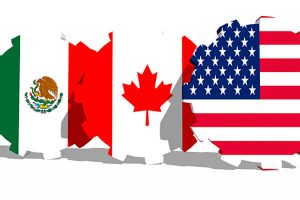
After the United States and Mexico agreed to overhaul the North American Free Trade Agreement (NAFTA), volatility in the dollar cooled down; the currency is now steady against the euro and a basket of other major currencies. The overhauling of the deal brought optimism amidst global trade tensions.

The agreement to overhaul NAFTA exerted pressure on Canada to consent to new terms with the aim of preserving a three-nation pact.

“[The deal] would be positive for the Canadian dollar, Mexican peso, these currencies that have been sold on the back of higher trade tensions,”, said Shusuke Yamada, currency and equity strategist at Bank of America Merrill Lynch in Tokyo. “Overall, that would be negative for the Japanese yen and the US dollar. That’s positive for the risk assets in general,” he added.

On Tuesday, following two sessions of losses, the dollar index, which gauges the fiat’s performance against six other currencies, fell nearly flat. Later, it edged 0.05% higher to 94.834, making up for the earlier losses.

Ever since it hit a high on August 15, the dollar has fallen more than 2%. This comes amidst US President Trump’s criticism of the Federal Reserve for raising interest rates while the US government attempted to boost the economy.

India poised to become world’s fifth-largest economy in 2019

Finance Minister Arun Jaitley, on Thursday, said that India is expected to outstrip Britain to don the title of the world’s fifth-largest economy in 2019.

“This year, in terms of size, we have overtaken France. Next year we are likely to overtake Britain. Therefore, we will be the fifth largest [economy],” he asserted. Further, he said that the other economies of the world were growing at a much slower rate, adding that India had the potential to rank among the top three economies of the world within a span of 10-20 years.

India’s GDP growth at 8.2% in Q1 of 2018-19

In the first quarter of the 2018-19 fiscal year, ending June 30, India’s economy performed at an impressive rate of 8.2%. This marks India’s highest growth rate since the first quarter of 2016. Gross Domestic Product (GDP) growth was backed by a strong core performance and a healthy base.

These growth figures will be factored in by the monetary policy committee at its next review, which is scheduled for October 3-5.

The sectors of the economy that registered a growth of over 7% include ‘manufacturing, electricity, gas, water supply and other utility services’, ‘construction’, and ‘public administration, defence and other services’.

Foodgrain output to reach new heights in 2017-18

Foodgrain production in India is expected to grown to an all-time-high of 284.83 million tonnes in the 2017-18 crop year, which ended in June. According to the Agriculture Ministry, this burst in output is fuelled by record production of wheat, rice, coarse cereals and pulses after a normal monsoon cycle.

The previous record was pegged at 275.11 million tonnes, in the 2016-17 crop year.

In the Ministry’s fourth advance estimate released on Tuesday, it revised, in the upward direction, the total foodgrain production by 5.3 million tonnes from the earlier projection of 279.51 million tonnes for the current crop year.

“As a result of near normal rainfall during monsoon 2017 and various policy initiatives taken by the government, the country has witnessed record foodgrain production in 2017-18,” the ministry said in a statement.


Qrius / Pavas Gupta / September 3

 

https://nrgibroker.com/wp-content/uploads/2018/09/AGRICULTURE-ECONOMY-GDP-INTERNATIONAL-TRADE-TRADE-WARS-Last-week-in-economy-Indian-rupee-slides-while-US-dollar-stabilizes-after-Trump-secures-Mexico-trade-deal.png 400 600 Soporte https://nrgibroker.com/wp-content/uploads/2025/12/logo-nrgi.svg Soporte2018-09-04 16:05:072026-05-11 19:51:17AGRICULTURE, ECONOMY, GDP, INTERNATIONAL TRADE, TRADE WARS Last week in economy: Indian rupee slides while US dollar stabilizes after Trump secures Mexico trade deal

Oil industry encouraged by Trump’s trade deal with Mexico

en Mercados internacionales, Reforma energética de México
Washington Examiner/ John Siciliano / August 27


President Trump’s announcement with Mexico on Monday is being taken as an encouraging sign by the U.S. oil and natural gas industry.

“We are encouraged that negotiators have reached a preliminary agreement to modernize our trade relationships,” said Mike Sommers, the new president and CEO of the American Petroleum Institute, the oil industry’s top lobbyist in Washington.

“America’s natural gas and oil industry depends on trade to continue to grow U.S. jobs and our economy, and deliver for consumers,” he added.

Trump announced Monday morning that progress had been made toward a deal with Mexico on renegotiating the North American Free Trade Agreement. Negotiations with Canada, the final piece in the agreement, are still ongoing.

Trump called it a «big day for trade» and the nation in an Oval Office announcement in which he teleconferenced with outgoing Mexican President Enrique Pena Nieto.

Energy has been a key aspect of the negotiations on a revamped version of NAFTA. However, no announcement on energy trade was made on Monday. The agreement with Mexico centered on ensuring that a higher percentage of automobiles sold in North America are made with parts produced on the continent.

Negotiations on an update to the free trade agreement had stalled in recent months amid disagreements over, among other things, provisions related to the automotive and energy industries. U.S. and Mexican negotiators, however, had made breakthroughs on those issues ahead of Monday’s announcement.

Jesus Seade, the incoming Mexican government’s chief NAFTA negotiator, said Sunday the energy issues have been “ironed out,” without going into detail, Reuters reported.

Mexico has become a large importer of U.S. natural gas and oil in recent years. Energy Secretary Rick Perry had visited Mexico ahead of Monday’s announcement. He was there to discuss «how the U.S. and Mexico can continue to work together to make North America a world-wide leader in energy production and exports,» Perry said last week in a tweet.


Washington Examiner/ John Siciliano / August 27


https://nrgibroker.com/wp-content/uploads/2018/08/Oil-industry-encouraged-by-Trumps-trade-deal-with-Mexico.png 400 600 Soporte https://nrgibroker.com/wp-content/uploads/2025/12/logo-nrgi.svg Soporte2018-08-28 13:17:152026-05-11 19:51:17Oil industry encouraged by Trump’s trade deal with Mexico

Trump deal with Mexico eases fears of trade wars, offers template to end other conflicts

en Mercados internacionales

Market Watch / Jeffry Barthash / August 27


That sound of ice thawing? It’s the Trump administration’s tentative deal with Mexico to rewrite the controversial Nafta free-trade pact, the first clear evidence the White House is willing to compromise on its hardline demands and avert ruinous trade wars.

News of the deal sent U.S. markets surging Monday. The Nasdaq Composite IndexCOMP, +0.17%  topped 8,000 points and the S&P 500 SPX, +0.06%  index almost hit 2,900, both touching record highs. The Dow Jones Industrial AverageDJIA, +0.15%   jumped nearly 260 points to surpass 26,000.

Details of the pending agreement are sketchy for now. Senior White House officials suggested the new pact would result in more new cars and trucks being made in the U.S. using steel and other materials produced in North America. That was one of President Donald Trump’s chief goals.

Other key provisions could lead to higher wages for Mexican auto workers and even give them greater rights to unionize, moves meant to reduce the incentive for U.S. automakers to shift operations south of the border due to lower labor costs.

The new agreement also puts greater emphasis on crafting rules to govern the “digital economy” and protect copyrights and intellectual-property rights, areas in which the U.S. is a global leader.

“I think this is an extremely historic time,” said Robert Lighthizer, the chief U.S. trade negotiator, in a call with reporters. “We had a Nafta agreement that got seriously out of whack … and needed modern updating.”

A deal is far from done, of course. Canada is the third country that was party to the original North American Free Trade Agreement signed in 1994, but negotiations have been at a standstill. The White House hopes Canada will now rejoin the talks and quickly join with the U.S. and Mexico to ratify a successor agreement to Nafta.

“We hope that Canada can join in now,” Lighthizer told reporters Monday. Talks are expected to resume soon, and at this point, it’s unlikely that any Nafta successor would be voted upon until the next Congress convenes in early 2019.

The Canadians and no doubt the Europeans and Chinese are likely to comb over the details of the agreement. The U.S. is sure to use the deal with Mexico as a template for negotiations in talks with other countries to update trade rules that Trump has long complained are unfair.

What the Mexico deal also shows, though, is the Trump administration is ready to compromise on some of its toughest demands. The U.S., for instance, dropped its insistence on a hard “sunset” clause that would cause the trade deal to expire after a certain number of years.

“Despite the Trump administration’s intransigence over trade disputes in recent months, it is willing to negotiate in good faith and accept a compromise, which will be welcomed in both China and Europe,” contended Paul Ashworth, chief U.S. economist at Capital Economics.

The new pact calls for the U.S. and Mexico to review an updated North American free-trade deal six years into a 16-year window. The countries could extend the pact another 16 years at any point after that six-year period.

The U.S. also appears to have softened its demand for an end to an arbitration process for determining if a country was violating the trade agreement. Industries in the U.S. mostly support the current process for resolving problems and lobbied the White House to back off.

Yet even if the agreement is not entirely what the White House wanted, the deal with Mexico allows Trump to claim partial victory for his “America First” policy.

What’s more, the deal will go a long way in easing tensions on Wall Street and in Washington that Trump’s tough talk on trade would ignite a conflagration damaging to economies all around the world.

Major industry lobbying group and trade experts were cautiously optimistic after the White House deal.

It’s “a victory for rationality over rhetoric,” said Steve Nelson, a partner at the law firm Dorsey & Whitney and a former state department lawyer.


Market Watch / Jeffry Barthash / August 27


https://nrgibroker.com/wp-content/uploads/2018/08/Captura-de-pantalla-2018-08-28-a-las-13.06.33.png 399 599 Soporte https://nrgibroker.com/wp-content/uploads/2025/12/logo-nrgi.svg Soporte2018-08-28 13:07:122026-05-11 19:51:17Trump deal with Mexico eases fears of trade wars, offers template to end other conflicts

US putting ‘final details’ into Mexico trade deal, Trump economic adviser says

en Mercados internacionales

Fox Business / Julia Limitone / August 13


Kevin Hassett on trade negotiations with Mexico

White House Council of Economic Advisers Chairman Kevin Hassett on the Trump administration’s efforts to renegotiate U.S. trade deals.

Days after President Trump touted trade negotiations with Mexico – White House Council of Economic Advisers Chairman Kevin Hassett said on Monday negotiators from the U.S. and Mexico are “very, very close” to a deal on the North American Free Trade Agreement.

“The team has been working overtime, late nights, going through what I would almost characterize as the final details,” he told “Mornings with Maria.”

While Hassett stayed tight-lipped on details, Trump tweeted on Friday that a deal with the U.S.’ third-largest trading partner – after China and Canada – is “coming along nicely” and any deal must take care of autoworkers and farmers.

“You should stay tuned because right now it’s closer than it’s been since I’ve been here,” Hassett, a former resident scholar at the American Enterprise Institute who was appointed as Trump’s chief economist in early 2017, added.

Fox Business / Julia Limitone / August 13

https://nrgibroker.com/wp-content/uploads/2018/08/sdsac.png 400 600 Soporte https://nrgibroker.com/wp-content/uploads/2025/12/logo-nrgi.svg Soporte2018-08-14 13:36:442026-05-11 19:51:18US putting ‘final details’ into Mexico trade deal, Trump economic adviser says

Trump and Mexico’s New Leader, Both Headstrong, Begin With a ‘Good Conversation’

en Mercados internacionales

The New York Times / Michael D. Shear and Ana Swanson / July 2


WASHINGTON — President Trump reached out to Mexico’s new populist president-elect on Monday in an early, but potentially short-lived, show of détente, saying the two leaders engaged in a “good conversation” about border security and the North American Free Trade Agreement.

The two countries remain locked in a heated dispute over the fraught issues of immigration and trade, areas that may face difficult complications from the election of Andrés Manuel López Obrador, a leader known for being as strong-headed and nationalist-minded as Mr. Trump — and just as willing to engage in a public clash of ideas.

Mr. López Obrador, who has said Mexico will not be a “piñata” for foreign governments, has said he will stand up to Mr. Trump to protect his country’s interests. And he may find himself under pressure by an electorate that, weary of Mr. Trump’s hectoring and disparaging comments about Mexico, will demand that he cede no ground, leaving little room to manage the relationship.

“There are going to be so many opportunities for this to go wrong,” said Duncan Wood, the director of the Wilson Center’s Mexico Institute. “If there are too many provocations, if there are too many insults against Mexico, López Obrador will not be able to just sit back and take it. His character shows that he will respond, and that could lead us down a dark path.”

Relations between Mexico and the United States are already tense, particularly over trade and the future of Nafta, which has enabled companies to create critical supply chains across North America. Talks to revise the trade pact among Mexico, the United States and Canada have stalled over dramatic changes proposed by the Trump administration, including altering protections for investors and rules for manufacturing automobiles in North America.

Mr. López Obrador has been a longtime critic of the 1994 trade pact and has given no indiction he will be more willing to accommodate Mr. Trump’s demands than the current Mexican government. Among other things, Mr. López Obrador has blamed Nafta for triggering an influx of grain from the United States that ultimately forced Mexican farmers off their land.

But Mr. López Obrador has pledged to continue to renegotiate Nafta — a promise that could ultimately put him in the position of defending the trade agreement against the frequent criticisms of Mr. Trump, who has called it the “worst” trade deal in history and blamed Mexico for siphoning off American jobs. Mr. López Obrador’s advisers have said they will start working with the current Nafta negotiators soon to ensure a smooth transition when the new administration takes office on Dec. 1.

The president-elect has also taken a far more critical view than his predecessor of corporations — which have among the most to win or lose with a revised Nafta. He has long criticized the role of multinational corporations in Mexico and once promised to turn the presidential palace into a public park. He has promised to review dozens of outstanding oil and gas exploration contracts for corruption, potentially delaying hundreds of billions of dollars in foreign investment. His election has put the value of the peso and Mexican government bonds on a more volatile path.

During the campaign, Mr. López Obrador and his advisers worked to reassure voters and industry that he would provide continuity for the private sector.

Known as an anti-establishment candidate, Mr. López Obrador is a divisive figure with Mr. Trump’s flare for capturing attention. After a failed bid for the presidency in 2006 against Felipe Calderón, Mr. López Obrador held a faux inauguration ceremony for himself, appointed a shadow cabinet and protested in the middle of the capital for weeks.

Mr. Trump and Mr. López Obrador spoke for 30 minutes Monday morning after the latter ’s landslide victory Sunday night. The call came just hours after Mr. Trump congratulated Mr. López Obrador in a rare, friendly tweet that said: “I look very much forward to working with him.”

The incoming Mexican president in turn pledged never to “disrespect” the United States government. In a tweet of his own, Mr. López Obrador said there was “respectful treatment” on the call.

Any period of gracious talk may be short lived, however, with Mr. Trump almost certain to continue his tirade about the 2,000-mile border with Mexico, and Mr. López Obrador virtually guaranteed to fire back in ways that his predecessors did not.

Mr. López Obrador “has committed to a louder, more combative posture with the U.S.,” said Carlos M. Gutiérrez, the former secretary of commerce under President George W. Bush. “He’s getting ready to take it up a notch.”

Mr. Trump campaigned for the presidency by demanding a wall across the southern border and suggesting that people being “sent” from Mexico into the United States are “bringing drugs. They’re bringing crime. They’re rapists.”

More recently, Mr. Trump has escalated his language against Mexico, accusing Democrats in a tweet of wanting “illegal immigrants, no matter how bad they may be, to pour into and infest our Country, like MS-13.”


The New York Times / Michael D. Shear and Ana Swanson / July 2


https://nrgibroker.com/wp-content/uploads/2018/04/EST13133484c784908_0.jpg 617 980 Soporte https://nrgibroker.com/wp-content/uploads/2025/12/logo-nrgi.svg Soporte2018-07-03 16:24:142026-05-11 19:51:20Trump and Mexico’s New Leader, Both Headstrong, Begin With a ‘Good Conversation’

NAFTA negotiations: Mixed feelings for US companies on Mexican border

en Mercados internacionales

America CGTN / Steve Mort / June 18


The U.S., Canada, and Mexico say talks on the North American Free Trade Agreement (NAFTA) will press ahead despite Washington’s steel and aluminum tariffs. But recent tensions between the U.S. and Canada are casting doubt on whether a deal is possible.

At Allen Russell’s warehouse in the border city of El Paso, materials are processed for shipment to factories in Mexico. His company depends on those shipments being tariff-free under NAFTA, so he rejects President Trump’s claim that the trade deal is the worst ever made.

“It is not the worst trade deal. It has done more for North America than could even have anticipated.”

Russell’s business provides U.S. corporations with manufacturing facilities employing around 8,000 people in Mexico, where labor costs are lower. He fears that without NAFTA, his cost of doing business will rise.

“The American consumer is going to pay the bill,” according to Russell. “The product is just going to be more expensive. It doesn’t mean anybody is going to move from Mexico to the US to produce the product.”

The US-Mexico border region is one of the largest in the world. Its population exceeds 2.5 million, with an economy to match. Mexico is Texas’ largest export market, with cross-border trade worth hundreds of billions annually.

More than 1/5 of that trade crosses the border in El Paso.

Thomas Fullerton, a professor at the University of Texas at El Paso, studies the region’s economy and the potential impact should NAFTA talks fail.

“It will throw a monkey wrench into how things operate rather seamlessly at this point,” he explained. “Existing operations will probably remain in place, but the level of investment and business formation will plummet.”

But not everyone is so sure. Nicole Grado’s company sells packaging. Up to 90 percent of her customers ship internationally. She’s looking for ways to diversify her business and says she’s confident other US companies could thrive without NAFTA.

“There would be changes, but I think it’s like everything: you adjust to those changes and you adapt,” the CEO said. “You figure out ways to continue moving forward.”

While the outcome of the NAFTA talks remains far from certain, business on the border continues. El Paso’s economy is projected to grow two percent in 2018.

But most here hope a long-term deal can be reached soon, to avoid the lingering uncertainty hanging over this region’s economy.


America CGTN / Steve Mort / June 18


https://nrgibroker.com/wp-content/uploads/2018/06/shutterstock_394500997-e1529435504896.jpg 400 600 Soporte https://nrgibroker.com/wp-content/uploads/2025/12/logo-nrgi.svg Soporte2018-06-19 14:12:002026-05-11 19:51:20NAFTA negotiations: Mixed feelings for US companies on Mexican border

Mexico’s central bank chief sees risk from protectionism to economy: paper

en Mercados internacionales

Reuters / Reuters Staff / june 4


MEXICO CITY (Reuters) – Protectionist trade measures could hit Mexican economic growth and inflation, Mexico’s central bank governor said in comments published by newspaper Reforma on Monday, in the wake of U.S. import tariffs on Mexico, Canada and the European Union.


Mexico now faces new tariffs of 25 percent on steel and 10 percent on aluminum after temporary exemptions expired, prompting Latin America’s second biggest economy to slap tariffs on U.S. products such as pork and cheeses.


“It’s an element of risk, the fact that protectionist measures are beginning to spread and that it generates a less favorable environment for international trade,” Mexico Central Bank Governor Alejandro Diaz de Leon said.

“The fact of this risk – which is already materializing in some actions against international trade – is an element of worry due to its influence on the side of growth and on the side of inflation,” he added.

The flurry of tariff hikes come as talks drag on among Mexico, Canada and the United States to overhaul the North American Free Trade Agreement (NAFTA).


Reuters / Reuters Staff / june 4


https://nrgibroker.com/wp-content/uploads/2015/10/shutterstock_287278118-e1458170355684.jpg 400 600 Soporte https://nrgibroker.com/wp-content/uploads/2025/12/logo-nrgi.svg Soporte2018-06-05 16:48:162026-05-11 19:51:21Mexico’s central bank chief sees risk from protectionism to economy: paper

Canada’s Freeland to visit Washington this week for NAFTA talks

en Mercados internacionales

Reuters / Reuters Staff / May 28


OTTAWA (Reuters) – Canada’s Foreign Minister Chrystia Freeland will go to Washington on Tuesday to meet with the U.S. trade chief, officials said on Monday, as officials press for a deal on reworking the North American Free Trade Agreement (NAFTA).

Freeland will be in Washington on Tuesday and Wednesday, said her spokesman Adam Austen. The United States, Mexico and Canada have spent months struggling to settle deep differences over what a new NAFTA should look like.

“We’ve said all along we are ready to go (to Washington) at any time,” Austen said by phone, but declined to comment when asked about the chances of the three nations sealing a deal.

A spokesman for U.S. Trade Representative Robert Lighthizer said Freeland would meet the U.S. trade chief on Tuesday, but did not give details of the meeting. A Canadian official said that NAFTA would be on the agenda during the talks.

Mexican Economy Minister Ildefonso Guajardo said last week there was about a 40-percent chance of concluding the NAFTA talks before Mexico’s July 1 presidential election.

Guajardo will not be at the Tuesday meeting in Washington.

The Mexican minister’s office said that he and his deputy Juan Carlos Baker would be in Paris through Thursday for high level meetings of the Organization for Economic Co-operation and Development (OECD) and the World Trade Organization.

Earlier, the European Commission said Lighthizer and U.S. Commerce Secretary Wilbur Ross are scheduled to be in Paris on Wednesday for meetings with Europe’s top trade official on the sidelines of the OECD event.

Meanwhile, the Mexican economy ministry said Guajardo and Baker would be holding bilateral talks with ministers from Mexico’s top trade partners while in Paris. The United States is easily Mexico’s most important trading partner.

Guajardo and Freeland have held several rounds of talks with Lighthizer, who says he wants a quick deal to avoid the talks overlapping with election campaigning in Mexico.

The negotiations are moving slowly as Mexico and Canada try to grapple with U.S. demands to impose tougher minimum content requirements for autos built in the region, along with several other contentious proposals.


Reuters / Reuters Staff / May 28


https://nrgibroker.com/wp-content/uploads/2018/05/UsCanada.jpeg 395 599 Soporte https://nrgibroker.com/wp-content/uploads/2025/12/logo-nrgi.svg Soporte2018-05-29 16:50:482026-05-11 19:51:21Canada’s Freeland to visit Washington this week for NAFTA talks

NAFTA negotiations enter critical week with the U.S. still pushing a hard line

en

From: Financial Post / Thomson Reuters / Veronica Gomez and Anthony Esposito / May 7


Sources close to the talks have suggested there is a creeping feeling of uncertainty and pessimism because of gridlock on the most critical issues

WASHINGTON — Talks to update the NAFTA trade deal enter a make-or-break week on Monday, as ministers from Canada, the United States and Mexico seek to resolve an impasse in key areas before elections in Mexico and the United States complicate the process.

Discussions in Washington will center on rules of origin that govern what percentage of a car needs to be built in the North American Free Trade Agreement region to avoid tariffs, the dispute-resolution mechanism and U.S. demands for a sunset clause that could automatically kill the trade deal after five years.

U.S. Trade Representative Robert Lighthizer warned last week that if the talks took too long, approval by the Republican-controlled Congress may be on “thin ice.” The aim is to complete a vote during the “lame-duck” period before a new Congress is seated after November’s congressional elections.

Mexico holds its presidential election on July 1 and the front-runner, leftist Andres Manuel Lopez Obrador, says he wants a hand in redrafting NAFTA if he wins.

“We have a window of opportunity in the next two or three weeks … considering two things: where the talks are now and the political calendars” in Mexico and the United States, said Moises Kalach, head of the international negotiating arm of Mexico’s CCE business lobby, which is leading the private sector’s involvement in the talks.

Sources close to the talks have suggested there is a creeping feeling of uncertainty and pessimism going into the new round because of gridlock on the most critical issues.

At the heart of the NAFTA revamp is U.S. President Donald Trump’s desire to retool rules for the automotive sector in order to try to bring jobs and investment back north from lower-cost Mexico. Despite months of talks on the issue, the sides remain far apart.

A round of talks among Canadian Foreign Minister Chrystia Freeland, Mexican Economy Minister Ildefonso Guajardo and Lighthizer scheduled for last week was cancelled to allow consultations with the Mexican car industry and for the American to go on a trade mission to China.

Mexico’s main auto sector lobby has described the latest U.S. demands, which include raising the North American content to 75 per cent from the current 62.5 per cent over a period of four years for light vehicles, as “not acceptable.”

“The positive momentum on the rules of origin appears to be counterbalanced by the opposite movement on labour wage treatment proposals,” said Flavio Volpe, president of Canada’s Automotive Parts Manufacturers Association.

The U.S. proposal also would require that 40 per cent of the value of light-duty passenger vehicles and 45 per cent for pickup trucks be built in areas with wages of US$16 per hour or higher.

That is seen as a hard pill to swallow for Mexico, where the Ann Arbor, Michigan-based Center for Automotive Research has estimated auto assembly workers average under US$6 an hour, and auto parts plants workers average less than US$3 an hour.

Critics also say it would create a bureaucratic nightmare of paperwork.


From: Financial Post / Thomson Reuters / Veronica Gomez and Anthony Esposito / May 7


https://nrgibroker.com/wp-content/uploads/2018/01/naftamc.jpg 400 600 Soporte https://nrgibroker.com/wp-content/uploads/2025/12/logo-nrgi.svg Soporte2018-05-08 17:53:482026-05-11 19:51:22NAFTA negotiations enter critical week with the U.S. still pushing a hard line

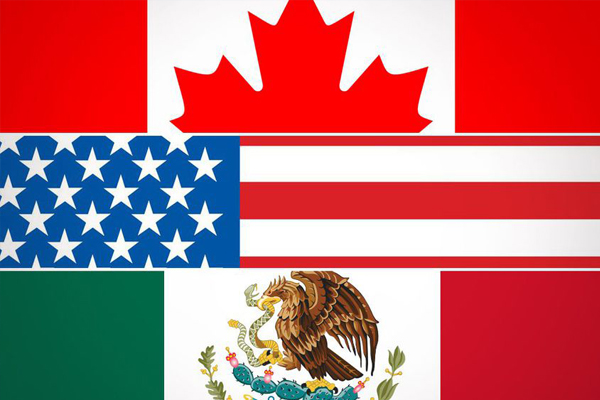
A closer look at round seven of the NAFTA negotiations

en Mercados internacionales

FROM: Lexology / Dentons / 19 de marzo de 2018


Round seven of the NAFTA negotiations concluded in Mexico City on March 5, 2018. The talks ended with United States Trade Representative, Robert Lighthizer, indicating that the US is prepared to walk away from NAFTA and replace it with separate bilateral agreements. He urged the parties to finish the negotiations quickly, «Now our time is running very short…I fear the longer we proceed, the more political headwinds we will feel.»1 Lighthizer alluded to several ‘political headwinds’ that could impact the future of negotiations, including the presidential election in Mexico, provincial elections in Ontario and Quebec, and the US midterm elections.

The talks were impacted midweek by an announcement from President Trump that his Administration would impose tariffs on steel and aluminum imports. The proposed tariff would be 25% for steel imports and 10% for aluminum imports.

The proposed tariff triggered controversy within the Republican Party and the Administration itself. US House Speaker Paul Ryan, backed by a number of Republicans who support the President, has urged President Trump to back away from threats of a tariff, fearing that it could spark a trade war.2 In a letter to the President, 107 House Republicans wrote, «We urge you to reconsider the idea of broad tariffs to avoid unintended consequences to the U.S. economy and its workers.»3 On March 6, Gary Cohn, President Trump’s economic advisor, resigned. Cohn was a voice of free trade in a White House that is ambiguous at best on trade agreements.4

While the tariffs announced by President Trump ultimately excluded Canada and Mexico «for now», the threat of tariffs proposal loomed over the remainder of the negotiations. Reportedly, the proposed tariff was the starting point for many discussions and was often referred to as «the elephant in the room».5 The tariff proposal further impacted negotiations when President Trump linked the tariffs to the NAFTA negotiations. On March 5, he tweeted «Tariffs on Steel and Aluminum will only come off if new & fair NAFTA agreement is signed».6 Canadian Trade Minister Chrystia Freeland responded in her closing remarks by saying «Canada would view any trade restrictions on Canadian steel or aluminum as absolutely unacceptable.»7 Mexican Economy Minister Ildefonso Guajardo responded by tweeting «Mexico shouldn’t be included in steel & aluminum tariffs. It is the wrong way to incentivize the creation of a new and modern #NAFTA».8 On March 7, President Trump announced that he would initially exclude Canada and Mexico from the proposed tariff. However, the exemption could be rescinded if Canada and Mexico do not agree to an updated NAFTA.9

Notwithstanding the short term exemption on steel, supported by the Steelworkers and Speaker Ryan, President Trump again tweeted on March 5 on the Canadian farm system and how Canada «must treat [US] farmers much better.» Thus, US agricultural demands remain on the table, while Canada continues to steadfastly defend its agricultural sector, including the supply management system. Whether and how the negotiators will successfully bridge this issue remains to be seen.

Limited progress was made in other areas, such as the rules of origin provisions. Jason Bernstein, the US negotiator for rules of origin, was called back to Washington on February 26 to consult with US industry representatives, thus halting negotiations. Talks amongst technical experts are scheduled to resume in advance of the next formal round of negotiations. Similarly, investor-state dispute mechanisms and the proposed sunset clause were not emphasized this round.

With respect to energy, we understand there is agreement to include both a standalone chapter on energy as well as energy related sections in other chapters. The standalone chapter, because it will likely include Mexico unlike certain energy provisions in the current NAFTA, will focus on «more interconnectivity across the networks of energy in North America» and will seek to recognize the changes Mexico has made to allow for foreign investment in its energy sector. 10

Negotiators did close a number of smaller chapters, including regulatory practices, sanitary and phytosanitary measures, and telecommunications. Additionally, Steve Verheul, Canada’s chief negotiator, commented that the parties were close to completing sections on technical barriers but required more time on sections regarding the environment.11 While reportedly half of the chapters are between 80-90% settled, Lighthizer commented that only 6 of NAFTA’s 30 chapters have been officially closed.

With respect to the sanitary and phytosanitary chapter that governs food safety, negotiators have settled on a fast-track system that would prioritize requests between the US, Mexico and Canada. This system is a first of its kind in international food safety agreements. Minister Guajardo said the chapter will help facilitate agricultural trade and it «guarantees animal and vegetable sanitation based in science.»12Additionally, sector annexes on proprietary food formulas and chemicals were closed this round. The annex protects the intellectual property of certain mixes and ingredients and allows for more regulatory cooperation for the use of chemicals. 13

The eighth round of NAFTA talks is expected to take place in Washington in April, subject to availability of Ministers who are traveling for other international meetings, including the upcoming Free Trade Area of the Americas summit.14


FROM: Lexology / Dentons / 19 de marzo de 2018

https://nrgibroker.com/wp-content/uploads/2018/03/nafta2mc.jpg 400 600 Soporte https://nrgibroker.com/wp-content/uploads/2025/12/logo-nrgi.svg Soporte2018-03-20 13:26:182026-05-11 19:51:23A closer look at round seven of the NAFTA negotiations
Página 2 de 3123

Buscador

Search Search

Categorías

  • Mexicanas Mujeres (14)
  • Mujeres (14)
  • Mujeres Exitosas (15)

Entradas Recientes

  • Rompiendo Barreras. Construyendo el Futuro
  • El Poder Femenino de la Perspicacia en el Mundo Empresarial Mexicano
  • La Secretaría de Marina reconoce a Graciela Alvarez Hoth en el día Internacional de la Mujer en el Sector Marítimo
  • Graciela Álvarez reconocida como una de las pioneras en la industria energética por la revista Oil and Gas Magazine
  • NRGI Broker Presente en el Congreso Mexicano de Petróleo 2022

NRGI Broker

Somos el enlace entre los riesgos que enfrentan las industrias del sector energético con las soluciones para administrarlos y respaldarlos mediante esquemas confiables de garantías financieras.

Contáctanos

Prolongación Paseo de la Reforma 1015 Torre A Piso 21. Col. Desarrollo Santa Fe, Contadero, C.P. 05348 CDMX, México

Tel: +52 (55) 9177 2100

Horario de Atención

Lunes – Viernes: 7:30-18:00
Contáctanos: [email protected]

© Copyright - NRGI Broker | Aviso de Privacidad | Términos y condiciones
  • Link to Facebook
  • Link to X
  • Link to LinkedIn
  • Link to Youtube
Desplazarse hacia arriba Desplazarse hacia arriba Desplazarse hacia arriba