• Link to Facebook
  • Link to X
  • Link to LinkedIn
  • Link to Youtube
  • Home
  • About us
  • SECTORS
    • ENERGY
      • Electric
      • Oil and Gas
      • Renewables
    • Maritime
    • INFRASTRUCTURE
      • Ports
      • Ducts
      • Roads
      • Buildings
      • Railways
      • Storage terminals
  • INSURANCE
    • CORPORATE
      • LIABILITY
        • Environmental liability
        • Civil liability
        • Professional Civil Liability
      • MARINE
        • Ports and Terminals
        • Port Civil Liability
        • Hull & P&I
        • Marine cargo
        • Charterers Liability Insurance
      • PROPERTY
        • Property Damage
        • Business Package Insurance
        • Business interruption insurance
      • CONSTRUCTION
        • Construction and Erection
        • Completed Civil Works
      • EQUIPMENT & MACHINERY
        • Contractors’ Equipment
      • EXPLORATION & PRODUCTION
        • Control of Well
      • Aviation and drones
      • Cargo
    • EMPLOYEE BENEFITS
      • Group Life
      • Group Major Medical
      • Personal Accident
    • Home
    • FLEET & AUTO
      • Car and Truck Fleet
      • Cars, Pickups, and Individual Trucks
    • FINANCIAL LINES
      • Cyber Risk
      • Errors and Omissions
      • Directors and Officers (D&O)
      • Commercial Crime
  • SURETY BONDS
    • Bid
    • Advance Payment
    • Performance
    • GOOD QUALITY
    • Labor Contingency
    • Lease Guarantee
    • FISCAL-DUTY
    • Damages
    • Fidelity
    • Fuel Supply
    • Customs
  • Blog
  • News
  • Contact
  • Spanish
  • Click to open the search input field Click to open the search input field Search
  • Menu Menu

Tag Archive for: PEMEX

Transparency is Key to Improving the Outlook for Mexico’s Deepwater Block Auction, says GlobalData Analyst

As Mexico’s first offshore bidding round for already discovered fields saw bids significantly higher than the minimum set up by the government, adding further transparency to the process would be positive for the round as it approaches its deepwater phase, according to an analyst with research and consulting firm GlobalData.

Adrian Lara, GlobalData’s Senior Upstream Analyst for the Americas, says that the Mexican government’s announcement of the minimum profit oil worked out well, especially in discovered fields, as opposed to the disappointment surrounding the exploration blocks on offer during the previous phase of Round 1.The minimum for Area 1 of this second phase was established at 34.8% and the bids ranged from 46.7% to 86.7%. GlobalData’s assessments suggest that assuming a price of $60 per barrel, these fields would be profitable with bids of up to 65%. Four of the nine bids were above this threshold, and two were significantly higher.

The size of the winning bid indicates that competition drove bidding higher because the floor was known. The previous phase also involved determining the potential floor for bidding, which could have led to negative bidding strategies designed to minimize outlay.

Lara comments: “So far, the particular design of Round 1 with its phases has functioned well, as it incorporates lessons learned in the previous phase.

“The success of the last phase, for example, was in part due to the failures of the first phase, namely that not disclosing the minimum adds uncertainty to the geological risk and ultimately lowers the incentive to bid high, or even bid at all.”

While GlobalData believes that the most promising deepwater prospects are the three discoveries Trion, Exploratus and Maximino being offered by Pemex as farm-outs, bidding activity in the next deepwater exploration block phase could be positively impacted if at least the framework for the farm-out agreements is released.

Lara explains: “Building on the premise that disclosing the minimum decreased uncertainty and added a degree of transparency to the process, it would be positive for the next phase if CNH provided more transparency on the terms of the farm-outs.

“This would provide a more comprehensive perspective on the final deepwater phase of the Round 1 and finally set an optimistic precedent for future bidding rounds,” the analyst concludes.

Copyright: Global Data

Round 3 MEXICO

https://nrgibroker.com/wp-content/uploads/2015/10/Round-3-MEXICO-.jpg 628 1024 admin https://nrgibroker.com/wp-content/uploads/2025/12/logo-nrgi.svg admin2026-05-11 19:32:022026-05-24 13:04:37Transparency is Key to Improving the Outlook for Mexico’s Deepwater Block Auction, says GlobalData Analyst

Pemex lays out the map for the road ahead

Mexico’s state oil company Pemex has laid out the broad strokes of a new strategy that could dramatically expand its use of partnerships in the Mexican exploration and production sector over the next five years.

The plans open up the possibility of more than 160 new opportunities for private companies over the next two years.

Pemex has already announced plans for the farm-down this year of an interest in the deep-water Trion discovery, and said 2017 would also bring other farm-outs in the shallow-water area of Ayin-Batsil and the onshore areas of Ogarrio and Cardenas-Mora. The company’s latest 2016-2021 business plan also labels 2017 as its target date for partnerships in the extra-heavy oil field of Ayatsil-Tekel-Utsil and the tricky but promising region of Chicontepec, as well as seven more unspecified onshore areas in the northern and southern parts of the country.

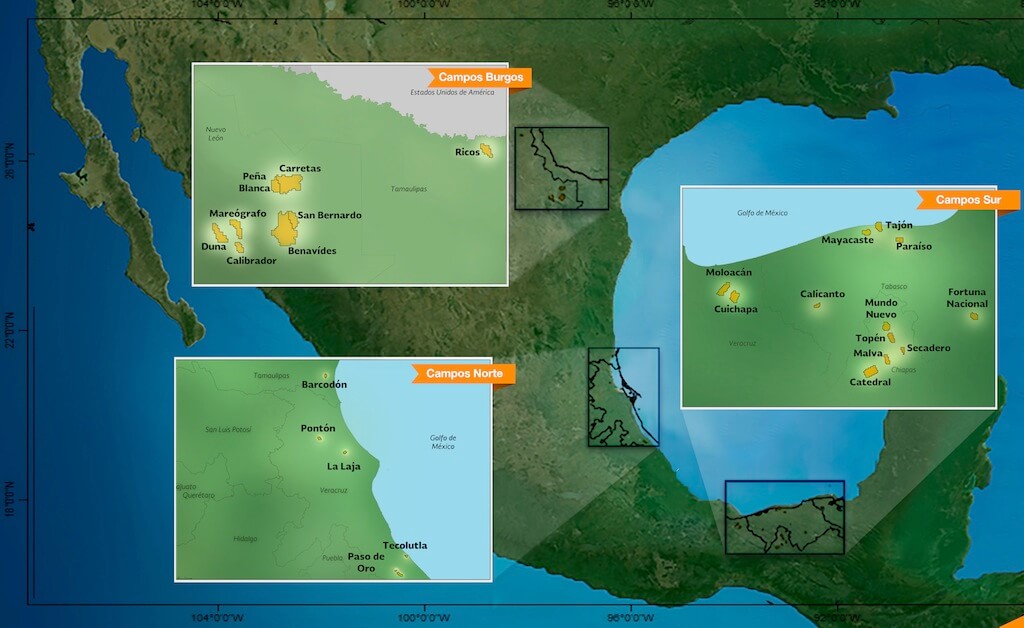
The strategy also sets out ambitious plans for 2018, with six deals proposed for shallow waters in the northern part of the country, 64 onshore agreements in the north and south and 86 natural gas contracts in the Burgos and Veracruz areas.

“Pemex’s business plan is a good roadmap, but short and medium-term challenges remain,” political risk consultancy Eurasia Group wrote in a note. “Operational challenges will remain substantial and many of the projects are likely to face delays.”

Pemex only recently gained the ability to take on operating partners in its projects as part of reforms passed in 2014 to end its nearly 80-year monopoly.

The state-led company has touted its new ability as being crucial to helping make up for its declining production curve and bringing in new technology and best practices.

A small number of farm-outs were announced with the passage of implementing legislation in 2014, but details since then have been scant other than Trion. Industry executives have called for more opportunities.

When it comes to exploration rights, by law Pemex must sign contracts for stakes in its projects via an open public bid round run by Mexican oil regulators, not just by direct negotiations.

Pemex did not provide many details on the projects mentioned, merely offering a list of “business opportunities” as part of its roadmap forward.

The strategy was unveiled as Pemex comes under pressure to show progress and activity on areas assigned in the process known as Round Zero.

That process divvied up what fields the Mexican player could retain following reforms but, without activity, acreage reverts back to regulators.

“The plan is very ambitious but I think it’s rightly so,” said Francisco Monaldi, adjunct professor of political economy of oil at Rice University in Houston, suggesting executives aim to position Pemex to take full advantage of the abilities offered by the energy reform.

Chiefly, Pemex will need to find a “winning formula” that can incentivise new operators to come in, and the process for the deep-water Trion block may end up being a model for that going forward, according to Luis Miguel Labardini, partner at Marcos y Asociados in Mexico City.

Ongoing discussions surrounding that joint operating agreement, with lots of feedback from international oil companies, led to the jettisoning of provisions that could have limited the autonomy of new partners, such as the ability of Pemex to unilaterally remove the new operator despite holding a minority stake in the project.

Some of the areas mentioned, notably the Ayatsil-Tekel-Utsil extra-heavy oil field and the Chicontepec region, also have higher production costs that could make economics difficult if lower oil prices persist.

Experts also acknowledged future political risk. The term of energy reform proponent President Enrique Pena Nieto is up in 2018, and the administration at present stands in a weak position due to multiple corruption scandals and its inability to stem violence from drug cartels.

15 Noviembre_shutterstock_391549441

Copyright: Up Stream

https://nrgibroker.com/wp-content/uploads/2016/11/15-Noviembre_shutterstock_3915494411-e1479165569786.jpg 267 400 admin https://nrgibroker.com/wp-content/uploads/2025/12/logo-nrgi.svg admin2026-05-11 19:29:152026-05-24 13:03:54Pemex lays out the map for the road ahead

Proposed border tax could harm U.S.-Mexico energy trade: official

A border tax floated by aides to U.S. President Donald Trump is “not a good idea” for bilateral energy trade, a senior Mexican official said on Wednesday, also confirming that Mexico’s second-ever deepwater oil auction would happen this year.

A 20 percent border tax on Mexican imports to the United States has been pitched by the Trump administration as one way to force Mexico to pay for a new border wall, a top campaign promise.

Separately, a so-called border adjustment tax has been proposed by the new administration and its Republican allies in Congress that in theory would tax imports but not exports.

Both proposed taxes face opposition from U.S. oil refiners and automakers, among other sectors, warning they would raise consumer prices.

“We don’t see this kind of a tax as a good idea,” said Aldo Flores, Mexico’s deputy energy minister for hydrocarbons.

“Our position continues to be that free trade and the free flow of these goods has benefited both countries, strengthening the energy security of both,” he said.

Relations between the United States and Mexico are especially tense as Trump has threatened to upend nearly a quarter century of free trade, deport millions of illegal immigrants and build his signature border wall while getting Mexico to pay it, something the Mexican government has said it will not do.

For decades, the two neighbors have nurtured a robust cross-border energy trade, with crude oil produced by state company Pemex sold to U.S. refiners, while American producers sell natural gas and fuels like gasoline and diesel to Mexican buyers.

Last year, the total value of U.S. energy exports to Mexico totaled $20.2 billion, while Mexico exported mostly crude oil worth $8.7 billion to the United States, in a reversal of the historic balance of energy trade between the two countries, according to U.S. Energy Information Administration data.

Similarly, Mexico’s crude shipments could be pressured if the United States approves the new Trump-backed permit for TransCanada’s (TRP.TO) proposed Keystone XL pipeline and the project brings new supplies of Canadian heavy crude to U.S. refineries.

“Supposing that (the pipeline) is completed, that changes the competitive playing field for Mexican crude,” said Flores, adding that producers of oil in Mexico would have to be more creative in how they market their output.


DEEPWATER AUCTION

Mexican and Canadian heavy crudes have competed for years for buyers among U.S. Gulf coast refineries.

While Mexico’s oil regulator is planning three new oil auctions later this year, covering shallow water and onshore fields, a new deepwater auction is also planned.

“It will be toward the end of the year,” said Flores, who also sits on the Pemex board and took over as deputy energy minister in August.

He declined to specify where the deepwater blocks would be located.

Flores added that a first-ever auction of shale oil and gas blocks would “probably” be scheduled, noting that necessary regulations would be published before the end of the year.

Last year, Mexico concluded four first-ever oil auctions, part of a landmark energy opening finalized in 2014 that ended Pemex’s decades-long monopoly, including a December deepwater auction that awarded 10 blocks to a wide range of international oil majors.

While Mexican crude output has declined over the past dozen years from a peak of 3.4 million barrels per day, Flores said he expected output to total 1.9 million to 2.0 million bpd in 2018, similar to a forecast of 1.94 million bpd for this year.


3 Octubre_shutterstock_331572071


David Alire Garcia and Adriana Barrera / Reuters

Wed Feb 15, 2017 | 8:09pm EST

https://nrgibroker.com/wp-content/uploads/2016/10/3-Octubre_shutterstock_3315720712-e1475553363960.jpg 267 400 admin https://nrgibroker.com/wp-content/uploads/2025/12/logo-nrgi.svg admin2026-05-11 19:29:082026-05-24 09:13:16Proposed border tax could harm U.S.-Mexico energy trade: official

Pemex Likely to Return Very Small Amount of Fields to State: CEO

By Adam Williams and Lucia Kassai

“Petroleos Mexicanos plans to develop most of the 120 oilfields the government granted the state-owned company, returning “only a very low percentage,” according to the company’s chief executive officer.

The production regions were given to Pemex, as the company is known, when Mexico’s oil industry opened to private competition in 2014. Pemex had three years to invest in the fields or return them to the regulator to be auctioned in future bidding rounds.

As the three-year deadline nears, Pemex is likely to maintain the majority of these fields, Jose Antonio Gonzalez Anaya, the company’s CEO, said in a Bloomberg Television interview from Houston.

“We are trying to make progress to make sure we meet the regulator’s requirements, especially the ones where we know there is oil and where there is production,” he said. “I think we will develop the fields that have been assigned to us.”

Appointed as Pemex’s CEO last year, Gonzalez Anaya’s impact on the company’s ailing financial standing has been immediate. After four years of losses, Pemex yesterday reported first-quarter earnings of 87.9 billion pesos ($4.6 billion).

“The last time we posted a profit the price of oil was $100 per barrel. To post a profitable result when the price of oil is around $40 is important,” Gonzalez Anaya said. “This is no small achievement.”

Production Growth

Pemex, which has seen oil output fall every year since 2004, hopes production will stabilize this year and possibly increase as soon as 2018, he said. In addition to joint ventures planned in onshore, shallow and deep waters fields, Pemex is also looking to “cluster small allocations and small fields so that we can migrate them together,” he said.

The company is counting on a recently implemented oil price hedge — independent of the Mexican government’s hedging program — to give Pemex “some degree of certainty to our investment and to our planning,” Gonzalez Anaya said. Pemex, which hadn’t hedged independently from the government in 11 years, will likely use the tool again next year, he said.

Pemex will also seek additional hydrogen unit joint ventures at its refineries, similar to the partnership signed with Air Liquide SA in February at the Tula refinery, he said.

“This model will be replicated for other refineries, and I think things will run much better,” Gonzalez Anaya said of the additional partnerships planned for refineries.”

4 de mayo de 2017 13:04 GMT-5

Bloomberg

https://nrgibroker.com/wp-content/uploads/2016/06/shutterstock_1601526051-e1465842068653.jpg 267 400 admin https://nrgibroker.com/wp-content/uploads/2025/12/logo-nrgi.svg admin2026-05-11 19:29:012026-05-24 13:53:02Pemex Likely to Return Very Small Amount of Fields to State: CEO

Mexico expects to hold a third oil and gas auction in 2018

From: Reuters.com / OCTOBER 19, 2017 / 2:04 PM / Mariana Parraga

HOUSTON (Reuters) – Mexico’s oil regulator will likely add another auction in 2018 featuring conventional onshore oil and gas blocks, the head of the National Hydrocarbons Commission (CNH) said on Thursday, potentially teeing up a third tender in an election year. The bid terms will be announced later this year or in early 2018 while contracts will likely be awarded by the summer, said Juan Carlos Zepeda on the sidelines of a forum in Houston.  The onshore tender is in addition to a deepwater Gulf auction expected to attract in January some of the world’s biggest producers, as well as a March shallow water auction.
A landmark 2013 constitutional energy reform championed by President Enrique Pena Nieto paved the way for the auctions, in which private firms can bid to operate oil and gas fields on their own. Before the reform, state-owned company Pemex had a monopoly on hydrocarbons production.
Depending on the winner, Mexico’s July 2018 presidential election could alter the pace and scope of future auctions, which are organized and supervised by the CNH, while the energy ministry designs the contracts and sets the schedule.

Zepeda added that so-called non-conventional blocks to produce shale oil and gas are also being analyzed for inclusion in an additional separate auction.
The CNH has run eight oil auctions to date, awarding 72 exploration and production contracts to more than 60 companies. The contracts are seen generating almost $61 billion in investment over their lifetime.

The 64 blocks to be offered in the two upcoming offshore auctions account for more than 65 percent of Mexico’s estimated resources. Along with the January bidding round, Pemex could also find a partner for the promising Nobilis-Maximino deeepwater project close to the U.S. maritime border.

A development plan for another large deepwater project, Trion between Pemex and Australia’s BHP Billiton, has not yet been submitted to the regulator, Zepeda said, but it is expected before year end.

UNITIZATION UNDERWAY
New regulation to establish how operators of two different blocks should produce oil from a single shared reservoir was recently finished by authorities and is now under public consultation, said Aldo Flores, Mexico’s deputy energy minister.

“The final version (of the regulation) should be ready by November,” Flores said.

The well Zama-1 containing over 1 billion barrels of oil in place discovered in July by U.S. firm Talos Energy and its partners in Mexico’s shallow water could extend into a Pemex area, Zepeda said.
“The first unitization case could be Zama, but it has not yet been officially presented (to authorities),” Zepeda said.

The reservoir unitization regulation will establish the need to nominate a single operator to produce oil in shared reservoirs even keeping two separate companies or consortia for each one of the blocks. The energy ministry will have the final word if the parties do not agree on how to develop the field.


From: Reuters.com / OCTOBER 19, 2017 / 2:04 PM / Mariana Parraga

https://nrgibroker.com/wp-content/uploads/2017/09/2.png 400 600 admin https://nrgibroker.com/wp-content/uploads/2025/12/logo-nrgi.svg admin2026-05-11 19:27:092026-06-11 22:33:58Mexico expects to hold a third oil and gas auction in 2018

Risk and insurance management in the transportation, storage, distribution and sale of hydrocarbons and petroleum products

Human activities, in general, are prone to accidents. In industries, the risk can be even greater, given the diverse factors that can trigger an incident.

The hydrocarbon industry is particularly susceptible to accidents, as oil and natural gas are considered hazardous substances due to their potential to cause fires, explosions, or pollution from spills.

Companies are increasingly aware of the importance of implementing risk management programs that allow them to identify, analyze, control, transfer, and monitor the risks to which they are exposed.

In Mexico, companies in the hydrocarbon sector must implement an Industrial Safety, Operational Safety, and Environmental Protection Management System, known by its acronym SASISOPA, which aims to prevent, control, and improve the performance of a facility or group of facilities to mitigate the inherent risks of their activities.

Through the SASISOPA (System for the Prevention of Occupational Risks and Environmental Protection), preventive measures are implemented to minimize the probability of risk materializing. Given that it is technically impossible to eliminate risk, it will always be latent because some events are difficult to predict or control, such as natural disasters or the negligence and/or incompetence of employees or third parties.

It is precisely for these risks that exceed preventive measures that insurance becomes the quintessential financial instrument to avoid losses greater than those resulting from the incident itself, such as: financial damage; non-compliance with clients and suppliers; business interruption; and bankruptcy.

Currently, insurance is recognized as one of the best international practices in industrial safety and environmental protection in the hydrocarbon sector, for repairing damages and absorbing the economic losses that may result from an incident.

Therefore, the regulations stemming from the Energy Reform granted the National Agency for Industrial Safety and Environmental Protection (ASEA) the authority to regulate insurance for activities across the entire hydrocarbon value chain.

The regulations regarding civil liability and environmental liability insurance for the transportation, storage, distribution, and sale of hydrocarbons and petroleum products are forthcoming. Those engaged in these activities will be required to register their insurance policies with ASEA to obtain the corresponding permit from the Energy Regulatory Commission (CRE).

At NRGI Broker, we are experts in risk management and insurance. We served as ASEA’s consultant for the regulations on civil liability and environmental liability insurance for the transportation, storage, distribution, and sale of hydrocarbons and petroleum products, making us the best choice to advise you.

https://nrgibroker.com/wp-content/uploads/2026/04/noticia-foto01.jpg 560 1000 Soporte https://nrgibroker.com/wp-content/uploads/2025/12/logo-nrgi.svg Soporte2026-04-19 19:38:552026-04-21 19:30:12Risk and insurance management in the transportation, storage, distribution and sale of hydrocarbons and petroleum products

Relief On Horizon for Mexico Natural Gas Market, Despite Short-Term Challenges

Natural Gas Intelligence / Andrew Baker / November 12

Mexico’s natural gas market faces multiple short-term challenges, the most urgent of which is a lack of supply to power generators, petrochemical plants, and industrial consumers in the southern and southeastern part of the country, as the state-owned oil and gas producer struggles to increase output.

Amid declining gas output by national oil company Petróleos Mexicanos (Pemex) and delays to critical midstream infrastructure that would bring abundant and inexpensive gas from Texas, consumers in southern Mexico now face the prospect of switching to more expensive fuel oil, diesel and liquid petroleum gas (LPG) in order to continue operating over the coming months.

A lack of Pemex supply and scarce available cross-border pipeline capacity for private sector gas shippers, as well as a dearth of storage capacity, are compounded by the fact that a new government will take over on Dec. 1.

However, relief appears to be on the horizon. The 2.6 Bcf/d Sur de Texas-Tuxpan marine pipeline is expected to enter operation next month or in January, with the Cempoala compressor station reversal project slated to finish in April. Both projects should provide relief to consumers in the south, the energy ministry’s general director of natural gas and petrochemicals, David Rosales, told NGI’s Mexico Gas Price Index.

While details of a planned tender to construct 45 Bcf of underground storage capacity still need to be ironed out, Rosales said the hope is for the new administration to give an order to proceed with the tender by early next year.

“I think it’s very clear for them that this is a [project] that will not cost the state, and will be paid for by the users of the gas system themselves,” Rosales said.

The incoming administration has generated unease among investors with its proposed oil policies, such as a pledge to halt crude exports and to divert Pemex investments from exploration and production to new refineries, but Rosales said a dramatic shift in course on natural gas policy is less likely. An efficiently run gas segment translates directly to cheaper electricity prices for end-users, he noted.

Recent days have also seen progress on other cross-border pipeline projects that should help meet rising demand from the power sector.

San Antonio, TX-based Mirage Energy Corp. last week said it has a memorandum of understanding (MOU) for reserved capacity on its proposed Texas-to-Mexico gas pipeline with commodities trader TrailStone NA Asset Holdings LLC.

The nonbinding MOU would allow TrailStone to purchase 150,000 MMBtu/d (146 MMcf/d) of reserved capacity for 10 years at a fixed tariff from the Banquete/Agua Dulce area in South Texas to Compressor Station 19 and Los Ramones interconnection points on the national pipeline network Sistrangas,” Mirage said. TrailStone is a partner and commercial operator in the recently commissioned Banquete header near Corpus Christi, TX.

The 42-inch diameter, bi-directional pipeline system under development would include nearly 140 miles of pipeline in Texas and about 103 miles of pipeline in Mexico. In addition to the four sections of pipelines in the two countries, Mirage said another interconnect in Falfurrias, TX, also in far South Texas, to Transcontinental Gas Pipe Line (Transco) is being considered, as is a 14-mile pipeline in Mexico known as the Storage Line that would connect the Progreso, TX, on the border to the Brasil storage field in Tamaulipas, Mexico.

Mirage expects to begin final development work on the project in December, “with a view toward receiving required United States and Mexico permits and authorizations in 3Q2019. The company has completed the necessary engineering and design of the pipeline. The alignment for the pipeline has also been substantially completed and Mirage is in the process of securing right-of-way agreements.”

Valley Crossing To Supply CFE Import Capacity

The Mirage news follows the startup of Enbridge Inc.’s Valley Crossing gas pipeline, which spans 168 miles in Texas from the Agua Dulce hub near Corpus to the Gulf of Mexico east of Brownsville.

Valley Crossing’s primary customer is Mexican state power utility Comisión Federal de Electricidad (CFE), which is undertaking a massive shift to combined-cycle gas turbines (CCGT) from fuel oil and diesel-fired power generation capacity. Mexico’s installed CCGT capacity stood at 28,084 MW at the end of 2017, a figure that is expected to double by 2032, according to the Energy Ministry’s 2018-2032 power sector development program.

“Valley Crossing is expected to account for about half of the CFE’s total import capacity,” Enbridge said last week. Transport capacity is “half the average daily production output of the entire Eagle Ford Shale basin — in fact, it’s more than 10% of the average daily production for the entire state of Texas.”

The pipeline is designed to “support Mexico’s growing electricity generation needs, as power companies like the CFE choose natural gas,” which is a “cleaner” burning fuel and more economical than imported liquefied natural gas, the Calgary-based operator said.

“Supply in Mexico continues to decline, but at the same time their demand continues to grow,” said Enbridge Executive Vice-President Bill Yardley. “And the U.S. has some of the most economical, plentiful and reliable natural gas supplies in the world.”

Valley Crossing connects to the Sur de Texas-Tuxpan pipeline, a joint venture of Sempra Energy unit Infraestructura Energética Nova and TransCanada Corp.

Fitch Bullish On Mexico Power Sector

A FitchRatings unit said last week it holds a positive outlook for Mexico’s gas-dependent electric power sector over the next 10 years, despite uncertainty over the energy and infrastructure policies of incoming President Andrés Manuel López Obrador, who is commonly known by his initials AMLO.

“We expect the Mexican power sector to register strong growth and offer investors significant opportunities over the coming decade, thanks to rising energy demand, a supportive market structure and favorable policies,” Fitch analysts said. “Our positive view for the market is premised on the expectation that AMLO will adopt a pragmatic approach and will not reverse reforms of the power sector that contribute to attracting investment in the market.”

Fitch analysts said they expect “Mexico’s total installed capacity — net of project retirements — to increase by almost 30% between 2018 and 2027, driven primarily by the development of wind, solar and thermal power projects. Moreover, we expect Mexico’s power consumption to increase by an annual average of 2.4% over the same period.”

Although wind and solar capacity is expected to increase the most on a proportional basis to current levels, conventional thermal power is seen accounting for about two-thirds of the country’s total capacity through 2026, Fitch said, citing projections from Mexican energy ministry Sener and the U.S. Energy Information Administration.

Despite the overall optimistic outlook, analysts cautioned that, “AMLO’s unorthodox approach toward decision making for the infrastructure sector could weaken private companies’ interest in investing in the market.” Fitch cited investor unease over López Obrador’s recent decision to cancel a $13 billion airport for which construction was more than 30% complete via a referendum in which only about 1.1 million of Mexico’s 129.2 million people voted.

Other risks to the power sector include López Obrador’s ability, because of the comfortable majorities held by his coalition in both of the national legislative chambers, to reverse the 2013-14 energy reform of predecessor Enrique Peña Nieto.

“AMLO has long opposed the liberalization of the Mexican energy sector, although his criticisms have mostly focused on the oil and gas industry rather than the electricity industry. A risk of changes to the power sector’s regulatory framework, however, must be taken into account.”

Fitch also cited the risk of an economic slowdown in Mexico, but noted that this risk is mitigated by the tentative agreement reached Oct. 1 by Mexico, Canada and the United States on the U.S. Mexico Canada Agreement, an updated version of the North American Free Trade Agreement. The agreement has yet to be completed.


Natural Gas Intelligence / Andrew Baker / November 12

 

https://nrgibroker.com/wp-content/uploads/2018/11/Relief-On-Horizon-for-Mexico-Natural-Gas-Market.png 400 600 Soporte https://nrgibroker.com/wp-content/uploads/2025/12/logo-nrgi.svg Soporte2018-11-13 12:57:492026-05-24 08:57:45Relief On Horizon for Mexico Natural Gas Market, Despite Short-Term Challenges

Feature: Mexico’s oil industry cautiously optimistic of future energy policy

S&P Global / Daniel Rodriguez / Edited by Pankti Mehta / October 1


Mexico City — Oil and gas executives attending last week’s Mexican Petroleum Congress (CMP) in Acapulco told S&P Global Platts that they were cautiously optimistic about the future of the country’s energy reform, pointing to higher oil prices and some clarification of President-elect Andres Manuel Lopez Obrador’s policies.

The conference took place as Lopez Obrador held a closed-door meeting with the country’s association of hydrocarbon producers, AMEXHI, on Thursday in Mexico City.

The incoming administration gave a firm message: Mexico will continue the energy reform and private upstream investment as long as they can deliver results by boosting output.

The meeting cleared some uncertainties that had built up since Lopez Obrador’s electoral victory in July. Obrador has been historically opposed to private investment in Mexico’s energy sector.

PRIVATE OPERATORS TO PRODUCE 280,000 B/D: LOPEZ OBRADOR

According to a video of the meeting obtained by Platts, Lopez Obrador told operators that the future of the reform rested on their shoulders.

“We want to give you the opportunity to invest and work on this reform,” Lopez Obrador said. However, companies must invest and boost output to prove the success of the country’s new energy model.

The president-elect said his goal is that private operators produce 280,000 b/d of crude oil and 305 MMcf/d of the natural gas by the end of his term in 2024. “That would be the ideal. We aren’t asking for more and we are happy with that level,” he said.

This is a very conservative projection compared to the 430,000 b/d estimate shared by outgoing Energy Secretary Pedro Joaquin Coldwell at the inauguration of CMP.

At a webcast press conference Thursday, Mexico’s future energy secretary Rocio Nahle said that auction rounds would be halted. She said the country first needs to evaluate the 110 contracts awarded to date because they have not helped boost domestic production.

“It would be irresponsible to continue auctioning areas without a previous production gain [from awarded areas],” Nahle said.

OPERATORS ARE CALM WITH INCOMING GOVERNMENT

AMEXHI members are allies of the state and can collaborate with Pemex to “continue strengthening Mexico’s energy security,” Alberto de la Fuente, AMEXHI’s president, said in a statement Thursday.

This message of partnership was also shared by senior executives from BHP Billiton, BP, Chevron, DEA Deutsche Erdoel, Equinor, and Shell at the CMP.

“We aren’t here to replace Pemex but to complement it and help to achieve the incoming administration’s goal of boosting oil output,” Steve Pastor, BHP Billiton’s president for petroleum operations, told Platts last week at the CMP.

De la Fuente denied that private operators were uncertain over the review of contracts awarded by the country’s National Hydrocarbon Commission (CNH).

In the statement, he said that AMEXHI members left the meeting with the incoming administration with the knowledge that Lopez Obrador will honor their contracts.

However, some industry members expressed their frustration to Platts at the conference about an apparent lack of understanding from the incoming administration on the long-term nature of the upstream industry.

INCOMING ADMINISTRATION WILL SEEK TO CUT RED TAPE

At the meeting with AMEXHI members, Lopez Obrador said his administration would work with regulators to cut the red tape and quicken the development of new projects.

“Some of you have told me permits take too long, and regulators delay your investment plans as well as Pemex’s activities,” Lopez Obrador said. “We are going to solve all bureaucratic roadblocks.”

Juan Carlos Zepeda, CNH’s president commissioner, told reporters Friday there was space to make the regulatory process leaner and more efficient while protecting the wellbeing of the country’s fields and hydrocarbon resources.

“We share views with President-elect Lopez Obrador and the industry … we are working toward that path without neglecting our responsibility of protecting Mexico’s reservoirs,” Zepeda said.

Right now, Mexico is more efficient than the US when it comes to the development of wells as CNH only requires notice from the operators instead of regulatory approvals, Zepeda said.

Also, CNH is working on a new process to expedite the approval of exploratory and development programs, which is currently under public consultation, he added.

A major regulatory roadblock for Mexico’s upstream sector has been Pemex’s framework to farmout projects via CNH auctions, Pemex senior officials said at CMP.

Zepeda said he supports the idea of Pemex being able to choose its own farm out partners. However, the company should maintain transparency levels upheld by CNH.


S&P Global / Daniel Rodriguez / Edited by Pankti Mehta / October 1


https://nrgibroker.com/wp-content/uploads/2018/10/Upstream_México.png 400 600 Soporte https://nrgibroker.com/wp-content/uploads/2025/12/logo-nrgi.svg Soporte2018-10-02 12:45:362026-06-11 22:36:35Feature: Mexico’s oil industry cautiously optimistic of future energy policy

Is Mexico Set To Boost Oil Output?

Oil Price / By The Dialogue / August 16


On July 27, Mexican president-elect Andrés Manuel López Obrador said his government will earmark more than $9 billion for state-run energy companies next year and start working on a new oil refinery in southern Mexico. The moves seek to reduce reliance on fuel imports from the United States while boosting the country’s oil production, which has significantly fallen off in recent years. López Obrador did not say how he would fund his proposals, an omission that worries analysts concerned about Pemex’s already heavy debt burden. He also announced Octavio Romero Oropeza as the incoming head of Pemex. Will the promised investment help accelerate Pemex’s oil and gas production? What else is needed to boost output? How well prepared is Romero Oropeza to lead Pemex, and what should his priorities be? Four Mexican energy experts weighed in with their opinions on these developments.

George Baker, publisher of Mexico Energy Intelligence in Houston: The 116-page energy sector document that the Morena transition team issued on July 10 sports both good and bad ideas. First, among the good ideas, is advocating independent unions in the oil sector (the first time since 1935 that a political party has done this). Second is suspending until further review the so-called farm-outs of Pemex—the idea that civil servants (Pemex employees) and market-disciplined managers of oil companies can have a joint venture based on sharing risk and reward only makes sense on paper. Third is promoting the concept of intelligent cities, including low energy consumption, renewable energy and intelligent grids. A fourth good idea is expanding the grid of natural gas pipelines and the use of renewable energy sources and cogeneration. Among the bad ideas: first is reactivating the refinery project in Tula and analyzing the construction of another refinery in the Gulf of Mexico. Pemex refinery upgrades have gone badly for the past 20 years, notably in Cadereyta, Villahermosa and Tula. A new refinery could take three years just for design and another three for contracting and financing. López Obrador would likely leave office before the first shovelful of earth was turned for the new refinery. Second is the upgrade of the role of Pemex in the energy space. The Morena team proposes to eliminate the so-called ‘asymmetrical regulations’ that restrict Pemex to compete effectively—to aspire to ‘make Pemex great again’ as a state agency is to ignore global success stories of state oil companies with mixed-equity structures, market financing and professional management. Finally, a third bad idea is to overstate (and obfuscate) the potential for change via public policy: there is nothing that is actionable in statements such as ‘the necessary investments in Pemex should be made,’ or ‘efforts to increase exploration and production of natural gas should be made to favor the petrochemical industry,’ or ‘deepen and coordinate all efforts to eliminate the black market in petroleum products.’ Notably, one word that does not appear in the text is ‘corruption,’ an unexpected omission by a candidate that vowed to end corruption by example. Finally, former Pemex director general Adrián Lajous recently calculated the average tenure of a director general as two years and four months. Pemex, legally configured as an agency of the federal government, always has a dozen cooks in its kitchen of corporate governance. If a director general had the authority to order early retirement for 35,000 Pemex unionized workers, there would be opportunities for leadership.

David Shields, independent energy consultant based in Mexico City: In a previous comment for the Energy Advisor on June 15, I mentioned that President-elect López Obrador’s energy team has excellent, progressive plans in renewable energy. Sadly, the same does not apply to conventional energy. The naming of Octavio Romero and Manuel Bartlett to head state-run Pemex and the Federal Electricity Commission (CFE) has been severely criticized because of their hardline political, ideological, non-technical, non-business nature. They may be okay for rooting out corruption, but they add to fears that recent energy reforms may be rolled back, even if they and López Obrador himself deny legal amendments will be made. Congress will ultimately decide on this, and the outlook there is bad. Reforms can be reversed in practice, anyway, just through day-to-day opposition. López Obrador says he will push oil output up sharply to 2.5 million barrels per day, but reserves and reservoirs are largely depleted, there are no new discoveries, and there is not enough money for a vast exploration effort. Foreign operators will need several years to develop their projects. His best bet for ramping up output quickly would be fracking, but he promises to prohibit that, thinking that environmental risks will be greater than the benefits. His refining plans are unrealistic, too. López Obrador´s native Tabasco State offers the wrong site and the wrong logistics for a large-scale refinery to be built in just three years. Such a project normally requires two years to study, plan and tender, then another five or six years to build. Even then, it can hardly be profitable if Mexico produces and processes only very heavy crude. Intentions to rescue Pemex and reduce reliance on energy imports are good, but the prospects are not.


Oil Price / By The Dialogue / August 16


https://nrgibroker.com/wp-content/uploads/2017/12/pemex-e1528826043964.jpg 397 600 Soporte https://nrgibroker.com/wp-content/uploads/2025/12/logo-nrgi.svg Soporte2018-08-21 16:59:452026-05-24 09:10:13Is Mexico Set To Boost Oil Output?

Interview with Graciela Álvarez, CEO of NRGI Broker

Mexico Oil & Gas Review / 18 Julio


Company bio: NRGI Broker specializes in insurance and surety bonds for the Mexican energy sector. It develops custom-made solutions for companies operating in the energy sector, including vessel, construction and engineering and catastrophic risks.


Q: How has NRGI Broker created market opportunities to expand the reach of its services?

A: I am proud to say that we have played a great role in the implementation of the Energy Reform. We have been standing with our country since the beginning, we trusted the reform and now we have mastered how it works. We are a Mexican broker that  has a broad services portfolio and we have consolidated as the best one in the market We have also established “Voces de Energía”, a forum where experts discuss the reform’s environmental, social and fiscal regulations.

Q: How will NRGI Broker benefit its potential clients and partners going forward?

A: In the long term, we see the company as a consolidated reference in the fields of insurance and sureties for the oil and gas industry. We are savvy about the needs of the companies along the entire value chain in hydrocarbons and we are an established adviser for risk management and on financial regulations. We started strong in offshore, ever since activity began in that area, and now we are talking about moving into onshore. The trend is to set new partnerships for storage, pipelines, clean energies and alike. We are investing in putting our brand’s name out there and showcasing that we offer a full range of services few other companies offer.

Q: What are the Top 3 successes of the Energy Reform?

A: I have a vivid memory of observing the Energy Reform’s application when I was acting as an adviser for ASEA in 2014, which gave me the chance to understand how the reform was set in motion. The first success was the implementation itself, which was accomplished according to the same spectrum of norms, rules and opportunities. The second success was the establishment of strong and transparent organisms to guide the implementation that facilitated the cohabitation of all different players in a single environment, which has grown to represent 18 operators. The third is the 72 percent rate of successful allocation of everything that has been tendered in the licensing rounds, demonstrating the genuine interest that local and foreign companies have in Mexico.

Q: How have local and foreign companies adapted to the new regulations and what have been the major hurdles in this process?

A: Everything comes down to an understanding that we need a unified regulatory framework and this cannot be implemented without looking at international standards. The reform’s planning was based on the experiences of seven countries that underwent similar processes, so it is molded to global requirements. Those international players that recently entered the market are used to these types of regulations since they apply to other territories, while many Mexican companies have previously worked with foreign partners that use those standards. For most local companies, application was not an issue. On the contrary, companies operating in the hydrocarbons sector now have the certainty of working in an environment protected by a well-established regulatory framework.

Q: How has NRGI Broker contributed to changing the local mindset and raising awareness about the need for insurance?

A: We advised ASEA when it conducted a three-year study on the best practices and experiences of Australia, Brazil, Canada, Colombia, Norway, the UK and the US that could be applied to the Mexican case. We worked with it every step of the way to establish these rules, from offshore platforms to setting up gas stations, and we developed the administrative dispositions for insurance in the upstream, midstream and downstream sectors. Insurance is required if this industry is to function properly and this mandatory status made things easier for us in terms of application. We are certain about the need to transform the attitude toward insurance and to combine that with our experience, specialization and innovation to offer personalized solutions to our clients.

Q: How will PEMEX’s migration projects make the company more competitive and productive?

A: This is a great strategy for PEMEX to establish investment partnerships that are specialists in how fields work, the reserves included in those fields and the different options to exploit them. This is a long-term investment business that opens the door to new opportunities to turn PEMEX into a more competitive entity. It is a win-win situation. It is important to note that PEMEX gets to keep the land ownership for these migrations; they only allow investment from third parties. One of the company’s future strengths lies in its capitalization and the establishment of partnerships with technology-driven companies. By binding all the parties involved in these type of projects, the companies are forced to bring their A game and deliver on their promises because they would harm themselves if they fell short due to the interdependence ingrained in this framework.

Q: What direction would you like the next administration to follow related to the industry?

A: I hope the next administration understands the implication of keeping the Energy Reform afloat. The reform was meant to contribute to the country and it has been set in motion successfully. The next president should push for new partnerships to continue deepening the reform’s outreach. What is important to understand is that reversing this process would be harmful to the country and it would hurt many companies that have supported and invested in its application.


Para leer la edición 2018, da clic aquí.


Mexico Oil & Gas Review / 18 Julio


https://nrgibroker.com/wp-content/uploads/2018/07/español-2018-1.jpg 400 600 Soporte https://nrgibroker.com/wp-content/uploads/2025/12/logo-nrgi.svg Soporte2018-07-18 19:25:092026-05-24 14:16:34Interview with Graciela Álvarez, CEO of NRGI Broker
Page 1 of 212

Buscador

Search Search

Categorías

  • Successful Mexican Women (2)
  • Successful women (3)
  • Women (3)

Entradas Recientes

  • (no title)
  • Breaking Barriers and Building the Future
  • The Feminine Power of Insight in the Mexican Business World
  • The Mexican Navy recognizes Graciela Alvarez Hoth on International Women’s Day in the Maritime Sector

NRGI Broker

We are the link between the risks faced by industries in the energy sector and the solutions to manage and support them through reliable financial guarantee schemes.

Contact Us

Prolongación Paseo de la Reforma 1015, Torre A, Piso 21, Col. Desarrollo Santa Fe, Contadero, C.P. 05348, Mexico City, Mexico

Phone: +52 (55) 9177 2100

Business Hours

Monday – Friday: 7:30 AM – 6:00 PM
Contact us: [email protected]

© Copyright - NRGI Broker | Privacy Notice | Terms and conditions
  • Link to Facebook
  • Link to X
  • Link to LinkedIn
  • Link to Youtube
Scroll to top Scroll to top Scroll to top