• Link to Facebook
  • Link to X
  • Link to LinkedIn
  • Link to Youtube
  • Home
  • About us
  • SECTORS
    • ENERGY
      • Electric
      • Oil and Gas
      • Renewables
    • Maritime
    • INFRASTRUCTURE
      • Ports
      • Ducts
      • Roads
      • Buildings
      • Railways
      • Storage terminals
  • INSURANCE
    • CORPORATE
      • LIABILITY
        • Environmental liability
        • Civil liability
        • Professional Civil Liability
      • MARINE
        • Ports and Terminals
        • Port Civil Liability
        • Hull & P&I
        • Marine cargo
        • Charterers Liability Insurance
      • PROPERTY
        • Property Damage
        • Business Package Insurance
        • Business interruption insurance
      • CONSTRUCTION
        • Construction and Erection
        • Completed Civil Works
      • EQUIPMENT & MACHINERY
        • Contractors’ Equipment
      • EXPLORATION & PRODUCTION
        • Control of Well
      • Aviation and drones
      • Cargo
    • EMPLOYEE BENEFITS
      • Group Life
      • Group Major Medical
      • Personal Accident
    • Home
    • FLEET & AUTO
      • Car and Truck Fleet
      • Cars, Pickups, and Individual Trucks
    • FINANCIAL LINES
      • Cyber Risk
      • Errors and Omissions
      • Directors and Officers (D&O)
      • Commercial Crime
  • SURETY BONDS
    • Bid
    • Advance Payment
    • Performance
    • GOOD QUALITY
    • Labor Contingency
    • Lease Guarantee
    • FISCAL-DUTY
    • Damages
    • Fidelity
    • Fuel Supply
    • Customs
  • Blog
  • News
  • Contact
  • Spanish
  • Click to open the search input field Click to open the search input field Search
  • Menu Menu

Tag Archive for: PEMEX

Risk And Reform: Observing Effective Controls In Mexico’s Rapidly Transforming Energy Sector

Forbes / Armando Ortega / 11 Junio


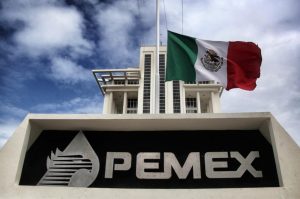
MEXICO CITY—For decades, the most relevant compliance legislation for international companies operating in Mexico was the US Foreign Corrupt Practices Act. Now, as a result of major national economic and legal reforms enacted during President Peña Nieto’s administration from 2012-2018, Mexico’s compliance environment has undergone a transformation. As foreign investment pours into Mexico’s recently opened oil and gas sector, legal entities are now criminally liable for any offenses or irregularities committed in their name, making the case for a robust compliance strategy that includes due diligence investigations into possible business partners.

A changing landscape: Mexico’s Energy Reform

Mexico enacted a historic reform program in December of 2013 that opened its oil and gas sector to foreign investment following 75 years of government ownership. Mexico’s energy reform plan was part of a broader, cross-sector effort by President Enrique Peña Nieto to boost the Mexican economy. Since its implementation, there have been three bidding rounds—the latest of which closed in March 2018—that have raised a total of $161.3 billion for investments that will take place until 2025. Fourteen percent of total investment is for public-private partnership projects between domestic and international companies and the Mexican state-owned oil company, Petróleos Mexicanos (Pemex). With these investments, Pemex expects to significantly increase Mexico’s current production of 2 million barrels per day to a hypothetical 3.4 million barrels per day.

There is significant international interest in the process, with 34 companies securing bids. The US, with nine companies, and the UK, with four, lead the pack. Royal Dutch Shell, Qatar Petroleum, British Petroleum and Chevron are just a few of the major multinationals that have a stake in Mexico as a result of the energy reform.

Although significant opportunities are opening up in the sector, it is key that international investors understand the complexities involved with the energy reforms, as they are occurring amid a rapidly changing regulatory environment and era of overall reform resulting from the Peña Nieto years, and as part of a broader shift in sentiment among the Latin American public in the fight against corruption.

The National Anticorruption System and the new compliance environment

In what can be best understood as a citizens’ effort, a set of new legislative and constitutional reforms have been introduced in Mexico since May 2014, culminating in the establishment of the National Anticorruption System (SNA) in July 2016. The SNA is defined as a coordinating body between various institutions, including the Superior Audit of the Federation and the Federal Court of Administrative Justice, among others, to create mechanisms of collaboration and coordination to effectively prosecute corrupt practices.

The SNA is still in its early stages; a Specialized Prosecutor’s Office in Combating Corruption has yet to be properly established, and the Mexican Congress has yet to elect the Anticorruption Prosecutor. However, despite the lack of distinct progress, parts of the legal reforms introduced to create the SNA already have far-reaching implications.


Forbes / Armando Ortega / 11 Junio


https://nrgibroker.com/wp-content/uploads/2017/12/pemex-e1528826043964.jpg 397 600 Soporte https://nrgibroker.com/wp-content/uploads/2025/12/logo-nrgi.svg Soporte2018-06-12 12:54:292026-06-11 22:36:32Risk And Reform: Observing Effective Controls In Mexico’s Rapidly Transforming Energy Sector

Mexico Opens Last Round Of Oil Bidding Before Election

From: Oil Price / Oxford Business Group / 28 April 2017


The latest round of open bidding for exploration rights in Mexico’s energy sector received mixed interest, with two further rights sales to take place later in the year.

Of the 35 shallow offshore blocks on offer in the March 27 auction, 16 were sold, with the strongest interest seen in blocks in the Sureste Basin – in the south-eastern portion of the Gulf of Mexico – where all eight offerings found buyers.

Mexico’s state-owned oil producer, Petróleos Mexicanos (Pemex), won seven of the blocks on offer, one in its own right and six more in partnership with overseas energy firms.

Fourteen oil majors were pre-qualified to bid alongside 22 consortia. France’s Total was the biggest winner in the Sureste Basin, coming away with the largest share of three blocks coverin­­g a total of 2342 sq km. It received two of these as part of a consortium with Pemex, and one with BP and Pan American.

The Ministry of Energy estimates that developing and operating the 16 blocks will require investment of $8.6 billion over the lifetime of the deposits.

Related: How High Can Trump Push Oil Prices?

Overall response to the auctions was slightly muted, with local and international majors showing some caution when making offers, partly due to the upcoming presidential election in July 2018, which has sparked concerns about potential changes to energy sector policy and rising supply in the market.

Auctions for shale deposits set for September

Indeed, the March auction was the first of up to three rights sales to be staged this year, with the remaining two land bids scheduled for late July and early September. The former will cover a total of 37 contractual areas in Burgos, Tampico-Misantla-Veracruz and the Sureste Basin.

The September round of bidding will be particularly notable, as it will be the first time that development rights for shale deposits have been auctioned off in Mexico.

Depleting natural gas reserves and high potential for shale – the country has 545trn cu feet of technically recoverable sources of shale gas, according to the World Resources Institute – have driven Mexico to accelerate development of the industry.

Early last month the energy sector regulator, the National Hydrocarbons Commission (Comisión Nacional de Hidrocarburos, CNH), called for bids on nine blocks in the Burgos Basin – located in the state of Tamaulipas, in the north-west of the country – to be auctioned off in September.

The blocks contain an estimated 1.1 billion barrels of oil equivalent (boe), and winning bidders will have the right to conduct exploratory work for conventional oil and gas, as well as any shale deposits identified.

Energy reform supports private sector development

The successive rounds of auctions for exploration and production rights are the keystone of Mexico’s energy reform policy. Launched in 2013, the reforms ended Pemex’s upstream and downstream monopoly, and offer the country the potential to generate $1trn of foreign direct investment by 2040, according to the Mexican Association of Hydrocarbons Companies.


From: Oil Price / Oxford Business Group / 28 April 2017


https://nrgibroker.com/wp-content/uploads/2016/02/Petróleo-mexicano-en-el-mundo1.jpg 203 300 Soporte https://nrgibroker.com/wp-content/uploads/2025/12/logo-nrgi.svg Soporte2018-05-02 16:10:552026-05-24 08:56:05Mexico Opens Last Round Of Oil Bidding Before Election

Energy Reform Could Generate $1T in Foreign Investment for Mexico by 2040

FROM:  Natural Gas Intelligence / Ronald Buchanan / 19 de marzo de 2018


Mexico’s energy reform could generate $1 trillion of direct foreign investment by 2040, said leaders of the industry lobby, Mexican Association of Hydrocarbon Companies, earlier this month.

The association, known by its Spanish acronym Amexhi, was presenting its Agenda 2040, a huge volume that reviews the industry’s past, from its origins at the beginning of last century; the present, including current uncertainties; and a future through 2040 that would “transform Mexico.”

Amexhi President Alberto de la Fuente admitted that the investment goal is ambitious.

The Agenda presupposes that power and hydrocarbons would account for  4% of gross domestic product by the target date. And, de la Fuente emphasized, it would require accurate instrumentation of the reform’s precepts, “as well as the resolution of challenges that are a legacy of the previous model.”

The defense of the Agenda would require four watchwords, he added: “Steadfastness, competence, transparency and knowledge.”

Amexhi has taken pains to remain neutral during the current campaigns for Mexico’s July 1 presidential election.

“All the candidates have shown interesting elements in their policy statements,” said Enrique Hidalgo, president of ExxonMobil Exploracion y Produccion Mexico, and the coordinator of Agenda 2040.

Some of the industry group’s sympathizers, however, have claimed that the pronouncements of the current leader in the race, Andres Manuel Lopez Obrador, who helms the left wing nationalist Morena party, has been less than steadfast in support of the reform. They also claim that his proposal for new refineries show a lack of understanding of the industry.

At the moment, the No. 2 in the race is Ricardo Anaya, leader of the National Action Party, the traditionally pro-business PAN. But Anaya has yet to issue any policy statements on energy.

Anaya also has embraced policies of left-wingers with whom he has formed an alliance. With them, he signed a statement of “No to the gasolinazo” — the liberation of gasoline prices.

Running third in the opinion polls is senior technocrat Jose Antonio Meade of the incumbent Institutional Revolutionary Party, the PRI. Meade was hand-picked by President Enrique Pena Nieto.

Meade’s loyalty to the energy reform has not been questioned. However, his loyalty to Peña Nieto has so far placed a political millstone around his neck. Pena Nieto is said to be the most unpopular Mexican president since political opinion polls were first published in the nation late in the 20th century as its democratic era began to dawn.

The democratic dawn has begun late for the former state monopolies of oil and natural gas, Petroleos Mexicanos (Pemex) and power, Comision Federal de Electricidad, the CFE.

Neither is free to set a budget, as Congress and the Finance ministry keep a tight grip on their spending. The Pemex and CFE unions, particularly that of Pemex, have corporate powers that go well beyond the defense of the interests of the workers in terms of pay and conditions.

The challenge are considerable, said senior analyst Arturo Carranza of Mexico’s National Institute of Public Administration. But, he added, the rewards are realistic.

Agenda 2040 proposes 15 bid rounds to lease oil and gas acreage. Since the 2013-14 reform was enacted, there have been two rounds featuring eight separate completed lease auctions. Three auctions are currently underway for the third round.

“But the pace has been stepped up and it can be pushed further,” Carranza said. “The country’s potential is beyond question for the industry. And the government has to do its part by identifying opportunities that the companies can grasp. In return, it can reap the benefits, such as royalties, on behalf of the nation.

“At the same time, the government has to cast off the restrictions on the budgets of Pemex and the CFE,” he added.

De la Fuente said at the presentation that about 80% of the nation’s oilfields are currently in decline, “but the best tool that’s available to revert the trend is the energy reform.”


FROM:  Natural Gas Intelligence / Ronald Buchanan / 19 de marzo de 2018

https://nrgibroker.com/wp-content/uploads/2018/03/plat-mc.jpg 400 600 Soporte https://nrgibroker.com/wp-content/uploads/2025/12/logo-nrgi.svg Soporte2018-03-20 13:16:532026-05-24 09:04:05Energy Reform Could Generate $1T in Foreign Investment for Mexico by 2040

Mexico raises the bar on oil deals as Latin America vies for investment

FROM: Reuters / Marianna Parraga, Adriana Barrera / 2 de Febrero de 2018


MEXICO CITY (Reuters) – Mexico has raised the bar on oil contracts in Latin America after sweetening terms to attract international energy firms, luring $93 billion in future investment in the region’s first big auction this year.

On Wednesday, Mexico awarded 19 of 29 deepwater blocks onoffer, comfortably more than the seven areas expected to be assigned. Anglo-Dutch oil major Royal Dutch Shell emerged as the biggest winner, with nine blocks.

Unique for generous terms such as setting a cap on royalties that oil firms can pledge to the government in bids, Mexico faces off this year with Brazil, Argentina, Ecuador and Uruguay.

They will all hold auctions for oil and gas fields in 2018 that require billions of dollars in investment from foreign firms.

Mexico is due to hold major auctions in March and July.

While Brazil’s prolific deepwater presalt oilfields are expected to attract aggressive bidding from oil majors, other regional rivals could be forced to revise the terms of their auctions if Mexico scores another win in its next auction for shallow water areas in March, analysts said.

Argentina and Ecuador have already changed their terms over the past year in preparation for their 2018 auctions. Argentina has lowered labor costs and some taxes, while Ecuador switched to production sharing from service contracts.

Oil prices have reached three-year highs near $70 per barrel in 2018, giving the world’s top energy companies a cash boost and improving the chances that they will have the funds needed for big-ticket projects in Latin American.

The industry is, however, emerging from a recession that cost tens of thousands of jobs and forced companies to slash spending on expensive projects such as those in deep waters. Oil majors have committed to keeping tight control on costs and will only bid for what they see as the most profitable projects.

Oil executives and industry specialists say the terms on offer in Mexico, as well as the potential for major finds in the country’s deep water, made it attractive on Wednesday.

At the auction, the decisive bidding parameter was the cash bonus that firms pledged. Shell won several bids with cash bonuses that drew surprised gasps from an audience mostly made up of executives from bidding firms and members of the media.

Mexico collected $525 million in cash.

While the government has limited its own take at the auction, the estimated $93 billion in investments pledged to develop the blocks auctioned is about 1.5 times greater than the amount involved in the previous eight auctions.

”COMPETITION FOR CAPITAL’

After the government of Mexico started auctioning oilfields in 2015, it tweaked the terms of the bidding process several times, following a historic energy reform that ended state oil firm Pemex’s 75-year monopoly over the sector.

The liberalization, the most ambitious plank of President Enrique Pena Nieto’s economic policy, started just as oil prices crashed in 2013-2014.

The government had to balance the need for a big enough take for the state to placate opponents of the reform with ensuring there was enough potential profit to attract foreign firms.

“Mexico understood how tough the competition for capital was in a very difficult oil price environment,” consultant Pablo Medina told Reuters.

After failing to award a large number of blocks in previous auctions, the government regarded the results of this week’s deepwater bidding round as a success.

As well as the limits on royalties, sweeteners included allowing foreign firms to propose areas to be included in the bidding rounds and relaxing the qualification process.

Mexico also put a stop to “additional investment pledges.” This makes it harder for small companies to win by making unrealistic promises, but further limits the mandatory investment in projects.

“What we are looking for is that the market tells us how big royalty should be and how much government take is possible to achieve,” Salvador Ugalde, head of the Mexican Finance Ministry’s Hydrocarbon Income Unit, said Wednesday.

Brazil, which plans a busy auction schedule for 2018, does not expect Mexico’s auctions will lower interest in its own offerings, said Marcio Felix, Brazil’s oil and gas secretary.

In Brazil’s last round in October, Shell and BP were the biggest winners.

“We have a set of companies that have an appetite for a certain type of asset,” Felix told Reuters on Thursday.


FROM: Reuters / Marianna Parraga, Adriana Barrera / 2 de Febrero de 2018

https://nrgibroker.com/wp-content/uploads/2017/12/h-seguros.jpg 800 1600 Soporte https://nrgibroker.com/wp-content/uploads/2025/12/logo-nrgi.svg Soporte2018-02-06 16:06:272026-06-11 22:36:01Mexico raises the bar on oil deals as Latin America vies for investment

Mexico to postpone deep water auction, adjust next oil tender terms

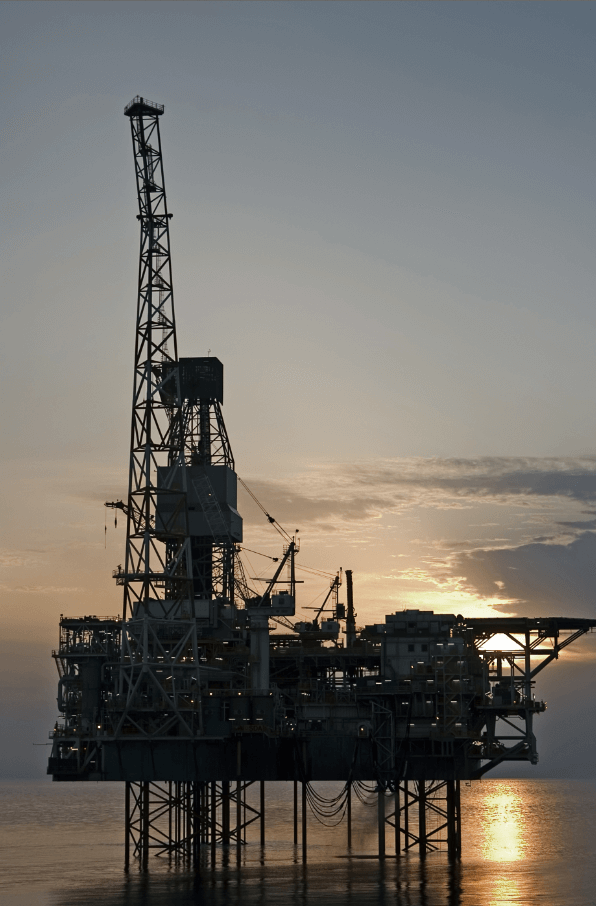
Mexico, which has started to open its nationalized oil industry to additional private investment, will postpone auctions for deep-water oil exploration and production contracts and adjust the terms of upcoming tenders after an inaugural oil auction failed to meet the government’s modest expectations.

shutterstock_173495Energy Minister Pedro Joaquin Coldwell told local television the government will change rules that scared off potential bidders earlier this month, when it was able to auction only two of 14 blocks in a pivotal oil and gas tender.
He signaled that the government will relax its requirement that consortia bidding on oil parcels must have one member act as a guarantor and hold shareholder equity of at least $6 billion to protect the state’s interest in the event of a major accident.

“We are revising the issue of the guarantees,” said Joaquin Coldwell in a Tuesday night interview with top Mexican broadcaster Televisa’s cable news channel Foro TV.

He also said the government would tweak rules prohibiting a consortium from selecting a new company to replace a pre-selected operator that pulls out. He said that rule thwarted bids in this month’s auction.

He said the government will also allow companies to make a second bid in auctions if an initial bid fails to meet a government set minimum.

This month’s disappointing auction was the first of a scheduled five-phase auction that will extend into next year for oil regulator CNH.

Joaquin Coldwell, also chairman of the board of state-owned oil company Pemex, said the critical fourth phase covering lucrative deep water acreage in the Gulf of Mexico would be postponed to allow the government and companies more time to pore over details.

“We are conducting a full evaluation in order to launch the deep water call for bids by the end of September and give us more time to perfect the criteria because we shouldn’t have any margin for error on that,” he said.

The oil regulator had previously said the call for bids, followed by the opening of the corresponding data rooms, would be made by the end of this month.

Joaquin Coldwell said the fifth phase, which was to focus on higher-cost shale and other so-called non-conventional oil and gas fields, has been frozen.

“Right now we have suspended it pending a future evaluation,” he said.

The government had previously said that the fifth phase would be trimmed but would still go forward.


Con información de REUTERS

https://nrgibroker.com/wp-content/uploads/2015/07/shutterstock_705791.jpg 203 300 admin https://nrgibroker.com/wp-content/uploads/2025/12/logo-nrgi.svg admin2015-07-30 11:00:552026-05-24 12:38:22Mexico to postpone deep water auction, adjust next oil tender terms

Pemex Plans To Compete In Mexico’s First Two Oil Tenders

(Reuters) – Mexican state-owned oil company Pemex plans to take part in the first two public tenders of the so-called Round One opening of the country’s oil and gas industry, a senior executive said on Thursday.

Mexico has already announced terms and conditions for the first phase of the sector opening, which follows a reform finalized last year that ended Pemex’s 75-year-old oil and gas monopoly in a bid to attract more private investment.

Gustavo Hernandez, Pemex’s head of exploration and production, said the firm would take part in the “first two tenders” – one for 14 production and exploration areas and the second for five contracts spread over nine production fields.

A lot of companies have approached Pemex because we have knowledge of the shallow water basin with more than 40 years of exploration and 35 years of production,” Hernandez told reporters after an event in Mexico City.

Mexico has opened the oil and gas industry in a bid to end a decade-long slide in production. But the reform has been blunted by the sharp decline in crude prices in recent months. (Reporting by Adriana Barrera; Editing by Dan Grebler)

Copyright Reuters

NRGI-Broker-new-pemex-plans-to-compete-in-mexicos-first-two-oil-tenders

https://nrgibroker.com/wp-content/uploads/2015/03/NRGI-Broker-new-pemex-plans-to-compete-in-mexicos-first-two-oil-tenders1.png 299 442 admin https://nrgibroker.com/wp-content/uploads/2025/12/logo-nrgi.svg admin2015-03-18 11:31:272026-05-24 13:54:12Pemex Plans To Compete In Mexico’s First Two Oil Tenders
Page 2 of 212

Buscador

Search Search

Categorías

  • Successful Mexican Women (2)
  • Successful women (3)
  • Women (3)

Entradas Recientes

  • (no title)
  • Breaking Barriers and Building the Future
  • The Feminine Power of Insight in the Mexican Business World
  • The Mexican Navy recognizes Graciela Alvarez Hoth on International Women’s Day in the Maritime Sector

NRGI Broker

We are the link between the risks faced by industries in the energy sector and the solutions to manage and support them through reliable financial guarantee schemes.

Contact Us

Prolongación Paseo de la Reforma 1015, Torre A, Piso 21, Col. Desarrollo Santa Fe, Contadero, C.P. 05348, Mexico City, Mexico

Phone: +52 (55) 9177 2100

Business Hours

Monday – Friday: 7:30 AM – 6:00 PM
Contact us: [email protected]

© Copyright - NRGI Broker | Privacy Notice | Terms and conditions
  • Link to Facebook
  • Link to X
  • Link to LinkedIn
  • Link to Youtube
Scroll to top Scroll to top Scroll to top