
NRGI Broker Expertos en Seguros para el Sector Energético
  • About Us
  • Services
    • Insurance
    • Consulting
    • Guarantees
  • Products
    • Well Control
    • Liability
    • Marine and Cargo
    • Cargo Transport
    • Energy
    • Environmental Liability
    • Construction and Engineering
    • Surety
    • Business Interruption
    • Physical Damage
    • Aviation
    • Employee benefits
  • News
  • Contact
  • Click to open the search input field Click to open the search input field Search
  • Menu Menu
los-riesgos-en-el-sector-hidrocarburos

Risks in the Hydrocarbons Sector

28 August, 2018/Mexico’s Energy Reform, Oil & Gas, Oil Operators, Our Core, Risk Management

A risk, according to the Law of the National Agency for Industrial Safety and Environmental Protection of the Hydrocarbons Sector (ASEA), is the probability that an undesired event will occur, measured in terms of its consequences to personnel, to the population, to facilities and equipment and the environment. In short, a risk is the probability of an accident occurring.

In this regard, it is important to consider that “risk” is not synonym to “danger”, since the latter refers to the intrinsic conditions or characteristics of an object capable of causing harm, while the risk is the probability of that damage occurring. From the above it follows that there are situations and objects that are dangerous themselves and therefore have the potential to cause harm, that is, they represent a risk, which however can be controlled and minimized.

In terms of hydrocarbons, oil and gas are hazardous materials, given their explosive and flammable characteristics. Therefore, the activities in which they are involved represent a risk, hence they are legally defined as highly risky activities.

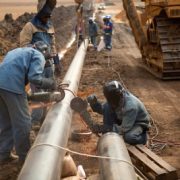
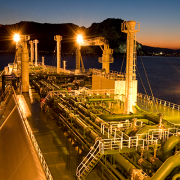
In addition to the intrinsic characteristics, the operations carried out throughout the hydrocarbon value chain are highly complex, since 1) they involve large-scale infrastructure: drilling platforms, ship-tanks, pipelines, storage terminals, others; 2) are carried out in conditions that may be extreme, for example, drilling an oil well in the sea or traveling long distances through a ship or a train; 3) Advanced technology and specialized personnel are required.

Derived from the above, it is necessary to take all the measures in risk management to avoid accidents from happening. However, although a risk can be prevented and controlled, it can not be eliminated completely, so in any case, it will be necessary to transfer it, with the aim of preventing a company from absorbing the total economic losses that a loss may represent and that they can translate into a significant patrimonial detriment.

A risk can be transferred to an insurance company, through an insurance contract in which the insurer is committed to the insured, who in return for a premium, will indemnify him in case he suffers a loss that causes losses economic, as long as the event corresponds to the insured object, conforms to the terms and conditions established in the policy and is not an exclusion.

In the SectorHydrocarbons Sector, there are specific insurances to cover the risks inherent to this activity, which have also been established as mandatory by the regulatory authority (ASEA), such as: 1) Well control; 2) Civil Liability and 3) Environmental Responsibility.

At NRGI Broker, we are experts in insurance for the Hydrocarbons Sector. Come to us.

 

Tags: ASEA, Civil Liability, Environmental Responsibility, Hydrocarbons Sector, pipelines, risky activities, storage terminals, Well Control
Share this entry
  • Share on Facebook
  • Share on X
  • Share on LinkedIn
  • Share by Mail
https://nrgibroker.com/wp-content/uploads/2018/08/Los-riesgos-en-el-Sector-Hidrocarburos.png 400 600 Soporte https://nrgibroker.com/wp-content/uploads/2023/08/nrgibroker-300x96.png Soporte2018-08-28 13:21:232018-08-28 14:01:51Risks in the Hydrocarbons Sector
You might also like
Regulación aplicable a la construcción y operación de ductos terrestres para el transporte de hidrocarburos y petrolíferos.
Regulación obligatoria para exploración y extracción en aguas profundas
Seguridad Industrial Y Seguridad Operativa En El Sector Hidrocarburos
Enbridge (ENB) Commences Mex-Border Pipeline’s Offshore Work
interview-with-graciela-alvarez-ceo-of-nrgi-broker Interview with Graciela Álvarez, CEO of NRGI Broker
Trámites ambientales relacionados con el Sector Hidrocarburos

Search

Search Search

Categories

  • Economy
  • Environment
  • Environmental Legislation
  • Hydrocarbons Storage
  • Insurance
  • International Markets
  • Marine
  • Marine and Offshore
  • Masonry (4 columns)
  • Mexico’s bidding rounds
  • Mexico’s Energy Reform
  • News
  • Oil & Gas
  • Oil Operators
  • Our Core
  • Pipelines
  • Risk Management
  • Surety and Guarantees
  • Uncategorized

Prolongación Paseo de la Reforma 1015 Torre A Piso 21.
Col. Desarrollo Santa Fe, Contadero,
C.P. 01219 Ciudad de México, México

Tel: +52 (55) 9177 2100

  • Facebook
  • Twitter
  • Linkedin
  • Youtube

Latest News

  • Breaking Barriers and Building the Future18 March, 2025
  • Fundamental factors to strengthen Pemex12 August, 2019
  • Offshore Project Development: The Road to First Oil26 July, 2019
  • Hydrocarbons Seminar “Fundamentals of the Hydrocarbons Sector in Mexico” generates proposals and knowledge31 May, 2019
  • Link to Facebook
  • Link to X
  • Link to LinkedIn
  • Link to Youtube
  • Home
  • About Us
  • Services
  • Products
  • News
  • Contact
  • Confidentiality notice
  • Terms of use
  • Cargo Transport
Scroll to top